4-year record oil price rise due to war in Middle East slows to 6%
Investors seek refuge from uncertainty in the dollar and gold

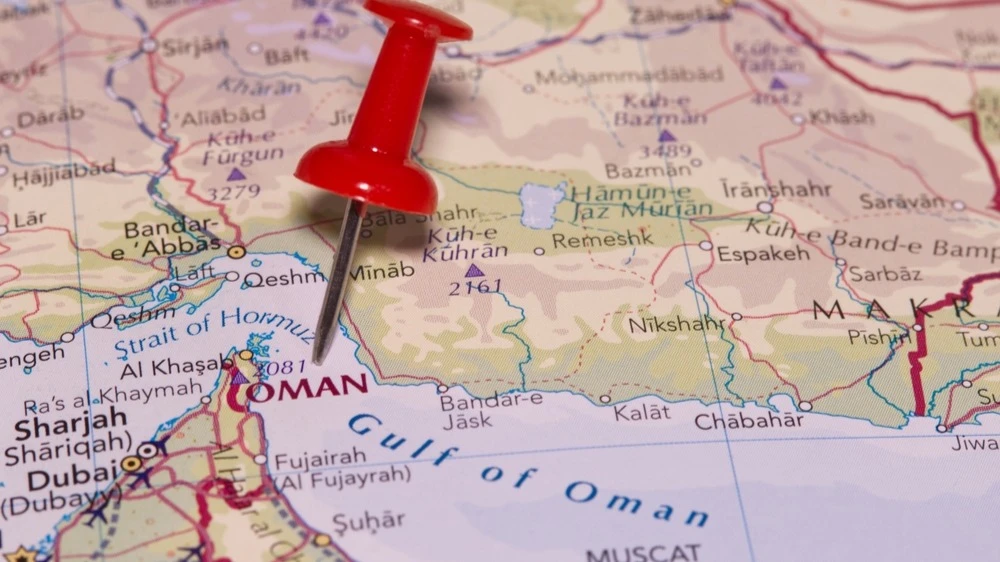
Although Iran has not announced the closure of the Strait of Hormuz, tanker traffic through it has effectively ceased / Photo: Below the Sky/Shutterstock.com
Oil prices have largely lost much of their gains since the strongest surge in four years at the opening of trading on March 2. All eyes are now on the Iranian-controlled Strait of Hormuz, through which about a fifth of the world's offshore oil trade and 20% of liquefied natural gas passes. Risks of a protracted war in the Middle East have forced investors to seek refuge in the dollar and gold.
Details
Brent crude oil prices soared on Monday morning by 13% - to the maximum since January 2025 - and exceeded the mark of $ 82 per barrel. The price jump was the strongest over the past four years, states Bloomberg. Subsequently, the price of the benchmark grade corrected downward, consolidating around $77.5 per barrel - but even this level was more than 6% higher than the closing price of Brent on Friday, February 27.
Gold rose 2.2% in early trading, above $5390 per troy ounce. Then the growth reduced to 1%.
What's happening in the Middle East
On Saturday, February 28, the U.S. with Israel launched missile strikes on Iran and called on the local population to overthrow the Islamist regime. Iran's supreme leader, Ayatollah Ali Khamenei, was assassinated. Tehran responded with a series of strikes on Israel, as well as U.S. bases and other targets in Saudi Arabia, Qatar, the United Arab Emirates, Kuwait and Bahrain.
While Iranian authorities said on Sunday, March 1, that the Strait of Hormuz remains open, they also reported an attack on three oil tankers. For his part, U.S. President Donald Trump said that the U.S. military had sunk nine Iranian Navy ships and that the fighting would continue until all targets were reached, Bloomberg reported.
What the analysts are saying
"The most immediate and tangible event affecting oil markets is the virtual stoppage of traffic through the Strait of Hormuz, which prevents 15 million bpd of oil from reaching markets," Reuters quoted Jorge Leon, head of geopolitical analysis at Rystad Energy, as saying. - Unless de-escalation signals emerge soon, we expect a significant upward revaluation of oil."
A prolonged period of high oil prices may provoke a new round of global inflation, and may also play the role of a kind of tax on business and consumers, which can cool demand. Although on March 1, OPEC+ countries agreed to increase production by 206 thousand barrels per day, starting from April, a significant part of these volumes will still have to be exported from the Middle East by tankers, emphasizes Reuters.
"The closest historical analog, in our view, is the Middle East oil embargo of the 1970s, which drove oil prices up 300% to about $12 a barrel in 1974," said Alan Gelder, senior vice president of oil markets at Wood Mackenzie. - At 2026 prices, that's just $90 a barrel. Surpassing that figure in today's market, which is concerned about significant supply losses, seems achievable."
What about stocks and currencies
Such a scenario will cost Japan, which imports all the oil it consumes, dearly: the Nikkei 225 index fell by 1.4%, with airline stocks suffering the most, Reuters reported. China's blue chips, the CSI 300 index, showed resilience, almost unchanged in price.
In the Middle East, the UAE and Kuwait temporarily closed their stock markets, citing "exceptional circumstances."
In Europe, EUROSTOXX 50 index futures slipped 1.4 percent and DAX futures fell 1.3 percent.
On Wall Street, futures on the S&P 500 and Nasdaq indexes lost 0.6 percent each.
The oil shock also affected currency markets, with the dollar being the main beneficiary, according to Reuters. The U.S. is a net exporter of energy resources, and Treasuries are still considered a liquid safe haven in times of stress, which led to a 0.2% depreciation of the euro against the U.S. currency to $1.1788.
This article was AI-translated and verified by a human editor