Hidden Risks: What Burry Noticed Between the Lines in Tech Companies' Reports
A well-known short seller believes that the AI race is fueled by hidden debt. Why isn't he willing to buy shares in the largest hyperscalers?

According to Burry’s estimates, the five largest hyperscalers have accumulated $3 trillion in financial obligations—and some of them aren’t reflected in their financial statements / Photo: Liam Briese / Unsplash
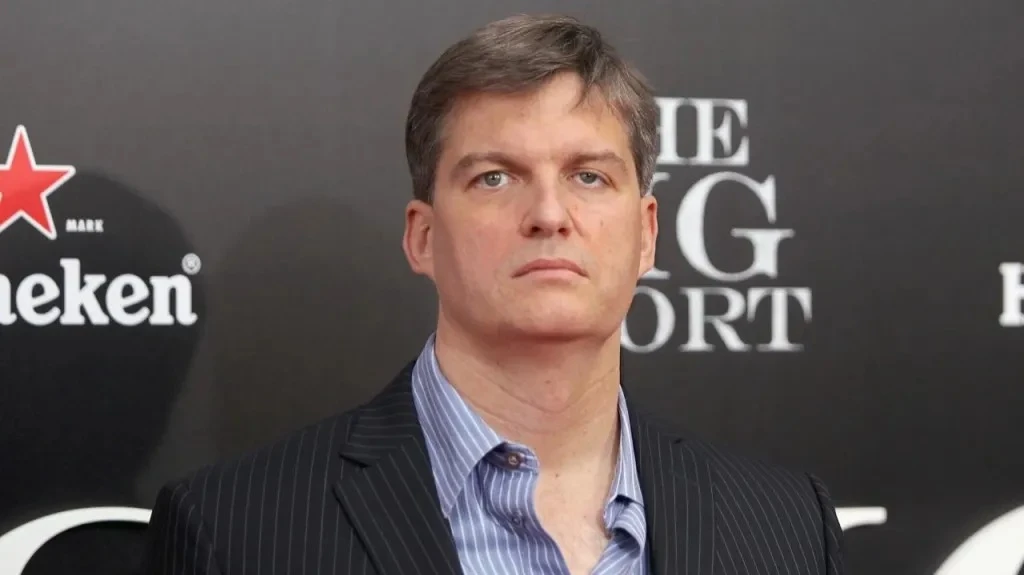
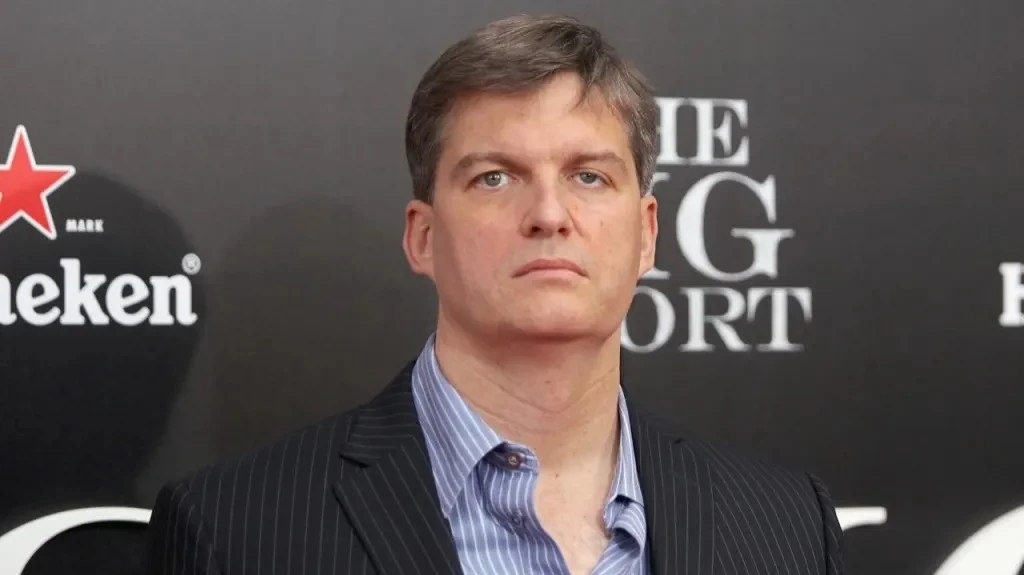
The financial obligations of Big Tech companies participating in the AI race are growing “at hyper-speed”—many times faster than their revenue, warns investor Michael Burry, who predicted the U.S. mortgage crisis. According to his calculations, the five largest hyperscalers have accumulated $3 trillion in financial obligations—for future acquisitions, data center leases, and so on. At this rate, the total could exceed $4 trillion by 2028 and even reach $5 trillion, Burry estimates in his blog, Cassandra Unchained.
"This is a massive bet on massive growth. The risk of this whole setup is what will happen when the music stops."
If forecasts for AI demand fail to materialize, investors will face a sharp decline in corporate earnings, Burry continues. In his view, Wall Street is not assessing the situation adequately—largely because accounting rules allow businesses to exclude certain liabilities from their balance sheets until the products are delivered and each party has fulfilled its obligations. Burry reviewed the latest financial statements of the “Big Five” hyperscalers—Microsoft, Amazon, Meta, Alphabet, and Oracle—and asserts that none of them fully reflects all the risks.
"It's practically impossible to analyze this <..> Practically speaking. There are always some clues in the footnotes."
What did investors see between the lines in the hyperscalers' financial reports?
Microsoft
Microsoft is increasingly committing itself to long-term spending on AI infrastructure, even as future revenue becomes more distant and less certain, Burry writes. Contracts expected to generate revenue for Microsoft over the next 12 months now account for 30% of the order backlog, down from 40% a year earlier, according to notes to the annual report published in July. The order backlog that will generate revenue within the year grew by 37%, while the volume of longer-term orders jumped by 113%.
"It is precisely in these backlogs with extended lead times that the lion's share of fiction is usually hidden. Simply put: the longer it takes for the backlog to turn into actual revenue, the more speculative it becomes."
At the same time, the investor notes, part of Microsoft's future revenue depends on OpenAI, Anthropic, and non-cloud providers, which have yet to raise the capital needed to fulfill their obligations.
Burry also highlights Microsoft’s growing data center lease commitments. Over the past year, the value of signed but not yet effective leases more than tripled—from $92.7 billion to $329.1 billion. At the same time, the company extended the maximum lease term for these facilities from 15 to 25 years. According to Burry, this allows more new data center lease agreements to be classified as operating leases rather than finance leases—and thus excludes the related expenses from CapEx.
Microsoft CFO Amy Hood explained during a conference call following the release of the earnings report that the company’s investment plans remain unchanged; however, because a portion of future lease payments will be reclassified as operating expenses, expected CapEx will decrease to approximately $175 billion.
"These changes will only partially affect 2026, but their full impact will be felt in 2027, when the capital expenditures reported in the financial statements will appear lower than they would have been without this change in accounting policy."
Amazon
Burry writes that he used to consider Amazon the only hyperscaler that earns enough to cover its obligations. But now the situation is changing. The company is no longer covering its growing infrastructure costs with its own cash flow and is increasingly relying on debt. Over the past nine months, commitments for future leases and purchases have risen by 81% to $267 billion, while free cash flow has turned negative —to about minus $8 billion, the retailer reported in its second-quarter earnings report.
At the same time, Amazon is sharply increasing its debt. Over the past six months, long-term debt has doubled—from $65.6 billion to $128.9 billion—and the amount of unsecured bonds maturing by 2066 has reached $132.1 billion. In June, the company also secured a $17.5 billion loan.
“To Amazon’s credit, these borrowings are at least reflected on the balance sheet, rather than buried under staggering amounts of off-balance-sheet liabilities, reclassified capital expenditures, and leases that haven’t yet taken effect. Amazon’s debt is quite transparent. But, damn it, honest leverage is still leverage. Why on earth should I let debt slide just because I can see it clearly?”
At the same time, Burry continues to hold Amazon’s business in high regard. In his view, AI can accelerate growth not only in the cloud segment but also in advertising, healthcare, the pharmacy business, and the company’s other services.
"I'm a reserved, reluctant fan of theirs. But Amazon is too expensive for what it offers."
Meta
At Meta, Burry focuses primarily on how the company finances the construction of data centers. It builds some of these facilities through a joint venture: the data centers themselves and the associated obligations are not fully reflected on Meta’s balance sheet, but the company uses this capacity, pays rent for it, and guarantees a portion of its residual value.
Meta reports a $3 billion stake in the joint venture on its balance sheet, but in the event of an unfavorable outcome, the company could lose up to $46 billion on this deal, according to footnotes in its second-quarter financial statements. Specifically, Meta may opt out of the lease in four years, but if the data center loses value by that time, the company will have to compensate for a portion of the losses—up to $28 billion.
“Meta will come out unscathed only if these assets retain their value. No one agreed to structure the deal for this data center in a way that would provide even a modicum of certainty regarding the preservation of its value. Lenders flatly refused to bear the risk of a decline in residual value without such protection.”
Meta’s counterparties are demanding safeguards under infrastructure procurement contracts as well: the company has set aside $10.8 billion for these contracts, funds it will not be able to freely use until the contract terms are fulfilled in 2028–2030. Burry views these funds as a cash collateral for obligations to suppliers.
“Do you realize what this is? It’s actual cash collateral demanded from Meta by its counterparties. Purchase commitments are becoming a harsh reality and are starting to function like a secured loan. It’s absolute madness.”
Meta’s off-balance-sheet liabilities total about $700 billion, according to Burry. As a result, the investor is lowering his valuation of Meta by approximately $50 per share. If the total exceeds $1 trillion, as he expects, the valuation will have to be lowered even further.
Alphabet
Alphabet has taken on massive commitments related to AI infrastructure: future purchases as of the end of the second quarter totaled $707 billion, according to the notes to the second-quarter financial statements. Taking into account guarantees and lease agreements that have not yet taken effect, the total exposure approaches $900 billion, writes Burry.
"That $900 billion is an unmatched figure among all hyperscalers, and I'd bet that most of the company's shareholders would find that number shocking."
In addition, Alphabet is effectively driving some of the demand itself: over the past six months, Google Cloud’s order backlog has grown by 112%, but during that time, the company began including contracts for the sale of TPUs in that figure. One of the largest buyers of these chips is Anthropic. According to The New York Times, Alphabet owns 14% of the company and has agreed to invest up to $40 billion in it.
"Such circular transactions have become a common feature of the AI boom—simply because they actually exist. 'Bulls' usually brush this fact aside, even though in any other industry such a practice would seem highly suspicious."
Alphabet also guarantees the debts of companies that build infrastructure for it. Over the past six months, the value of these guarantees has risen by 158%, to $43.8 billion; an additional $7.6 billion is tied to energy equipment. If a partner is unable to service its debt, Alphabet will have to assume its lease agreements or pay compensation. These guarantees have terms of up to 15 years.
At the same time, Alphabet’s own debt is also growing: over the past six months, it has risen from $46.5 billion to $98.2 billion. A year ago, cash outflows from financing activities totaled $26 billion—primarily due to share buybacks—but now, conversely, Alphabet has seen an inflow of $86.3 billion, mainly due to new borrowings. In 2026, the company issued debt securities in six currencies, including 100-year bonds.
Oracle
Burry considers Oracle to be the most problematic of the five hyperscalers. The company’s AI infrastructure obligations are growing rapidly, and part of the cost of building that infrastructure is effectively being financed by the customers themselves. In the last quarter, Oracle reported capital expenditures of $28.5 billion, but spent only $18 billion of its own money. The difference was covered in part by $11.4 billion in customer prepayments—which accounted for nearly 49% of operating cash flow for the quarter.
Customer prepayments are already evident in Oracle’s financial statements: short-term deferred revenue rose from $9.9 billion to $14.7 billion, while other long-term liabilities increased from $16.2 billion to $28.2 billion. In addition, these prepayments also affect the amount of Oracle’s future revenue, Burry points out. Here’s how he explains it: suppose a customer pays $10 billion for services it will receive in a few years. By the time services begin, the liability, including interest, will have grown to approximately $11.9 billion—Oracle will then recognize all $11.9 billion as revenue as the services are provided, even though it received only $10 billion in cash, the investor writes.
As a result, according to Burry, the interest component increases both Oracle’s revenue and its order backlog, even though it is initially recorded as an expense. If, on the other hand, customers borrow money themselves to make prepayments, they may demand lower prices for computing capacity in return. Oracle’s gross margin has already fallen by five percentage points in the most recent reporting period.
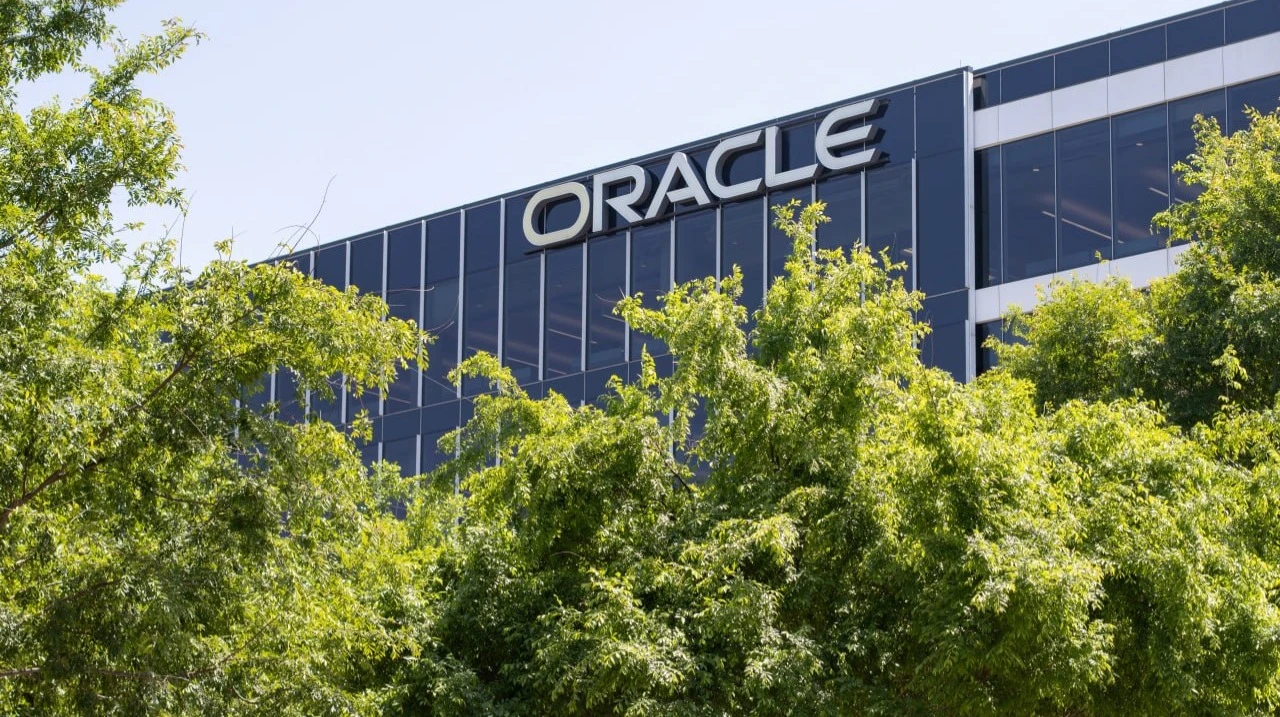
Oracle's order backlog has already reached $664 billion, an increase of $209 billion over the past year. However, a significant portion of these contracts is not expected to generate revenue for several years: approximately $332 billion is attributable to the period after fiscal year 2029, and $106 billion to the period after fiscal year 2031, according to the notes to the financial statements.
To fulfill these contracts, Oracle has taken on significant infrastructure commitments. Purchases and leases that have not yet begun account for approximately $273 billion, and after the end of the quarter, the company signed contracts worth another $19 billion. At the same time, Oracle’s EBITDA is the lowest among the five hyperscalers.
According to Burry’s calculations, even with long-term business growth, Oracle isn’t generating enough revenue to justify the scale of these commitments. If some of the built capacity goes unused, the company will have to write off part of the cost of the data centers and equipment. Burry believes this could happen in 2029, though he acknowledges that problems could begin even sooner.
Missed the mark: not a single stock to buy
To value stocks, Burry uses his own IV10 metric—a calculated price that should yield approximately 10% annually over a horizon of at least 15 years. He considers this level of return to be close to the market average, so IV10 serves as his benchmark for a stock’s intrinsic value: if the market price is lower, the stock is likely undervalued, in his assessment.
In the ranking of the best companies to invest in compiled by Burry, Microsoft came out on top: as of September, it ranked 14th, and its stock was trading at about 30% below Burry’s estimated value. Meta and Alphabet are close behind—in 19th and 29th place, respectively: Meta is trading about 8% below its estimated value, while Alphabet is trading about 2% above it. Amazon is now in 33rd place and is trading at a premium of about 27%.
Burry gives Oracle the lowest rating—it ranks 53rd, and according to his calculations, the company’s stock currently does not even meet the benchmark of a 10% annual return. At the same time, he emphasizes that this does not mean the business has zero value or is at risk of bankruptcy.
Burry divides investment ideas into three groups, using a baseball metaphor: “Fat Pitches”—the most attractive buying opportunities; “Just Outside” (Just Outside)—stocks that don’t quite meet his criteria yet—and “The Out Field”—stocks that are significantly further from a price he considers suitable. Currently, none of Burry’s five hyperscalers fall into the “Fat Pitches” category: Microsoft, Meta, and Alphabet are in the “Just Outside” group, while Burry classifies Amazon and Oracle as “The Out Field.”
This article was AI-translated and verified by a human editor