Highlights in Small-Cap Stocks: Oatly's Surge, the FDA's Rejection, and Shoe Station's Reversal

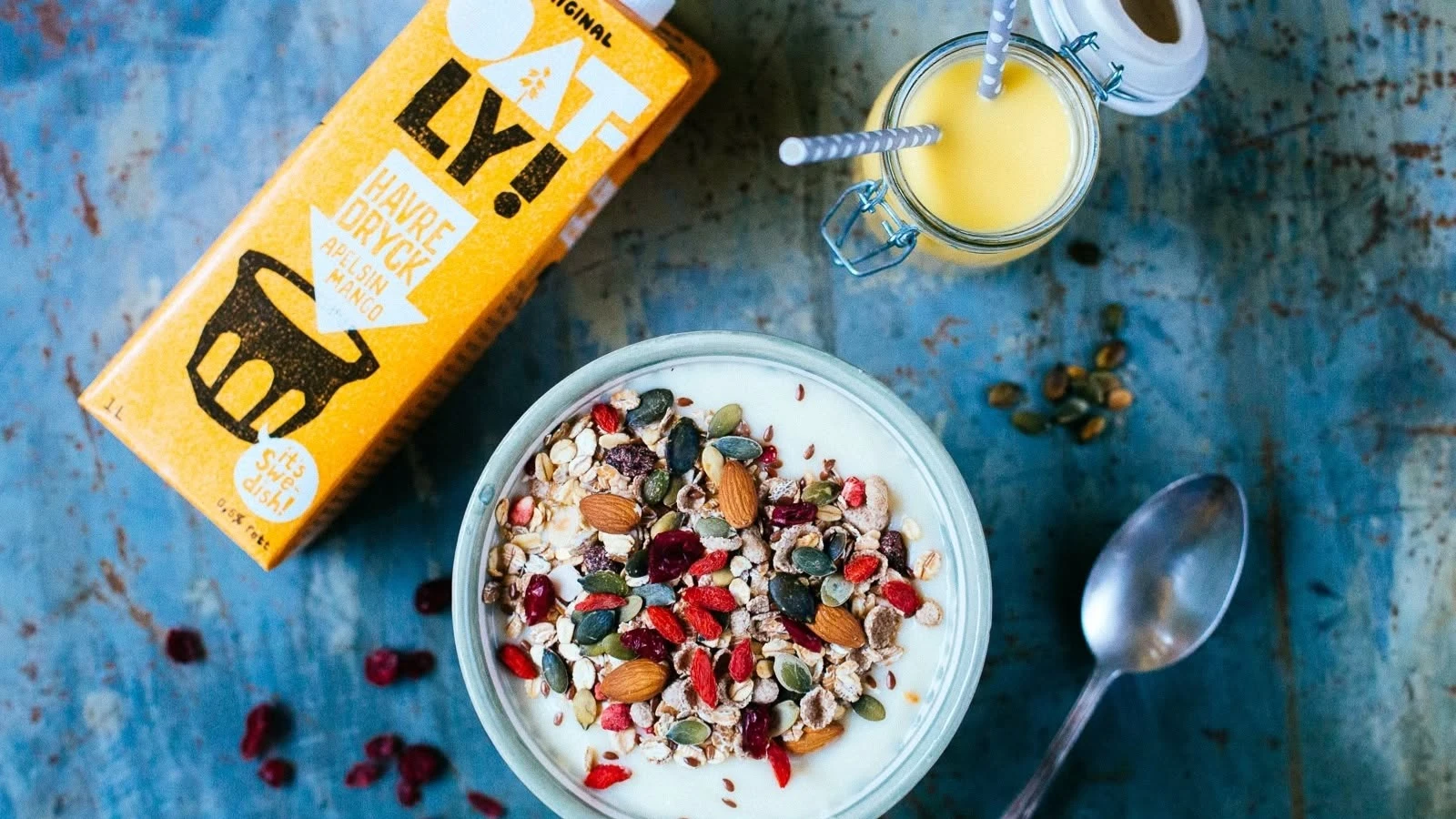
The Belgian investment firm Verlinvest has agreed to buy out the stake held by its Chinese partner, China Resources, in the oat milk producer Oatly Group / Photo: Facebook / Oatly
Shares of oat milk producer Oatly more than doubled following news that a Chinese shareholder had exited the company. Capricor Therapeutics shares fell nearly 75% after the FDA rejected its application for a Duchenne muscular dystrophy treatment for the second time. Shoe retailer Shoe Station lowered its annual forecast and decided to restore the original signage to most of its renamed stores. Highlights from the small-cap market for the week of November 23–27 are featured in the Oninvest digest.
Oatly's stock soared 109% following news of a Chinese shareholder's exit
American Depositary Receipts (ADRs) for Sweden’s Oatly Group rose 109.1% on November 23, to $14.5. The Belgian investment firm Verlinvest has agreed to acquire China Resources’ indirect stake in Oatly and the rights to convertible securities held by the partners through their joint venture, Nativus. Upon completion of the transaction, Verlinvest’s stake is expected to increase to approximately 42.6% of Oatly’s equity.
As part of the deal, Verlinvest, in accordance with Swedish law, offered the remaining Oatly shareholders a buyout at $4.13 per depositary receipt. Oatly’s board of directors recommended that investors reject the offer. Verlinvest stated that it intends to maintain Oatly’s public status and keep its ADRs listed on Nasdaq. Three Wall Street analysts recommend buying the company’s shares, while another recommends holding them. The average target price is $15.75, which implies upside potential of about 13% relative to the closing price on November 27.

Capricor's stock plummeted nearly 75% following the FDA's second rejection
Capricor Therapeutics shares fell 74.7% on November 23, to $1.92. On Friday, November 20, the FDA denied the company’s application for the second time to register deramiocel—a cell therapy for the treatment of Duchenne muscular dystrophy, a rare genetic disorder that causes progressive muscle weakness.
The FDA identified serious violations in the conduct of the HOPE-3 study that call into question the reliability of its data. Separately, the regulator deemed the evidence submitted regarding the therapy’s efficacy to be insufficient. Capricor has taken time to assess the situation and determine its next steps.
Piper Sandler downgraded Capricor’s stock by two notches, from “Overweight” to “Underweight,” and lowered its price target from $25 to $1. According to MarketWatch, Wall Street has adopted a wait-and-see stance: five analysts recommend holding the company’s stock, three recommend buying it, and one recommends selling it. The average price target is $17.2, which is nearly nine times higher than the most recent closing price.

Shoe Station has lowered its forecast and will restore the original signage to its stores
Shares of the shoe retailer Shoe Station Group—which was known as Shoe Carnival until June 2026— fell 18.4% on November 24, to $11.58. Revenue for the third fiscal quarter fell 5.8% year-over-year to $280 million. The company reported a net loss of $0.46 per share, compared with a profit of $0.53 a year earlier. Both revenue and adjusted earnings fell short of analysts’ expectations.
The retailer lowered its revenue forecast for fiscal year 2026 to $1.087–1.092 billion. This is 3.8–4.3% less than the previous year. The previous forecast called for a 2–3% decline, to $1.100–1.111 billion. Shoe Station also cut its adjusted earnings per share forecast from $0.75–0.9 to $0.2–0.28.
In the fourth quarter, the company expects to spend about $4 million to restore the original store layouts at 74 locations. Most of the renamed stores will revert to the Shoe Carnival or Rogan’s signs.