Huang 2.0: What Risks Might Nvidia Face Following the Founder's Return?


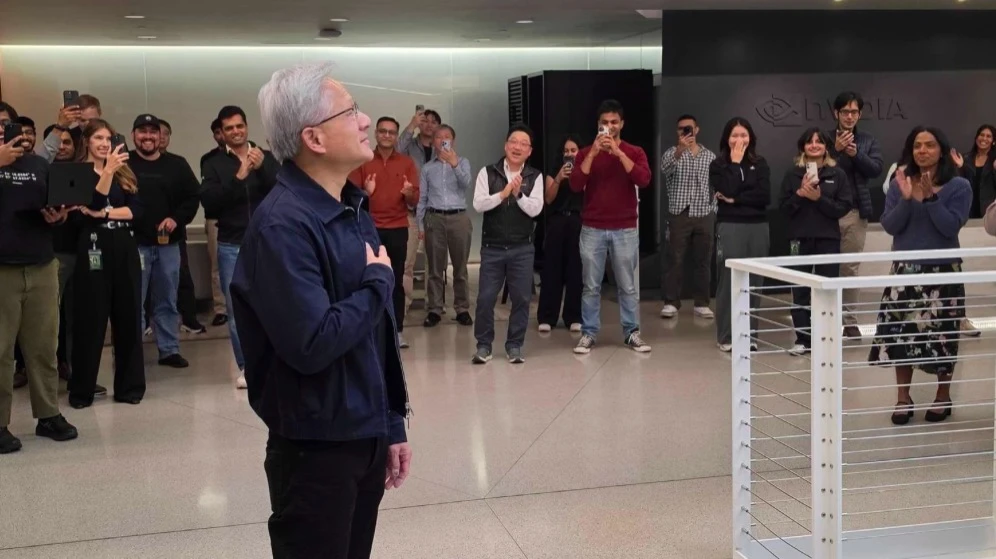
Jensen Huang's return as CEO of Nvidia has restored optimism to the market, but the company itself may now face new risks. Photo: Nvidia / X
Jensen Huang’s return as CEO of Nvidia brought relief to the market, and the company’s stock rose more than 30% on November 23 alone. However, the problems at Nvidia that came to light during the scandal have not gone away, and the company may face new risks in the future, investment analysts warn.
Increased attention from Congress
Nvidia's decision to reinstate Jensen Huang as the company's CEO has drawn criticism from influential members of the U.S. Congress, including both Republicans and Democrats, according to Axios . The involvement of the U.S. administration—and President Donald Trump personally—in this reinstatement gives Democrats grounds for new investigations.
For example, Democrat Elizabeth Warren, who may chair the Senate Banking Committee in January, stated that Nvidia’s board of directors remains obligated to provide Congress with an explanation regarding its compliance with U.S. export restrictions, and the Trump administration must disclose which U.S. officials, and at what level, were involved in discussions regarding Huang’s reinstatement.
Trump himself has already stated that he spoke with members of Nvidia’s board of directors, urging them to reinstate Huang. In addition, Vice President J.D. Vance has also gotten involved. According to Politico, he has been working closely with Trump on this matter.
With all this in mind, investors should keep an eye on Congress’s actions in January, when Democrats will take control of both chambers, according to analysts at the Chinese investment banking group Huatai Securities in a note dated November 24.
Huang’s reinstatement does not mean that the authorities’ close scrutiny of Nvidia will end, they write. On December 1, Huang is scheduled to answer questions from members of three House committees during closed-door hearings, including questions about Nvidia’s security protocols to protect against foreign espionage. On December 3, the Senate Banking Committee will hold public hearings on Nvidia.
"We will be monitoring whether these hearings lead to new legislative proposals on export restrictions," according to a note from Huatai Securities.
"Mitigating" Key-Man Risk
Analysts at William Blair, for their part, noted in a November 23 report that the events of recent weeks—in which Nvidia has been at the center—have revealed deeper issues with the company’s corporate governance, leadership succession, and regulatory oversight. They cite the company’s dependence on a key figure—Jensen Huang—as one of the main risks.
William Blair stated that it intends to assess “what impact the second phase of Huang’s leadership at Nvidia will have on the company’s long-term prospects” and maintained its “Market Perform” rating for Nvidia, which implies a stock return roughly in line with the market. Analysts note that Nvidia has already established a National Security and Export Control Committee composed of independent directors and is searching for a chief compliance officer responsible for ensuring compliance with regulatory requirements and legislation.
The search for Huang’s successor proved fruitless: there were few candidates “capable and willing” to take on the role, and the leading contender, Arm CEO René Haas, has extended his contract with the company; furthermore, as of December 1, he will become vice chairman of SoftBank’s board of directors, adds Yegor Tolmachev, senior analyst at Freedom Capital Markets.
"The risk of an 'irreplaceable loss of talent' due to Huang's departure was becoming increasingly real. And while the board of directors acknowledged that Huang had violated the code of conduct <…>, it reinstated him anyway. This weakens the board’s position and reinforces the argument that Huang dominated it,” he said.
The U.S. Administration's Policy and Huang's Relationship with the White House
Analysts at Wedbush generally view Huang’s return as a positive development for both Nvidia and the AI sector as a whole. In their view, he will continue to play a key role in shaping the company’s direction, and Nvidia will retain access to the highest echelons of the U.S. government, allowing it to continue advocating for its own interests and those of the entire AI industry.
However, the main question now is to what extent U.S. government policy might change in the wake of this incident. In other words, analysts at Wedbush are trying to assess how relations between the White House and Nvidia will develop under Huang’s new leadership.
In particular, there is the question of whether U.S. authorities will scale back their investigation into Nvidia’s accounting practices (which, according to Reuters, is being conducted by the SEC). The outcome of this investigation could affect the company’s investments in AI, as well as its relationships with suppliers and customers. Much will depend on what exactly the regulator focuses on: closed investment schemes and/or possible illegal shipments of graphics processing units, according to a Wedbush note.
Another question is whether the U.S. is willing to ease restrictions on semiconductor exports to Asian countries, as well as requirements limiting Chinese companies' access to data centers outside of China.
Concerns about these issues have weighed on investor sentiment over the past week.
Analysts at Wedbush believe that Huang's return could lead to a more lenient resolution of both issues. They also believe that if concerns surrounding the AI industry subside, component manufacturers—such as memory and hard drive makers—could benefit. According to their assessment, these segments have so far lagged behind due to concerns about the prospects for AI.
This article was AI-translated and verified by a human editor