Investment funds are pulling out of French stocks. JPMorgan and UBS have suggested doing the opposite
The CAC 40 index is on track to post its widest-ever lag behind the European market, even though its constituent companies are not heavily dependent on France and are forecast to continue increasing their profits

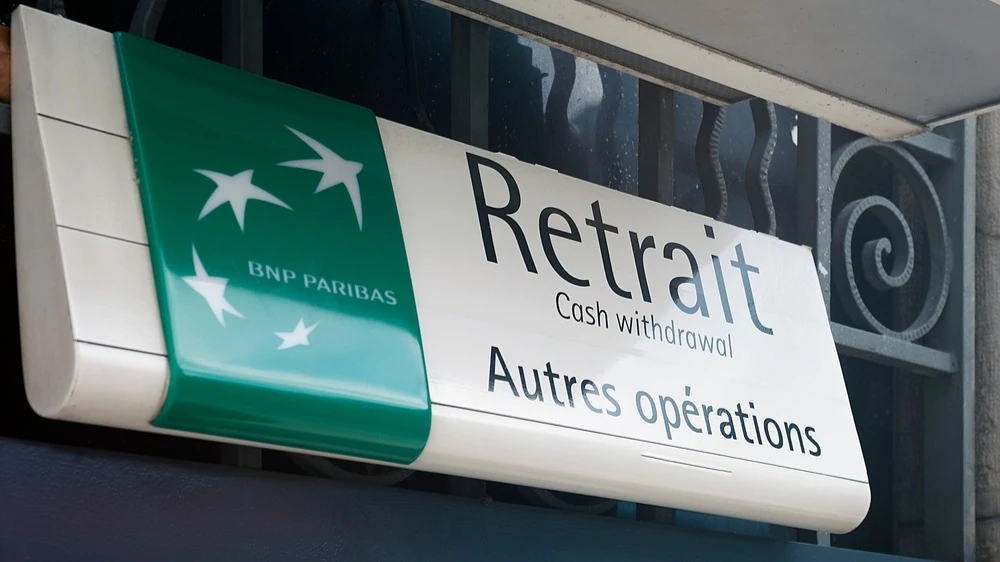
Shares of the French bank BNP Paribas have fallen along with the rest of the country's banking sector, and UBS recommends buying them / Photo: Vytautas Kielaitis/Shutterstock.com
While funds are offloading French stocks, strategists at JPMorgan, the largest U.S. bank, believe that their weakness could present an opportunity for investors, and analysts at UBS, the largest Swiss bank, are advising investors to buy shares of French banks.
France's main index, the CAC 40, is on track to post a record underperformance relative to the pan-European Stoxx 600—trailing by 12 percentage points in total return— even though companies based in France account for less than 20% of the index’s constituent firms, according to Bloomberg. Their earnings are forecast to continue growing, but stock prices have fallen so sharply relative to those earnings that this hasn’t happened even during the eurozone debt crisis in the early 2010s. According to JPMorgan strategists, this divergence “suggests that the market is punishing the index despite steady earnings.”
However, UBS considers the series of political events in France—which is set to continue through the summer—to be “dragging on too long” and notes that this is scaring off investors. “We maintain a positive outlook for the next 12 months, but we recognize that market valuations may only rise toward the end of this period,” the bank’s analysts acknowledge.
UBS remained bullish on European stocks overall in September as well: the bank’s strategists recommended buying them and noted, among other things, that companies in the region generate about half of their revenue outside Europe. The U.S.-based Citigroup maintains a neutral stance on France but believes that most of the bad news from France has already been priced in.
Who got hit the hardest?
The October sell-off hit companies operating primarily in France and retail chains particularly hard. Shares of retailer Carrefour fell 14%, while bank stocks lost as much as 13%. Many analysts consider this decline excessive, according to Bloomberg.
JPMorgan estimates that the country’s banks have invested 18% of their assets in French government debt. Therefore, a decline in the price of government bonds will have almost no impact on their capital, according to Bloomberg. Analysts at UBS add that BNP Paribas’s stock price already reflects “too much bad news”: the bank holds few French government bonds (Obligations Assimilables du Trésor, OAT), and its reliance on the retail business is minimal.
What Investors Fear
Investors are being deterred by the sharp rise in France’s borrowing costs, political uncertainty, and social unrest in the country, according to Bloomberg. On October 22, the yield spread between 10-year OATs and German Bunds reached 175 basis points—its highest level since 2011. According to Bloomberg, Moody’s may downgrade France’s credit rating as early as today.
Sentiment is extremely negative: in a Bank of America survey, the net percentage of fund managers who plan to hold fewer French stocks in their portfolios over the next 12 months than the benchmark index calls for reached a record 56%. Even algorithm-driven funds have made the CAC 40 their top bet on a decline in the region, according to Barclays.
Jitanya Kandari, Deputy Chief Investment Officer at Morgan Stanley Investment Management, believes that France’s budget problems did not come as a surprise to the market. “There is no hidden fiscal time bomb about to go off,” Bloomberg quotes her as saying. According to Kandari, the example of France clearly shows that a country’s economic problems do not necessarily affect the performance of individual companies.
This article was AI-translated and verified by a human editor