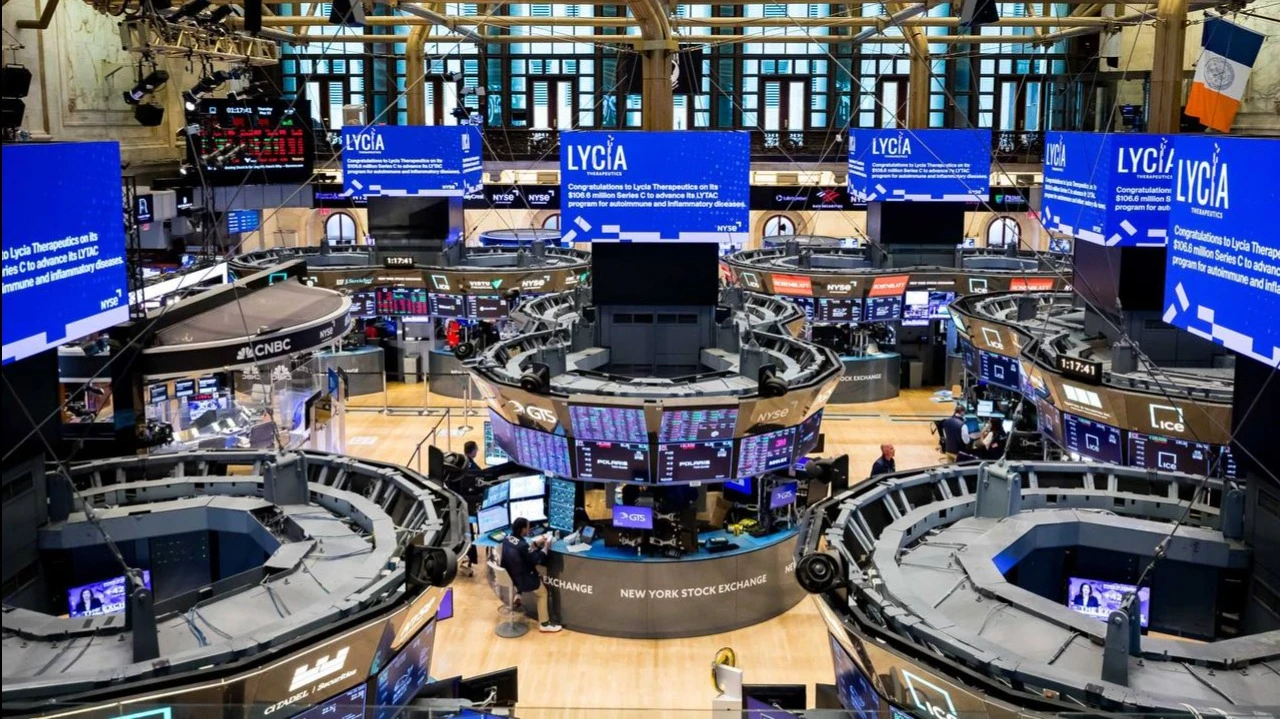
Morning in New York: Capital Rotation Faces the PMI Test

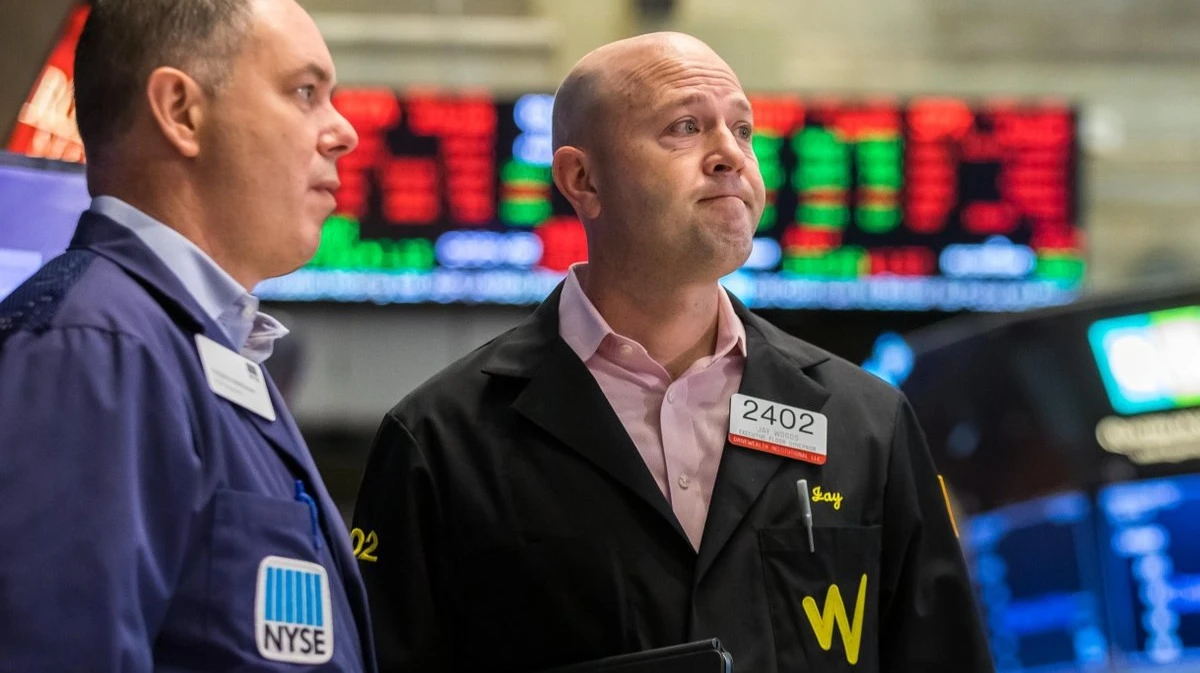
Preliminary PMI figures for October will show how sustained the shift of capital from tech stocks to safe-haven assets is / Photo: X / NYSE
Daily Review and Forecast of U.S. Stock Market Events by Mikhail Denislamov, Deputy Director of Capital Markets Research at Freedom Broker
We expect
Preliminary data on the Purchasing Managers’ Index (PMI) from S&P Global for October will test the sustainability of the shift in capital flows from technology stocks to defensive and interest-rate-sensitive assets. Market consensus forecasts suggest the manufacturing PMI will decline from September’s 55.9 points to 55.5, while the services PMI is expected to fall from 58.8 to 57.9 points. Both indicators remain near four-year highs. If the figures exceed forecasts—especially amid accelerating growth in input prices—this could spur a recovery in Treasury bond yields. Weaker readings, coupled with easing price pressures, would support bond prices. At the same time, a sharp deterioration in business activity would increase risks for cyclical companies. The key factor will be the combination of economic growth rates and inflation signals.
Also this Friday, the University of Michigan will release its final Consumer Sentiment Index for October. A macroeconomist at Freedom Broker agrees with the consensus forecast, which expects the preliminary reading of 46.3 points to be confirmed. Consumer inflation expectations will also draw attention.
According to media reports, OpenAI is close to raising up to $30 billion at a valuation of $1.25 trillion, whereas a valuation of $1.4 trillion had previously been discussed. Potential lead investors include Coatue and funds from the UAE. The $150 billion reduction in the company’s estimated valuation coincided with a sell-off in the AI sector. In this situation, attention is increasingly focused on the cost of raising capital for large-scale infrastructure projects. The terms of the deal are not yet final. Further negotiations will serve as an important indicator of investor interest in AI.

Market divergence has reached a historically rare level. The RSI indicator for the SPY ETF has fallen to 45.2 points, while the median value across 11 sector ETFs stands at 63.1 points. This gap of nearly 18 points corresponds to the bottom 1% of the five-year distribution. At the same time, eight sectors have maintained positive momentum over the past five trading sessions. Such a significant divergence confirms the thesis of a large-scale rotation of capital away from the largest technology companies toward most other market sectors.
Before the start of regular trading, American Express (AXP), SLB (SLB), Infosys (INFY), Booz Allen Hamilton (BAH), and Autoliv (ALV) will report their quarterly results.
U.S. index futures are trading near zero. We assess the risk balance for the upcoming session as neutral, with heightened volatility following the release of PMI data. Buyers are supported by 10-year Treasury yields remaining below 5% and strong earnings reports outside the tech sector. Upside momentum is limited by concerns over AI infrastructure funding, high oil prices, and the risk of monetary policy tightening.
What to Watch for in the Pre-Market
— Shares of Crown Castle (CCI) and American Tower (AMT) are up about 6% and 4%, respectively, while shares of AT&T (T), Verizon (VZ), and T-Mobile US (TMUS) are down by 2–3%. According to Bloomberg, SpaceX (SPCX) is in talks with Crown Castle regarding access to at least 80,000 sites for communications infrastructure in the U.S. That’s about half of the country’s active towers. For the site owners, this represents a potential partnership with a major tenant, while for the operators, it poses the risk of a fourth nationwide competitor entering the market.
— Western Digital (WDC) fell about 3% after the market closed, despite a 55% year-over-year increase in quarterly revenue to $4.38 billion, and adjusted EPS of $4.64, compared to the market consensus of $4.11. The company’s revenue guidance for the next quarter, in the range of $5–5.2 billion, significantly exceeded market expectations. WDC’s stock price came under pressure due to a broad sell-off in shares of companies related to AI infrastructure.
— Bloom Energy (BE) fell by about 5% following the release of strong earnings results, though it soon recouped most of its losses. The company’s revenue for the quarter rose 138% year-over-year to $1.24 billion, and adjusted EPS reached $0.94, beating the consensus estimate of $0.69. Guidance for full-year revenue has been raised to $4.4–4.6 billion. Meanwhile, a negative free cash flow of $181 million heightened concerns about the capital intensity of further growth.
— Deckers Outdoor (DECK) shares are down more than 7% following a downward revision to its fiscal 2027 revenue forecast from $5.86–5.91 billion to $5.7–5.725 billion. Sales growth for the HOKA brand is now expected to be in the high single digits, while UGG is expected to be in the low single digits. The company’s second-quarter revenue was $1.48 billion, compared to a consensus estimate of $1.51 billion. The full-year EPS forecast has been raised from $7.35–7.5 to $7.8–7.95, partly due to tariff compensation. Management noted pressure from promotional expenses in the U.S. and logistics restructuring in Europe.
The Market on the Eve of...
Trading on October 22 on U.S. stock exchanges ended with mixed results. The S&P 500 fell 1.21%, the Nasdaq-100 dropped 2.9%, the Dow Jones closed flat, and the Russell 2000 rose 0.11%. The equally weighted S&P 500 (RSP) remained in positive territory and outperformed the “classic” benchmark by approximately 190 basis points, marking the widest spread for a single day since July 2024. Two-thirds of the index’s components traded in positive territory, with 60.4% of S&P 500 companies trading above their 50-day moving averages. Over the past 20 sessions, the RSP has outperformed the SPY by 4.2 percentage points, while the QQQ has underperformed by 4.5 percentage points. Behind the sell-off in tech lies a strong rally in many other market segments.
Suppliers of non-cyclical consumer goods led the gains (+3.31%). The IT sector (−3.29%) and telecommunications (−1.42%) were the worst performers.
Meta Platforms (META: −7%) beat revenue expectations and provided a strong outlook for the fourth quarter, but investors were concerned by the scale of capital expenditures and the need for additional funding. Tesla (TSLA: −3.1%) reported free cash flow above consensus, but lowered its capital expenditure forecast for 2026. Lam Research’s (LRCX: −11.8%) guidance for the current quarter fell short of the market’s optimistic expectations. The sell-off affected shares of Coherent (COHR: −12.5%), Lumentum (LITE: −11.5%), and Ciena (CIEN: −10.7%).
The number of initial claims for unemployment benefits fell to 194,000, the lowest level since mid-July (consensus: 200,000), while the number of continuing claims rose to 1,738,000 (consensus: 1,720,000). The Leading Economic Index remained unchanged in September (consensus: −0.1%) after falling 0.1% in August.
The yield on 10-year bonds fell by 15 basis points to 4.97%, the yield on 30-year bonds fell by 12 basis points to 5.29%, and the yield on 2-year bonds fell by 15 basis points to 4.66%. The rise in bond prices was driven by capital outflows from the AI segment, the closing of short positions by trend-following funds, and demand for safe-haven assets amid rising yields on French government debt. The market estimates the probability of a rate hike at the Fed’s October 27–28 meeting at approximately 13%; most analysts expect this move to occur in December.
Procter & Gamble (PG: +5.6%) reported 4% organic sales growth in the first quarter of fiscal 2027, compared with an average market consensus of 2.4%. Lockheed Martin (LMT: +7%) raised its guidance for 2026 and reported a record order backlog of $292 billion. Ryder System (R: +10.5%) raised its full-year EPS guidance. Falling Treasury yields supported Lennar (LEN: +8.7%) shares. Moderna (MRNA: −17.6%) fell after releasing data from Phase 3 trials of its melanoma vaccine. The positive results failed to meet inflated expectations following a nearly 530% rise in the stock price since the start of the year.
This article was AI-translated and verified by a human editor