Investors seeking safe havens have driven the valuations of "toothpaste" stocks above those of the tech sector

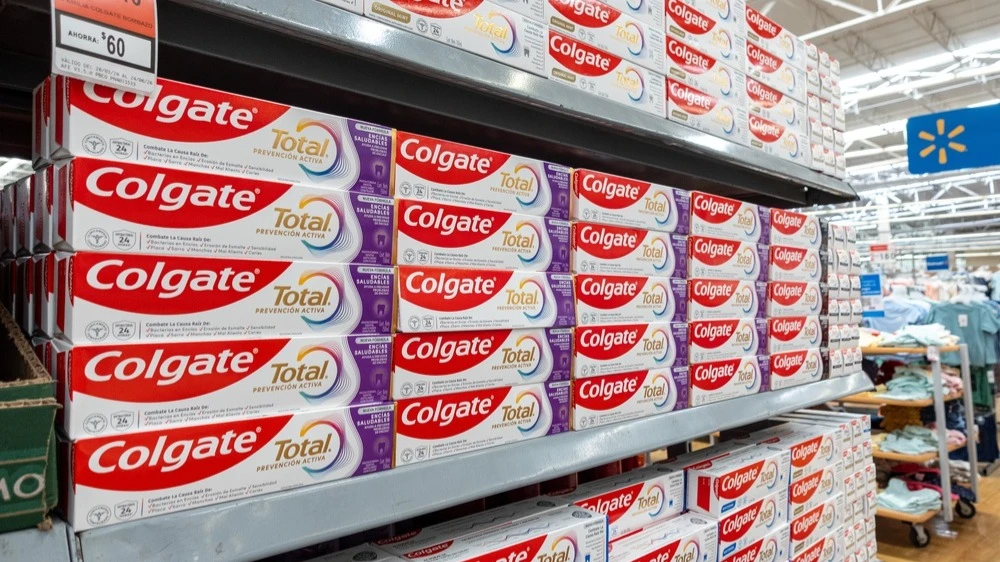
Consumer staples have overtaken the IT sector as the most expensive sector in the S&P 500 based on the price-to-earnings ratio / Photo: JRomero04 / Shutterstock
The technology sector is no longer the most expensive in the S&P 500 based on the price-to-earnings ratio. It held this status for a long time because investors expected faster earnings growth and higher margins from technology companies, but now the consumer staples sector—which includes retailers Costco Wholesale and Walmart, as well as household and personal care products manufacturer Colgate-Palmolive—has taken the lead, MarketWatch noted. “The search for a safe haven in the market has made ‘toothpaste stocks’ more expensive than tech stocks,” the publication writes.
Details
According to FactSet, on the morning of Tuesday, October 20, the forward P/E ratio for the S&P 500 consumer staples sector stood at 23.8, compared with 19.8 for the technology sector, MarketWatch reports. This ratio—the relationship between a stock’s price and a company’s expected earnings—shows how much investors are willing to pay for every dollar of its future earnings. Typically, shares of consumer staples manufacturers and retailers trade at more modest multiples relative to technology stocks: investors value them for their stable but moderate growth and reliable dividends, the publication explains.
Shares of consumer staples companies in the S&P 500—which sell food and essential goods that people need regardless of economic conditions—have already jumped nearly 9% in October, according to FactSet. By comparison, the broad S&P 500 index gained less than 1% over the same period, while its information technology sector fell 3.8%, MarketWatch notes.
What's going on?
“Stocks of consumer staples companies have become a relatively more attractive hedging instrument amid market concentration in tech stocks and uncertainty surrounding artificial intelligence,” said Mark Hackett, chief market strategist at Nationwide’s investment management division. However, due to last month’s rally, certain leaders—and perhaps the sector as a whole—are no longer cheap, though they haven’t become universally overvalued, he added. If a stock or sector is called “overvalued,” it may mean that it is expensive relative to its projected earnings, explains MarketWatch.
Nevertheless, some companies in the consumer staples sector do appear to be overvalued. Walmart and Costco shares are trading at about 42 and 48 times expected earnings, respectively, even though their projected earnings growth is significantly lower than that of the technology sector, the publication noted.
It makes perfect sense for investors to pay more for the “reliable earnings” of companies in the consumer staples sector, but the prices of some growth leaders may already reflect an unusually optimistic outlook for the sector, Hackett said. “If inflation starts to squeeze margins, consumers switch to cheaper goods, or earnings disappoint investors, stocks with high price-to-earnings ratios could prove vulnerable,” he explained.
When investors start to get nervous about the prospects for the AI rally or the state of the economy, they often shift their funds into defensive sectors, such as consumer staples. But if too many investors flock to this sector as well, there’s almost nowhere left to take shelter, notes MarketWatch.
Context
During economic downturns, the consumer staples sector has often outperformed the broader stock market. According to Dow Jones Market Data, during the four previous recessions (defined as two consecutive quarters of declining real GDP)—in July 1990, March 2001, December 2007, and February 2020—this sector gained an average of 2.2% in the first six months after the start of the downturn and nearly 6% one year later, the publication reports. The U.S. economy is not currently in a recession, but the labor market and consumer spending are showing clear signs of cooling due to persistent inflation and high borrowing costs. However, according to Hackett, the current outperformance of consumer staples stocks is more akin to a defensive rotation than to evidence of a sharp improvement in consumer demand.
“Investors were reducing risk in their portfolios amid concerns about capital expenditures on artificial intelligence, the cost of financing, valuations, and the sustainability of earnings expectations in the technology sector. This benefited companies with steady demand, the ability to raise prices without losing customers, and relatively stable cash flow,” he said.
Amid a downturn in the technology sector, Goldman Sachs strategists advised investors last week to consider 23 defensive stocks from the consumer and healthcare sectors. The list includes hygiene products manufacturer Colgate-Palmolive, household chemicals manufacturer Church & Dwight, and Hershey shares.

This article was AI-translated and verified by a human editor