JPMorgan recommended buying Kazatomprom shares

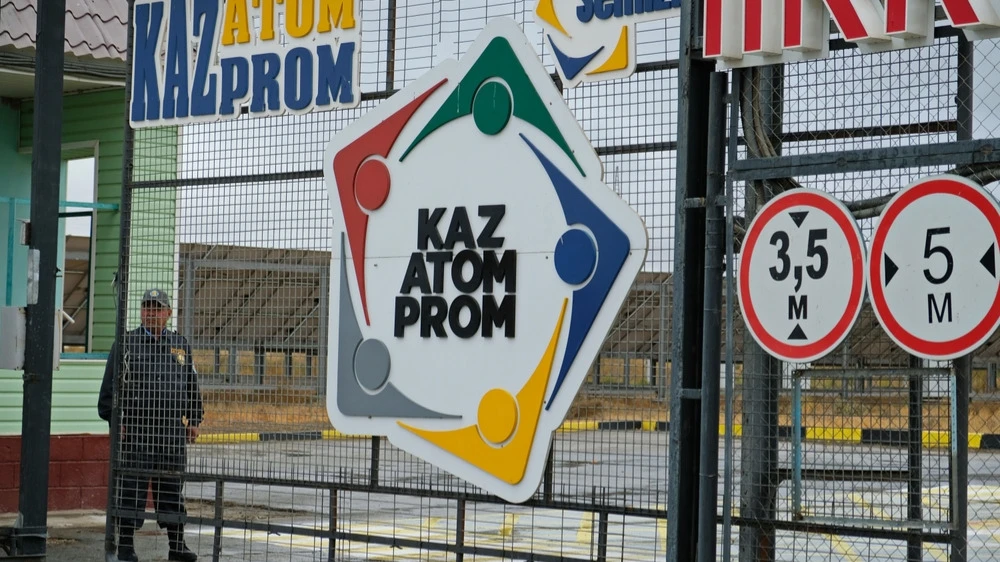
Analysts see a "clear path to profit growth" for the company / Photo: Vladimir Tretyakov / Shutterstock.com
JPMorgan Investment Bank has revised its valuation of Kazatomprom shares. Although the target price rose only slightly—from $90 to $91—the recommendation was changed from “hold” (neutral) to “buy” (overweight).
“The results for the first half of 2026 were generally in line with our forecasts, and, as we had initially anticipated, Kazatomprom has revised its financial forecast for fiscal year 2026 — downward for revenue and upward for costs and capital expenditures — amid the strengthening of the tenge against the U.S. dollar, as well as rising sulfuric acid prices and other cost increases. “Now that this uncertainty has been resolved and consensus forecasts have been adjusted, we see a clear path to future earnings growth, as we expect the negative impact of costs to begin to ease next year,” write J.P. Morgan analysts. In their view, the situation in the commodities market also remains favorable, as spot prices for uranium have not yet caught up with rising futures prices amid sustained demand. Experts believe the company will be able to capitalize on these positive trends thanks to its reserves, low costs, strong balance sheet, and effective supply management.
At the same time, the report notes that Kazatomprom’s operations could be indirectly affected should political tensions between the U.S. and Russia escalate, as the company has three joint ventures with
the Russian state-owned nuclear corporation Rosatom (through Uranium One), which account for more than 30% of Kazatomprom’s share of uranium production.
Analysts at J.P. Morgan believe that, due to a challenging start to the year, the company’s enterprise value (EV) to operating profit (EBITDA) ratio will rise to 10.5 by the end of 2026, but will then decline over the next two years to 6.3 and 5.3, respectively—figures more typical for the company in recent years.
J.P. Morgan last revised its rating on Kazatomprom on May 8. At that time, the bank downgraded its recommendation on the stock from “buy” to “hold,” and since then, the stock has been on the “watch list for potential negative catalysts” pending the release of its first-half 2026 results.
Context
In late July, Kazatomprom published its half-year financial report, in which it reported a 1% year-over-year decline in group-wide sales compared to the same period in 2025, down to 7,590 metric tons. According to the consolidated IFRS financial statements for the first half of the year, revenue rose 9% year-over-year to 717.83 billion tenge ($1.5 billion), while net income fell by 9% to 240.43 billion tenge ($494.9 million). .
The price of Kazatomprom’s depositary receipts on the London Stock Exchange, which had reached $93.8 at the end of April, had fallen to $62.5 by the end of July. Then the upward trend resumed, and by the close of trading on September 3, 2026, the shares were trading at $75.7, having gained 4.99% in a single day. On the KASE on September 3, 2026, Kazatomprom shares rose to 33,899.9 tenge, up 1.2% from the previous close.
In late August, Bank of America raised its price target for Kazatomprom’s depositary receipts from $93 to $94, as its analysts have been anticipating since spring that uranium prices would rise to $130 per pound. Uranium prices had been trading in the $85–87 range since early March, but began to rise in late July and had reached $89.5 per pound by the time of publication.
Morgan Stanley analysts are less optimistic and, in a report released around the same time, kept their price target at $83—but maintained their “buy” rating.
Finally, UBS analysts decided to lower their price target from $88 to $86, but they also did not withdraw their “buy” recommendation.
NAC "Kazatomprom" accounts for approximately 40% of global uranium production; all of its deposits are located in Kazakhstan. The company is state-controlled, and 25% of its shares are publicly traded.
This article was AI-translated and verified by a human editor