June was TSMC's best month ever in terms of revenue. Is the AI rally continuing?
The leading chipmaker for Apple and Nvidia exceeded analysts' revenue forecasts

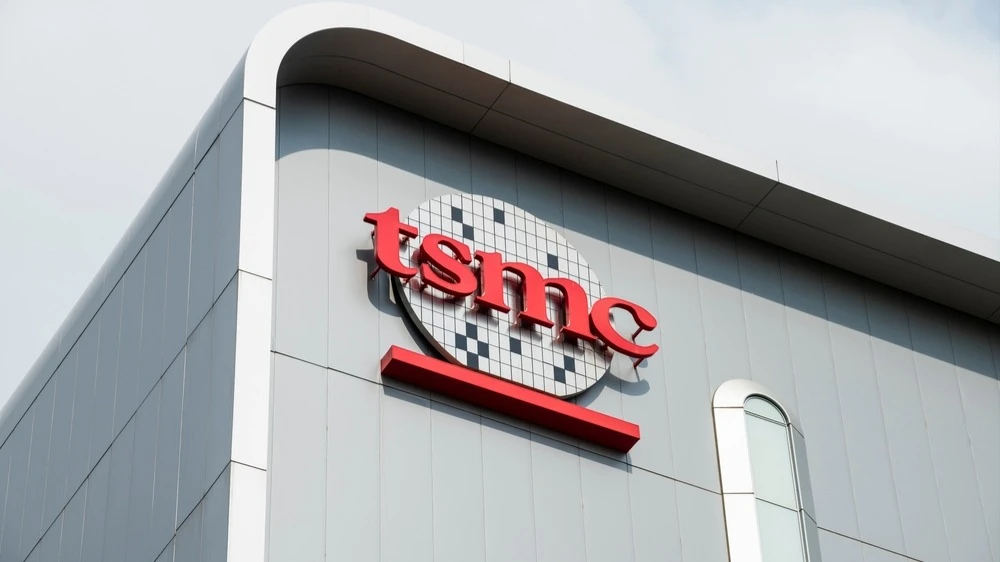
TSMC's revenue for the period from April to June reached a record 1.27 trillion New Taiwan dollars / Photo: Jack Hong/Shutterstock
Taiwan-based TSMC, the world's largest contract chipmaker, reported on Monday that its revenue in the second quarter rose 36% compared with the same period last year. During the reporting period, revenue reached a record high amid strong demand for artificial intelligence technologies, according to Reuters.
Details
TSMC's revenue for the period from April to June totaled 1.27 trillion New Taiwan dollars. According to calculations by Bloomberg and Reuters, this figure amounted to $39.6 billion in U.S. dollar terms. This result was slightly higher than the LSEG consensus forecast—based on estimates from 20 analysts—which stood at 1.264 trillion New Taiwan dollars ($39.4 billion), Reuters reports.
The strongest results were recorded in June: this month, sales at a key chip supplier for Nvidia and Apple jumped 68% year-over-year to a record 442.68 billion New Taiwan dollars ($13.8 billion). This month marked the most successful in terms of revenue in TSMC’s entire 39-year history, according to MarketWatch.
These preliminary figures come ahead of the release of TSMC’s full financial report, which is scheduled for Thursday, July 16. The company’s management is expected to update its forecasts and plans for the current quarter and the remainder of the year at that time. The second-quarter results were originally scheduled to be released last Friday, but the announcement had to be postponed due to the approaching Typhoon Bavi, which caused financial markets in Taipei to close that day, Reuters reports.
Why Is This Important?
TSMC’s steady growth underscores its central role in the production of the vast majority of cutting-edge chips for AI data centers and smartphones, according to Bloomberg. The results of TSMC—Asia’s most valuable company, with a market capitalization of about $2 trillion—clearly reflect the scale of global AI infrastructure development. Major U.S. corporations, including Meta, Microsoft, and Amazon, plan to invest a total of more than $725 billion in this sector this year alone. Nevertheless, concerns are growing in the market: investors fear that the inflated valuations of tech stocks will not be justified, and that the bloated AI capacity of major tech companies will eventually go unused.
Against this backdrop, markets are also keeping an eye on TSMC’s own capital expenditures: they serve as a barometer of demand for critical components—from Nvidia’s AI accelerators to Tesla’s automotive processors and server platforms, Bloomberg adds. TSMC had previously stated that it would allocate a sum close to a record $56 billion for capital expenditures this year.
Industry leaders themselves consider investors’ fears about AI to be unfounded, Bloomberg reports. TSMC CEO Xi Wei warned back in June that the company would not be able to fully meet demand from U.S. customers for many years—even with the launch of new, competing factories in the U.S.
What Analysts Are Saying
“TSMC’s June sales confirm our view: strong demand for AI and server processors easily offsets the downturn in the smartphone and PC markets,” notes Bloomberg Intelligence analyst Charles Shum. “This is a strong case for raising prices [on TSMC’s products], which should push the company’s gross margin forecast above the consensus of 67.1% and bring it closer to the upper end of its guidance (67.5%).” June revenue of 442.68 billion New Taiwan dollars “brings second-quarter sales to the very top end of the forecast range—$39 billion to $40.2 billion,” he added.
Now, according to Shum, capital expenditures will be the main topic of TSMC’s July 16 conference call following the release of its quarterly report. The market wants to understand whether the capacity shortage will force TSMC to increase its own spending on building new factories and chip packaging. Investors are also interested in how TSMC’s management plans to respond to challenges from competitors—in particular, Intel’s efforts to promote its own chip packaging technology and Elon Musk’s Terafab project to develop chips for Tesla, the analyst noted.
Goldman Sachs strategists led by Evelyn Yu have called demand for artificial intelligence and high-performance computing a “multi-year structural growth driver” for TSMC, according to MarketWatch.
In a recent note, JPMorgan analysts noted that they had raised their earnings per share (EPS) forecasts for TSMC for the current year and the next two years by 5%, 10%, and 16%, respectively. According to them, this was done “to reflect higher short-term profitability, clarity regarding AI demand, aggressive capacity expansion, and strong pricing through 2028.”
“We expect TSMC’s structural growth drivers to remain very strong, as supply for leading-edge processes (N4, N3, and N2) will remain limited through 2027 or early 2028,” — concluded JPMorgan analysts (as quoted by MarketWatch).
What about the stocks?
Despite TSMC’s strong preliminary results, the release of the data coincided with a widespread sell-off in the Asian tech sector. Investors took profits across the region, pushing down the share prices of other semiconductor giants, such as South Korea’s SK Hynix. Nevertheless, TSMC shares rose 1% in Taiwan trading on July 13 and are up nearly 60% year-to-date. TSMC’s American Depositary Receipts (ADRs) on the New York Stock Exchange traded largely unchanged during Monday’s pre-market session.
According to MarketScreener data, of the 34 analysts who cover TSMC’s Asian shares, 33 recommend buying them (with “Buy” and “Outperform” ratings), and only one advises holding. There are no “sell” recommendations for TSMC shares.
This article was AI-translated and verified by a human editor