Kazakhstan to Launch a Unified QR Code for Payments: What This Will Mean for Banks and Shoppers

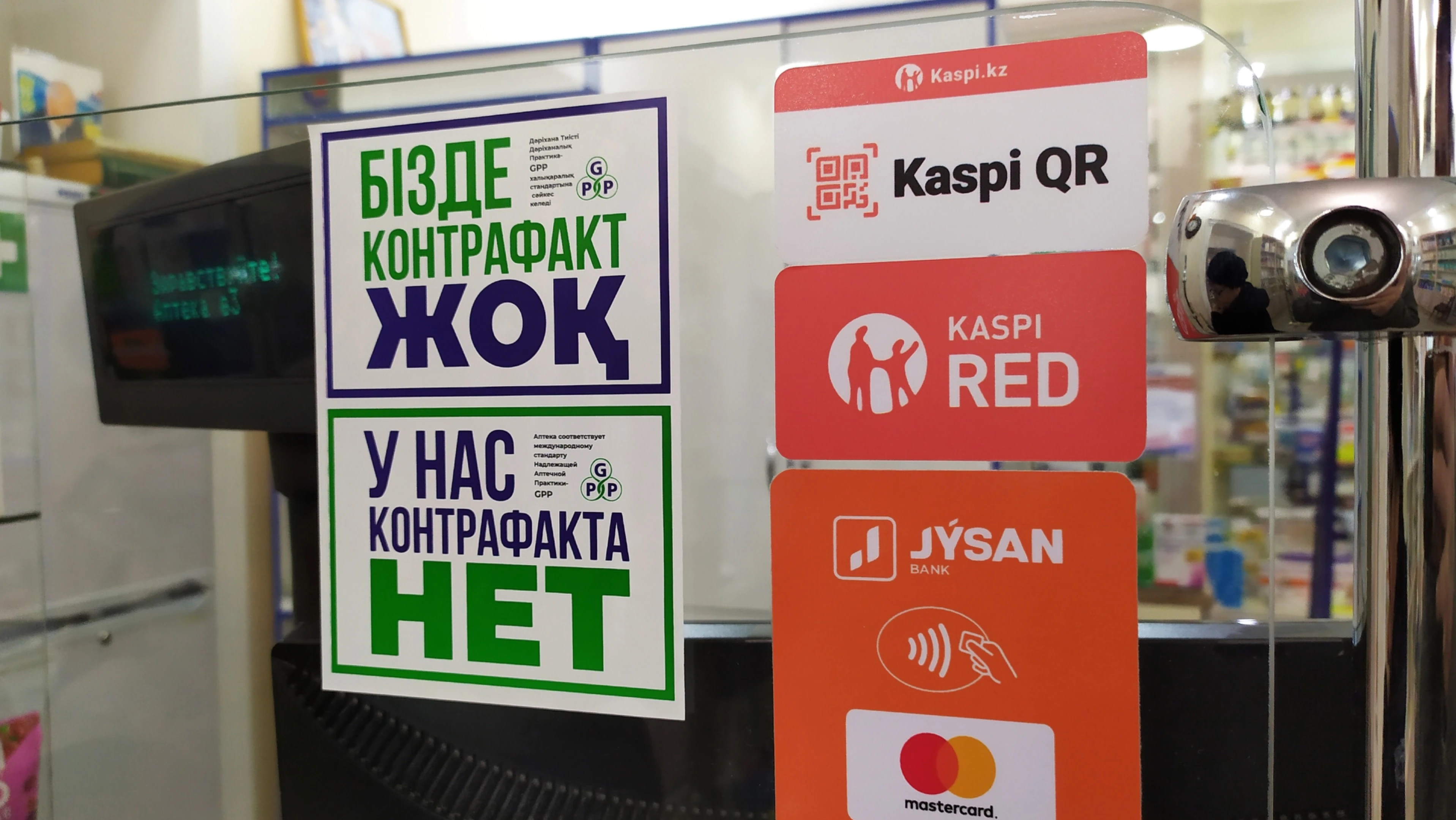
Kaspi.kz holds a dominant position in Kazakhstan's cashless payments market / Photo: Nurlan Tastanbekov / Shutterstock.com
On July 20, a unified QR code payment system will become fully operational in Kazakhstan, a representative of the country’s National Bank told Oninvest. It is already possible to make payments this way in the country, but apps from different banks do not always support payments through each other’s payment infrastructures. Once the system is launched, it will no longer matter to shoppers which bank’s app they use. Businesses, meanwhile, will not need to spend money on multiple terminals. Banks have resisted the introduction of this system for several years.
The Long Road
The Kazakhstani authorities began publicly discussing the need to standardize banks' QR code payment solutions four years ago.
In September 2022, Asel Zhanasova, Deputy Minister of Trade and Integration, explained that her ministry had been working on standardizing QR codes as early as 2021: “It doesn’t matter which bank you’re a customer of—Halyk Bank, Kaspi, or Jusan. If there’s a QR code, any bank should be able to read it. There’s no need to have 10 POS terminals, and businesses shouldn’t have to pay for each one—let there be a single terminal that can work with all market participants. That’s what we should be striving for,” she said.
By that time, the Kazakhstani market already had a player that held a de facto dominant position—the fintech company Kaspi.kz. According to its own data, its share of the non-cash payments market stood at 69% in 2020 . According to the National Bank, in January–May 2026, Kaspi.kz accounted for 83% of the number of non-cash transactions in Kazakhstan and nearly 75% of their total value.

Kaspi’s QR code system has become the de facto standard: if you want to shop conveniently, get a card from this fintech company; if you want to receive cashless payments, accept them into your Kaspi.kz account. It can also be used by customers of nine other banks operating in Kazakhstan, including Bank RBK, Alatau City Bank, Forte Bank, and Alipay+ users. However, six of the ten largest banks in terms of customer deposits are not on this list.
In April 2024, Timur Suleimenov, head of the National Bank of Kazakhstan, stated in an interview with Bloomberg that two banks may have created an oligopoly in the market, controlling 80–90% of payments. He did not specify which financial institutions he was referring to. According to Bloomberg, he was referring to Kaspi.kz, with a market share of about 70%, and Halyk Bank, with a share of approximately 8%. (Suleimenov later had to clarify that the current situation “is neither good nor bad,” and that both banks are cooperating with the regulator on the issue of introducing a unified QR code.)
At that time, in April, he announced the project’s timeline: a full-scale launch in the first half of 2025, involving all of the country’s banks.
For the system to become operational, all retail banks are required to connect to Kazakhstan’s centralized Interbank Mobile Payment System. But progress was slow. It was not until late September 2025 that the National Bank managed to launch the unified QR code system—though only three players were connected: Bank CenterCredit (BCK), Home Credit Bank, and Freedom Bank.
In January 2026, a law was passed requiring banks to join a centralized mobile payment system and businesses to ensure that such payments could be made. The text was published on January 17; the regulation takes effect in six months, that is, in July.
As early as March 2026, the country’s president, Kassym-Jomart Tokayev, commented on the project’s delay: “The requirement for all banks to connect to the infrastructure is enshrined in law, but the largest banks are dragging their feet on complying with this requirement.”
Why did the major banks delay connecting to the system? They didn’t want to risk losing their customer base; Suleimenov himself warned in an interview with Bloomberg that the launch of a unified QR code payment system “could lead to a decline in revenue for some banks.”
In April of this year, he attributed the delay in connecting the banks to technical difficulties:
Banks have made significant investments in their own technologies—separately within their own ecosystems—to develop their own security tools for these QR payments. And now they need to “integrate” these systems so that they can be accessed by each other in a secure manner, within a secure environment.

By that point, three more banks—Halyk Bank, Altyn Bank, and Bank RBK—had joined the unified QR code system. However, Kaspi.kz was not among them, and therefore this had no significant impact on the retail sector.
In May, the National Bank of Kazakhstan issued a resolution setting a clear deadline for banks to connect to the mobile payment system—by July 19. On June 18, Timur Suleimenov, speaking before the Senate, personally promised that the system would go live on that very date.
A source at one of Kazakhstan's retail banks told Oninvest that the National Bank will begin connecting the remaining banks to the system starting July 7.
“Banks must complete the integration by July 19,” Asan Akhmetzhan, head of the press service at the National Bank of Kazakhstan, told Oninvest. “We expect everything to be up and running as early as July 20.”
Another change will also take effect on July 19: Previously, it was sufficient for merchants to accept either cards or electronic payments. As a result, some small retail outlets limited themselves to accepting transfers within the Kaspi.kz system. Now, it will be mandatory for all merchants to accept both electronic payments and cards, so every merchant will have to acquire a terminal and select an acquiring bank.
What will the launch of the system lead to?
Once the unified QR code payment system is launched, a government-backed platform will emerge that will effectively end the de facto monopoly held by the leading player in the cashless payments market—customers of other banks will be able to pay using QR codes at Kaspi.kz terminals, and terminals at other banks will be able to accept payments from this fintech company’s app.
This will gradually begin to “erode” Kaspi.kz’s market share in Kazakhstan’s cashless payments market, according to an analyst at an investment bank with operations in the country: “Kaspi.kz currently has a very strong position precisely because it has a closed ecosystem: it’s convenient for merchants to accept payments, it’s convenient for buyers to pay, and both parties effectively remain within a single app.”
In his view, a significant market realignment will likely take at least a year, and the main impact may not be felt until 2027, when users get used to the fact that QR code payments are no longer limited to the Kaspi.kz system alone. For other banks, the new system represents an important window of opportunity, he says. It will intensify competition among them for small and medium-sized businesses, for transaction fees, for cashback, and for the frequency of use of banking apps.
InfoLine founder Ivan Fedyakov believes that the launch of the system will not deal “a very painful blow to Kaspi.kz as a whole”: the company is also developing an acquiring system and recently introduced a palm-based payment system. “A flexible consumer lending system and a powerful marketplace will allow Kaspi.kz to maintain its position, even though it will have to concede ground in QR payments,” Fedyakov believes.
Global experience shows that, in most cases, the market share of a single dominant player declines after the introduction of a unified system. The exception is oligopolies, where no single participant has clear dominance: for example, in China, Alipay and WeChat Pay controlled 94% of the mobile payments market until 2019; after new players—UnionPay and PayPal—entered the market, that share remained unchanged.
One example of tangible market changes is the story of the mobile money and payment service M-Pesa. In Tanzania in 2013, it held a 53% market share. In 2014, competitors Tigo Pesa, Airtel Money, and Ezy Pesa agreed to make transfers between wallets interoperable, and by 2015, M-Pesa’s market share had fallen to 37%. In early 2016, M-Pesa had to connect to the shared system, which allowed it to recover its market share to 43% by 2018. However, the market share of its closest competitor, Tigo Pesa, grew from 18% to 36% during those years.
Saken Nigmatchev, Director of Communications at the BCC, sees the key benefit of launching a unified QR code as an increase in the number of transactions through the onboarding of new participants. “This is much more important to us right now than market share distribution. Following the pilot launch, we at BCC have seen a simplification of interbank payments, and Kazakhstani entrepreneurs have gained the opportunity to reduce their operational costs for acquiring,” he told Oninvest. “The main competition lies in offering favorable acquiring terms and fast service.”
Representatives of Kaspi.kz did not respond to Oninvest's inquiry.
This article was AI-translated and verified by a human editor