"Kazatomprom" Regained Profitability in the Third Quarter, but Is Seeing Its Profits Decline

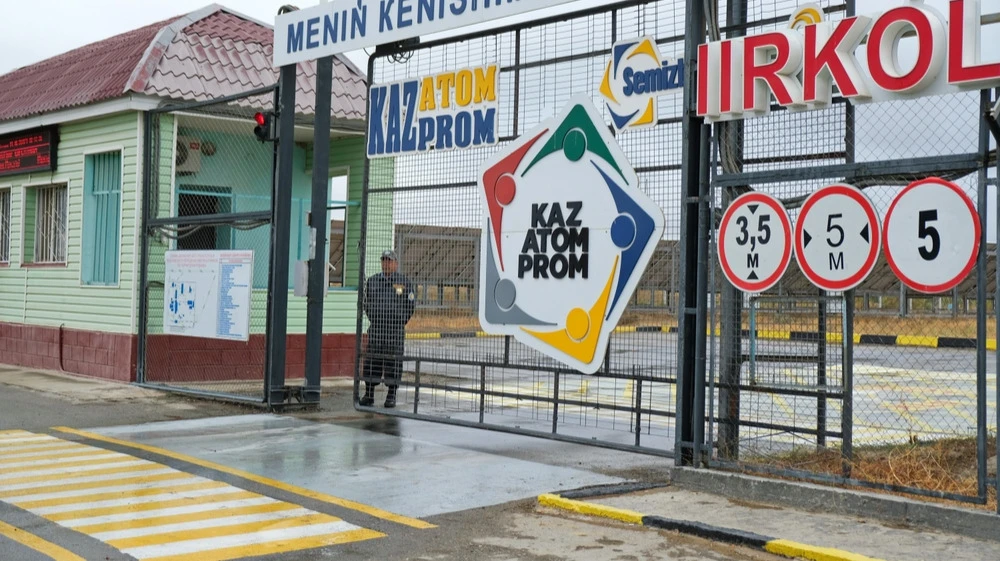
The financial statements were published without an independent auditor's opinion: the company needs time to assess the impact of the top executives' detention. Photo: Vladimir Tretyakov/Shutterstock.com
According to its consolidated financial statements, Kazatomprom increased its revenue by 25.9% year-over-year in the third quarter of 2026, to 670.7 billion tenge ($1.46 billion at the National Bank’s exchange rate as of November 27, 2026). The group’s net income, however, decreased by 11.6% to 238.3 billion tenge ($519.3 million), while profit attributable to Kazatomprom’s shareholders fell by 24% to 163.6 billion tenge ($356.6 million).
For the first nine months, the group’s revenue rose 16.4% to 1.39 trillion tenge ($3.03 billion), net income fell by 10.2% to 478.7 billion tenge ($1.04 billion), and the company’s shareholders’ earnings fell by 23.3% to 320.2 billion tenge ($697.8 million).
Prices and Costs
Compared to the second quarter, the group’s revenue rose by 19% to 670.7 billion tenge ($1.46 billion), and net income increased by 5.2% to 238.3 billion tenge ($519.3 million). Gross margin increased from 42.6% to 49.4%, returning exactly to the level of the same period last year.
The company previously reported that the group’s average uranium sales price in the third quarter rose by 15.1% compared to the previous quarter, to $81.5 per pound, while Kazatomprom’s , the price rose by 19.3% to $79.45. The gap between selling prices and spot prices narrowed.
However, the cost of sales for the first nine months rose by 19.2% compared to last year. More than half of this increase was due to higher tax expenses: since the beginning of the year, Kazakhstan has implemented differentiated mineral extraction tax (MET) rates based on production volumes and the market value of uranium. Tax expenses as a component of cost of sales nearly doubled, reaching 140.3 billion tenge ($305.8
million).
Net income was also affected by the strengthening of the tenge: in the third quarter, the group incurred a foreign exchange loss of 29.5 billion tenge ($64.3 million), compared with a gain of 11.2 billion tenge ($24.4 million) a year earlier.
Operating cash flow, which declined by 55% year-over-year in the first half of the year to 239.6 billion tenge ($522.2 million), increased by 37.2% year-over-year in the third quarter, to 162.9 billion tenge ($354.9 million). However, the company was unable to fully make up for the losses—by the end of the first nine months, the shortfall had narrowed only to 38.2%, and cash flow totaled 402.4 billion tenge ($877.1 million).
Partners and Customers
The share of the group’s profit attributable to minority shareholders of its subsidiaries rose from 21.7% to 33.1% over the nine-month period. This is due to changes in the financial results of individual enterprises: in particular, profits at the Budenovskoye joint venture, in which Kazatomprom holds a 51% stake, nearly tripled. Consequently, revenues increased for both Kazatomprom itself and its partner—the Stepnogorsk Mining and Chemical Combine, which is part of the Uranium One group controlled by Rosatom.
There have been some changes in the geographic breakdown of sales. The share of U.S. customers in the group’s revenue rose from 10.4% to 11.5%, while that of Russian customers rose from 7.7% to 16.9%. China remains the group’s largest market, accounting for 44.6% of its revenue.
Forecasts and Quotes
"Kazatomprom" has maintained its production and financial forecasts for 2026. In November, Bank of America lowered its price target for the company’s depositary receipts from $94 to $93, adjusting its financial model to account for the strengthening of the tenge, but maintained its “buy” rating. In September, JP Morgan issued a similar recommendation with a target price of $91, anticipating that the negative impact of rising costs would ease next year.
The financial statements were published without an independent auditor’s review report: the company states that both it and the auditor need additional time to assess the potential financial implications of the investigations involving management. At this time, management has no information that would require adjustments to the financial statements.
Context
This week, amid arrests related to a corruption case, the powers of two members of Kazatomprom’s board—Kuanysh Omarbekov and Vladislav Baiguzhin—were terminated. On November 27, the company also announced the voluntary resignation of Darkhan Sagindykov, Chief Director of Procurement and General Affairs.
In a statement to shareholders and partners published on November 27, the Board of Directors of Kazatomprom assured that recent events have not affected the company’s operations or its development strategy. The management board maintains a quorum, and the responsibilities of the departed executives have been reassigned. The board of directors also intends to address any potential deficiencies in the internal control system if they are identified during an investigation or an independent audit.
Analysts at Freedom Finance Global viewed the decline in share prices amid management changes as a potential opportunity to buy shares at a discount. Kazatomprom’s depositary receipts, which fell 9.9% on the London Stock Exchange (LSE) on November 25, rose 8% the following day, closing at $53.8.
As of 4:00 p.m. Astana time on November 27, 26, Kazatomprom shares on the KASE had risen 6% from the previous day’s close to 26,494 tenge ($57.74). On the LSE, the depositary receipts rose 4.65% to $56.3.
This article was AI-translated and verified by a human editor