Luxury Goods Are Losing Customers: What Are They No Longer Willing to Pay For?

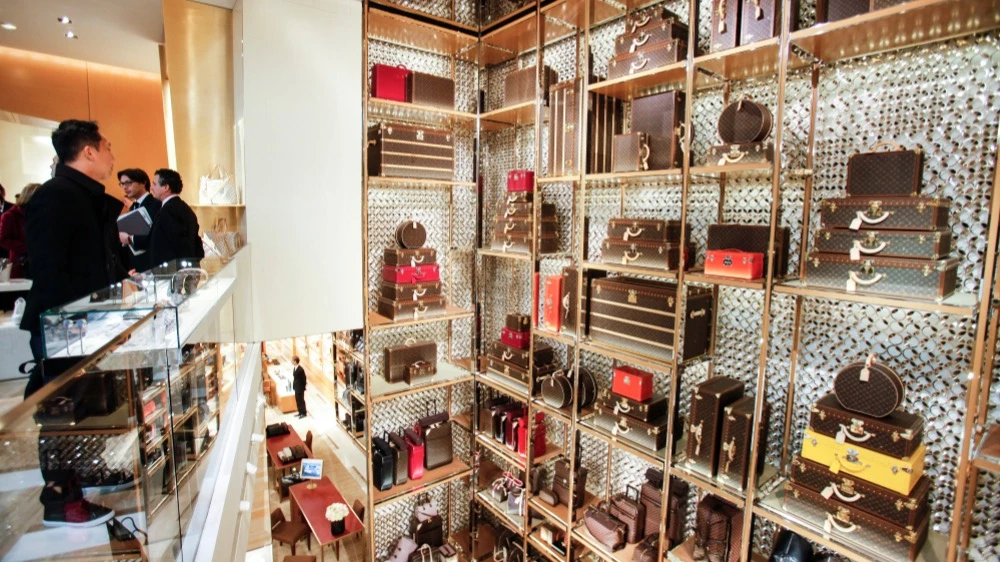
LVMH, which owns 75 brands, including Louis Vuitton and Christian Dior, fell out of the top 10 most valuable companies in Europe following the market close on September 15. Photo: Alessia Pierdomenico / Shutterstock.com
LVMH—the epitome of luxury—fell out of the top ten most valuable companies in Europe by market capitalization on September 15. For the first time in nine years, a company outside the luxury sector—L’Oréal— took the top spot at the close of trading on the Paris Stock Exchange. The situation with LVMH shows that Europe’s main growth driver—the luxury sector—is facing serious challenges, Bloomberg reported. But LVMH isn’t the only one facing problems. Consumers are reevaluating their attitude toward luxury and seeking alternatives in the mid-price segment. Which companies in the sector will come out on top? Alena Nikolaeva, an independent portfolio manager specializing in global markets, provides her insights.
Redistribution of Power
One of the main challenges facing the luxury sector today is changing consumer habits. And behind that lies a more serious question: How sustainable has the growth model proven to be—one in which price increases have gradually replaced the expansion of the customer base? It is now facing a double test—increasingly selective consumers and the conflict in the Middle East, which is disrupting tourist flows and delaying the recovery of demand.
In the wake of the pandemic, the expectation of rising prices in the luxury sector seemed justified. Accumulated savings and deferred consumption supported sales, and affluent buyers appeared to be price-insensitive. According to Bloomberg Intelligence, prices in the luxury sector rose by an average of 25% between 2022 and 2024. But even after that, further increases followed.
The truth is that raising prices and strengthening a brand are not at all the same thing. Price allows you to monetize an existing desire to own something, but it does not automatically create that desire. As long as sales volumes remain steady, this approach supports profitability.
But then that expensive first purchase becomes unaffordable for a new customer, and a regular customer begins to question the need for subsequent purchases. As a result, the company seems to earn more from a single sale, but at the same time, it narrows its base for future growth.
For investors, this is an important signal: not only is current demand declining, but so is the flow of customers who, over time, could become the brand’s most valuable customers.
At this point, it’s not so much a matter of luxury brands losing their pricing power as it is of that power being redistributed. Some brands retain the ability to raise prices thanks to an artificially maintained scarcity and enduring appeal. Others, however, have to explain all over again to customers why they’re paying more.
And I see this as a long-term shift. The recovery of the economy and tourist traffic may bring back some of the sales, but it won’t, on its own, bridge the gap between price and product appeal. Brands that have lost customers because of this gap will have to work to regain their trust.
Meanwhile, consumers have become more selective. The changes are particularly noticeable in China. Problems in the real estate market and uncertainty in the labor market are compounded by consumer saturation: existing customers already own status symbols, while the younger generation spreads its spending across a much wider range of interests. Travel, health, sports, and experiences are actively competing with fashion not only for money but also for attention.
Noteworthy is an August Bloomberg Intelligence survey of 1,000 Chinese consumers with a monthly household income of more than 30,000 yuan (approximately $4,500). The share of those willing to spend more on luxury goods in the expectation that the item will appreciate in value over time rose from 14% in May to 30%. Conversely, the share of those willing to increase spending simply because they are earning more has fallen from 27% to 12%.
This is an important change that suggests that a willingness to spend more is increasingly linked to expectations that the value of the item itself will rise, rather than to one's own income.
In other words, consumers are increasingly viewing luxury goods as an investment and are considering not only the opportunity to purchase an item, but also its potential depreciation after the purchase.
This explains the focus on practicality, versatility, and future resale value. Bags and jewelry do not automatically become a sound investment. However, a well-developed secondary market provides customers with a benchmark for value that cannot be determined by a brand’s decision alone.
You can’t attribute everything happening in the luxury market to a widespread shift toward secondhand goods and resale. In China, for example, there is growing interest in daigou—middlemen who take advantage of price differences between countries to buy authentic goods abroad and deliver them to local customers. In other words, people still want a bag from the same brand, but they’re not willing to pay the price charged at a Chinese boutique. For the company, such a purchase may help maintain overseas sales, but its own store in China loses revenue.
In addition, the brand is gradually losing control over pricing and sales structure. After all, it is the intermediary who builds the relationship with the customer: the customer may turn to the intermediary the next time as well.
The Middle East is stepping up the pressure
The structural challenges facing brands are currently being exacerbated by the ongoing conflict in the Middle East. This conflict has the potential to temporarily undermine the performance of even very strong brands.
The region is important for the luxury sector not only as a place where affluent customers live, but also as the largest hub for international air travel. A disrupted trip through Dubai or Doha could mean a lost sale both at the local airport and at a European boutique. Based on first-quarter results, LVMH estimated that the conflict had a negative impact on the group’s organic sales growth of at least 1%, specifically noting weak tourist demand in Europe. In other words, part of the losses was reflected in European sales, which depend on tourist demand.
For luxury brands, the impact of the conflict on profits may be even more significant than on sales. After all, rent, personnel costs, and the operating expenses of flagship stores do not decrease in tandem with foot traffic. And shifting demand requires the reallocation of inventory across markets. For seasonal merchandise, delays are particularly problematic: missing the sales window increases the likelihood of discounts. The main logistical risk here is a deterioration in inventory turnover and cash flow.
Any further escalation or prolongation of the conflict could affect consumers far beyond the region. Higher energy costs drive up the price of air travel and everyday expenses, while rising inflation prevents central banks from cutting interest rates. As a result, the middle class has less disposable income to spend on luxuries. The wealthiest clients feel the pressure differently: if high inflation and interest rates cause markets to fall, the decline in the value of their portfolios may also force them to postpone major purchases.
Who Will Win, and Who Will Lose?
I believe the most vulnerable brands are those that have raised their prices but have not strengthened their position in the eyes of consumers. They are too expensive for everyday, practical purchases, yet not exclusive enough to justify buying regardless of price.
LVMH’s stock price has fallen by nearly 37% since the start of the year. But in this case, it’s important to understand that “cheaper” doesn’t mean “cheap.” The company is trading at a price-to-earnings (P/E) ratio of 16.45 based on projected annual earnings, which is nearly 29% below the 10-year average. The discount is significant, but the historical valuation was established during years of rapid growth in Chinese demand and the ability to raise prices more freely. A return to that level is not guaranteed.
Furthermore, the earnings forecast has yet to materialize. If the recovery in demand is delayed and the company’s expenses remain at current levels, downward revisions to forecasts could quickly offset the apparent attractiveness of the stock.
The scale of its business and its cash flow enable LVMH to weather a period of weakness while continuing to invest in its brands. However, the fashion and leather goods segment accounts for about 71% of the luxury giant’s operating profit: a recovery in Louis Vuitton and Dior’s performance will be key to a revaluation of the stock. Success in other segments may not be enough.
In this case, I would primarily monitor the company’s sales figures (excluding discounts) and inventory turnover, as well as new customer acquisition and free cash flow. Growth in these areas would indicate that LVMH has been able to restore demand without compromising profitability. Even moderate sales growth can significantly bolster profits, since a significant portion of the costs associated with stores, production, and employees are already factored in.
Risks remain for the Gucci brand and its owner, Kering. In China, the brand’s perception has not yet improved significantly. The company’s investment potential remains, but realizing it will largely depend on whether the new team can rekindle consumer interest in the brand and restore its appeal. A recovery in the luxury market alone may not be enough to achieve this.
In the more affordable segment, Coach (owned by Tapestry) and Ralph Lauren come out on top: these are well-known brands with a long history, and it’s easier for shoppers to understand what they’re paying for. But it remains to be seen whether they will be able to continue turning this influx of customers into profit growth while maintaining full-price sales.
Richemont appears more stable thanks to its Cartier and Van Cleef & Arpels brands: jewelry with distinctive designs that remain timeless is better suited to the demand for more thoughtful, high-end purchases.
Hermès' growth potential is driven by limited supply and steady demand for its key models.
However, it is important to understand that a company’s strong business position does not guarantee high stock returns. Demand for jewelry continues to depend on tourist traffic and the state of private wealth, and Hermès’s already high valuation may limit the stock’s growth potential.
My basic conclusion is that the luxury sector has not lost its potential, but it is no longer a sure bet on the growth of global prosperity.
In the next cycle, the companies that will succeed are those capable of winning back customers and waiting for demand to recover without sacrificing price discipline and margins. For investors, the key is to distinguish between a temporary decline in sales and a situation where customers have genuinely reconsidered their attitude toward the brand or even turned away from it. In the former case, a recovery in demand could reveal the business’s true value. In the latter, an improvement in external conditions alone will not be enough.
This article was AI-translated and verified by a human editor