Meetings of the U.S. Federal Reserve, the Bank of England, and the Bank of Japan: What Investors Can Expect This Week

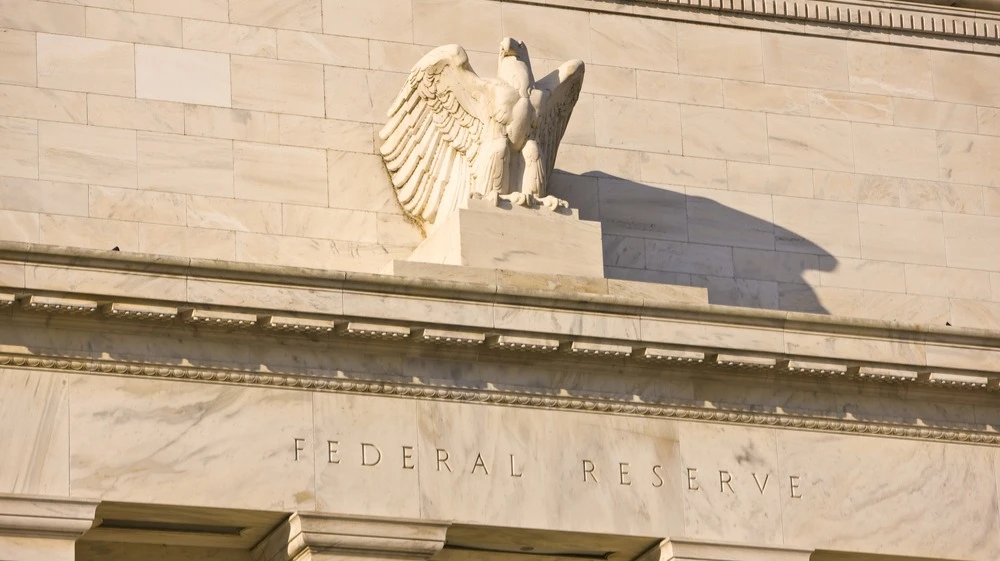
The release of U.S. inflation data has bolstered Wall Street's confidence that the Fed will resume raising interest rates this week / Photo: Rob Crandall/Shutterstock.com
The main event of the week will be the U.S. Federal Reserve meeting. Following strong labor market data and steady inflation, an interest rate hike appears to be a realistic scenario, according to The Wall Street Journal.
The market will also be watching to see how Fed Chair Kevin Warsh explains the regulator’s decision. His previous statements triggered a sell-off in U.S. Treasury bonds: investors interpreted them as an attempt by the Fed to shirk responsibility for inflation, according to Yahoo Finance.
The Bank of England and the Bank of Japan will also announce their interest rate decisions this week, with the Japanese central bank expected to raise rates again. In China, a set of economic activity statistics will be released, which will show how sustainable the export-led growth model remains amid weak domestic demand.
On Monday, September 14, G20 energy ministers will gather in Houston to discuss energy security and supply chains for critical minerals, according to Barron's. The meeting will last until Wednesday, September 16.
On Tuesday, September 15, China will release a monthly set of economic data, including retail sales, investment, and industrial production. Economists generally expect the current trend to continue: strong exports coupled with weak domestic demand. Investors will also be watching for political signals ahead of the meeting between U.S. President Donald Trump and Chinese President Xi Jinping, scheduled for the end of the month, the WSJ reports.
Trip.com will present its quarterly results.
On Wednesday, September 16, the Fed will announce its interest rate decision. Following stronger-than-expected labor market data and annual inflation remaining at 3.4%, the central bank may raise rates by 25 basis points. According to LSEG data as of September 11, the market priced in an 82.5% probability of such a move, up from about 68% before the inflation data was released, the WSJ notes.

Following the release of inflation data, Goldman Sachs also revised its forecast and now expects a 25-basis-point rate hike. The bank attributed the change in its stance primarily to financial market expectations rather than a revision of its economic outlook, according to Reuters.
U.S. retail sales data for August will be released ahead of the Fed's decision. According to Barron's, the consensus forecast calls for a 0.8% increase from the previous month, following a 0.6% decline in July.
Industrial production data for July will be released in the eurozone.
Lennar will report its results for the third quarter of fiscal year 2026.
On Thursday, September 17, the Bank of England will announce its interest rate decision . Economists at ING consider the current rate to be restrictive, which, in their view, reduces the likelihood of a rate hike in 2026, according to the WSJ. According to LSEG, the probability of a 25-basis-point hike at the upcoming meeting is estimated at 32%, while the market is fully pricing in three hikes by March 2027.
The final inflation figures for August will be released in the eurozone.
In the U.S., the Census Bureau will release data on housing starts. Economists, on average, forecast 1.32 million new homes started in August, on a seasonally adjusted basis—nearly 100,000 more than in July.
On Friday, September 18, the Bank of Japan will announce its monetary policy decision. The regulator is generally expected to raise its key short-term interest rate from 1% to 1.25%. Following hawkish comments from central bank officials and strong economic data, the market increasingly views a rate hike as virtually a foregone conclusion, so the main focus will be on signals from the Bank of Japan regarding its future actions, according to the WSJ.
U.S. Treasury Secretary Scott Bessent had previously supported raising interest rates in Japan as a way to strengthen the yen—a strong yen helps keep U.S. Treasury yields in check, Barron’s notes. This summer, the Japanese currency fell to a four-decade low against the dollar, but then partially recovered, in part following intervention by the United States.
This article was AI-translated and verified by a human editor