Morgan Stanley is betting that gold will exceed $5,000 in 2027. It expects an 11% increase.
NovaGold Chairman Thomas Kaplan called a tenfold increase in the price of gold “not just likely, but inevitable”

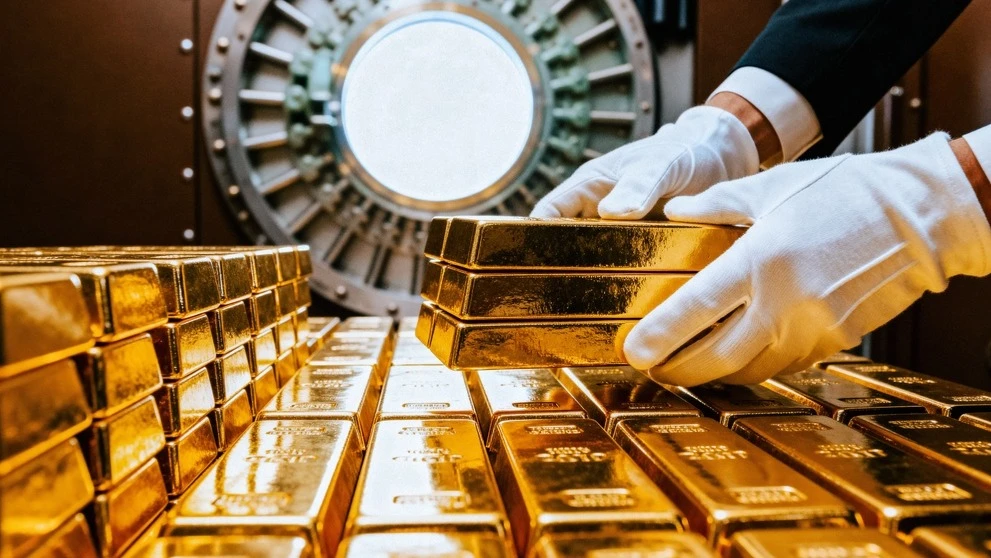
Gold has reached Morgan Stanley's price target several months ahead of schedule / Photo: GraphinityLab/Shutterstock.com
Morgan Stanley has suggested that gold could rise above $5,000 per troy ounce in 2027, according to Seeking Alpha. The metal reached the bank’s previous fourth-quarter target of $4,450 sooner than expected, analyst Amy Gauer noted. However, she warned that optimists should be prepared for sharp price fluctuations on the way to that round number.
By the close of trading on August 20, the spot price of gold had exceeded $4,516. Accordingly, Morgan Stanley’s price target implies an 11% increase in the price of the precious metal. On Friday, August 21, gold rose 1.5% and traded at $4,583. Since the beginning of the year, spot gold has risen 6%, according to Bloomberg data.
Three Points of Support
According to Morgan Stanley, demand for exchange-traded funds (ETFs) that invest in gold is rising: market participants are increasingly less likely to expect a Fed rate hike, and the dollar is weakening. The price of gold is also being supported by central bank purchases of the metal and growing demand for it.
Morgan Stanley expects the Fed to keep interest rates unchanged through the end of 2026. However, new U.S. inflation data and statements from Fed officials could increase volatility in the gold market, according to Seeking Alpha.
Bonds aren't a problem
The bank noted that gold remains stable despite high yields on long-term Treasuries. Morgan Stanley sees the metal’s performance as a sign of growing investor anxiety over high government debt and potential currency devaluation.
ByteTree founder Charlie Morris believes that the U.S. Treasury Department’s actions are propping up gold prices. According to him, the rally in gold began back in late July following a statement by U.S. Treasury Secretary Bessent that the department was prepared to spend billions of dollars to prop up the yen: “Of course, he can print new dollars to do that, but gold is watching his every move.” On August 19, the Treasury doubled the pace of its purchases of long-term government bonds in an effort to keep borrowing costs in check. “The government is buying back bonds? As far as I’m concerned, this looks like quantitative easing, and gold likes that, too,” Morris told Kitco.
According to his calculations, the value of global gold reserves is currently only 37% of the market capitalization of the U.S. stock market. During the Great Depression and in the 1970s, that ratio reached 160%—roughly four times higher than the current level. This gap leaves gold with significant potential to appreciate relative to U.S. stocks, according to the founder of ByteTree.
"A 10-fold increase in the price of gold is inevitable"
Thomas Kaplan, chairman of the gold mining company NovaGold, expects a much sharper rise in gold prices than Morgan Stanley does. “A tenfold increase in the price of gold is not just likely to me—it’s inevitable,” he told Kitco on August 20. Kaplan said he can “easily” envision a price of $30,000, $40,000, or $50,000 per ounce.
Kaplan has long been investing in precious metals, Kitco notes: after selling Leor Energy in 2007, he made gold and silver the cornerstone of his family’s wealth. In addition to NovaGold, the investor heads Electrum Group and Sunshine Silver Mining and Refining, which went public on the New York Stock Exchange in June.
Unlike Morgan Stanley’s forecast for 2027, Kaplan’s assessment is not tied to a specific timeframe. He acknowledged that he does not know where prices will go in the near future. “It doesn’t matter, because in the long term—and even in the medium term—gold and silver will rise several times in price compared to current levels,” Kaplan said.
This article was AI-translated and verified by a human editor