Morning in New York: Diplomacy Will Set the Tone for Trading

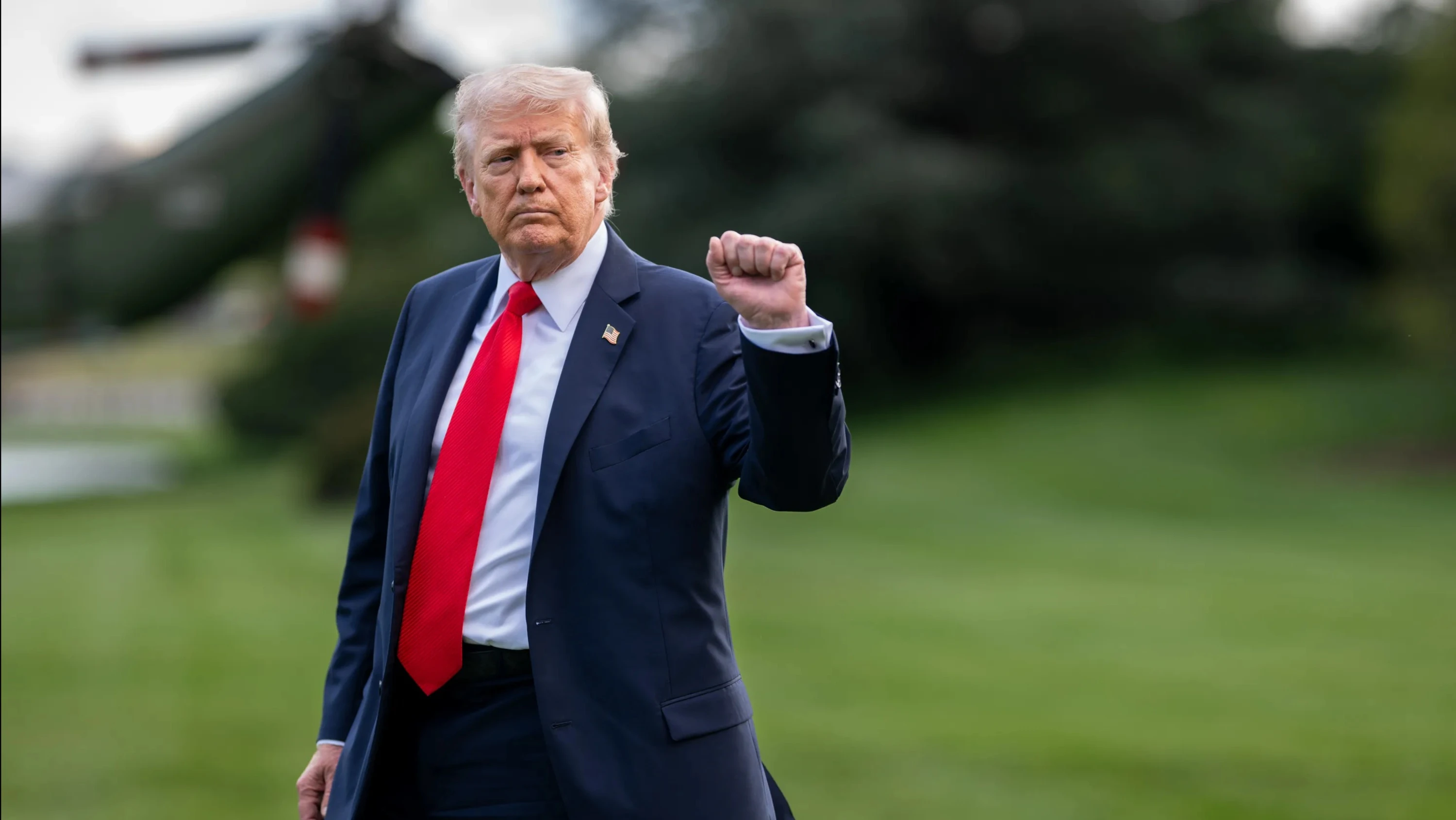
The main topic of the upcoming session will be the development of diplomatic tracks between the U.S. and Iran and between the U.S. and China / Photo: The White House
A daily review and forecast of events in the U.S. stock market by Mikhail Denislamov, Deputy Director of Capital Markets Research at Freedom Broker.
We expect
The main topic of the upcoming session will be the development of diplomatic tracks regarding U.S.-Iran and U.S.-China relations. According to White House Special Envoy Steve Whitcoff, the U.S. and Iranian delegations held lengthy negotiations through intermediaries. Donald Trump himself has stated the need to make a “big decision” regarding Iran. Chinese President Xi Jinping arrives in Washington today, and his meeting with the U.S. president is scheduled for September 24. The two sides will discuss issues of bilateral trade, access to cutting-edge technologies—including AI—as well as the situations in Iran and Taiwan.
Saudi Arabia has begun restoring shipments via the East-West Pipeline. Hopes for progress in negotiations between Washington and Tehran have bolstered expectations that energy shipments across the region as a whole will return to normal. Against this backdrop, the price of Brent crude fell below $100 yesterday, and WTI is also becoming cheaper. Positive news about progress in U.S.-Iranian dialogue will contribute to a further correction in hydrocarbon prices, while reports of growing disagreements between the parties will bring back the geopolitical risk premium.
Preliminary data on the S&P Global Purchasing Managers' Index (PMI) for September will be released this Wednesday. The consensus forecast calls for a decline in the manufacturing PMI from 53.9 points to 53.7, and in the services PMI from 56.5 points to 55.8. Both sectors, however, remain in expansionary territory. Following recent comments from the Fed regarding persistent inflationary pressures, the price components of the index will be of particular interest to the investment community. Also today, the EIA will release its weekly report on crude oil inventories (consensus: −0.6 million barrels, compared to −0.64 million a week earlier). Given the heightened sensitivity of oil prices to foreign policy news, this data could further exacerbate intraday volatility in the energy market.
Market participants will look to the remarks by Federal Reserve Board member Michael Barr, followed by a question-and-answer session, for guidance on the future direction of Fed interest rates. Yesterday, Thomas Barkin, president of the Federal Reserve Bank of Richmond, noted the economy’s resilience amid persistent risks of accelerating inflation.
The Ministry of Finance will issue $70 billion in five-year notes. Following yesterday's auction of two-year notes, today's issuance will provide an indication of demand for Treasuries with longer maturities.
Before the start of the main session, Paychex (PAYX), Cintas (CTAS), General Mills (GIS), and Cracker Barrel (CBRL) will report their earnings.
The AI-related sector, which showed strong growth earlier this week, remains in the spotlight. Meta Platforms (META) continues to gain momentum following the successful launch of its AI assistant, Muse. Investors are awaiting details about the company’s new cutting-edge model at the annual Meta Connect conference, which kicks off today. CPU manufacturers, particularly AMD (AMD), whose stock is approaching all-time highs, have joined the rally driven by the popularity of Muse and other autonomous AI agents.
S&P 500 and Nasdaq 100 futures are trading in neutral territory. We maintain a neutral risk outlook amid moderate volatility. The upward trend has broadened, extending beyond the megacaps.
What to Look for in the Pre-Market
— Shares of Worthington Enterprises (WOR) soared nearly 15% following the release of its first-quarter financial results. The company’s adjusted EPS and revenue came in at $0.82 and $343.9 million, compared with consensus estimates of $0.75 and $331.3 million, respectively. Organic growth came in at 7%, and free cash flow nearly doubled, reaching $54 million. Comments by CEO Joe Hayek regarding rapidly growing demand for ASME-certified tanks for data center liquid cooling systems served as an additional catalyst for buying.
— IonQ (IONQ) shares rose 13.8% following the announcement that it had tested a real-time end-to-end quantum error decoder running on a single standard CPU. In simulations, the technology supported circuits with up to 408 logical qubits, and the additional execution time in the most favorable scenario was 0.02%. These results are based on simulations rather than on the operation of an actual quantum computer, which limits their direct applicability to commercial systems.
— KB Home (KBH) shares fell 1.4% following the release of its fourth-quarter guidance. The homebuilder’s EPS for the most recent reporting period was $1.05, compared with a consensus estimate of $0.89. Meanwhile, the company’s own guidance for housing construction revenue for the next quarter, in the range of $1.45–1.65 billion, implies an average of $1.55 billion, compared to the market consensus of $1.6 billion. The gross margin in the residential segment is expected to be 16–16.6%. The developer’s management noted a deterioration in market conditions and increased price pressure since June.
The Market on the Eve of...
Trading on September 22 on U.S. stock markets ended with mixed results. The S&P 500 remained virtually unchanged, the Nasdaq-100 rose 0.82%, the Dow Jones fell 0.36%, and the Russell 2000 gained 0.51%. Rotation within the AI sector continued. The top gainers were materials (XLB: +1.65%) and consumer staples (XLP: +0.99%) suppliers, as well as the technology sector (XLK: +0.73%). The financial (XLF: −1.97%), energy (XLE: −1.09%), and communications (XLC: −1.06%) sectors were among the underperformers.
In the AI sector, infrastructure providers such as Monolithic Power Systems (MPWR: +8.1%), SanDisk (SNDK: +6.8%), and Micron (MU: +5%) were in the highest demand. The rally was fueled by continued interest in AI investments and demand for computing power. Companies whose businesses may face competition from AI agents came under the most pressure, particularly Charles Schwab (SCHW: −6.1%) and GoDaddy (GDDY: −6.2%).
OpenAI has introduced GPT-6 Sol and Luna, with pricing roughly half that of the previous generation’s promotional rates. Sol costs $2 per million input tokens and $10 per million output tokens, while Luna costs $0.1 and $0.5, respectively. Anthropic has released Claude Opus 5.5, which, according to the company, costs 40% less than its predecessor—that is, $4/$20 per million tokens. The rapid decline in the cost of using these models should accelerate the adoption of AI, but at the same time, it increases the demands on infrastructure efficiency and heightens the risk of a deterioration in the economics for model developers.
Lennar (LEN) shares rose 6.4% after Berkshire Hathaway (BRK) disclosed details of its purchase. Royal Caribbean (RCL) shares fell 6.1% on reports of a potential deal for Sandals Resorts worth approximately $6 billion. Quest Diagnostics (DGX) shares fell 4.1% after CMS released preliminary Medicare rates for laboratory services.
UST yields changed only slightly. The yield on 10-year bonds stood at around 4.95% at the close of the session. The dollar index rose 0.1%. WTI crude oil fell by about 2% amid the aforementioned hopes for an increase in supply and expectations of diplomatic progress regarding Iran.
The Richmond Fed’s Manufacturing Activity Index fell in September from 4 points in August to −2. At the same time, the price components rose, indicating continued pressure on producers’ costs.
The session highlighted the continuation of two trends: interest in AI is spreading beyond the largest technology companies to semiconductor manufacturers and infrastructure providers, while the financial sector was among the top decliners. Meanwhile, the VIX “fear index” fell to 14.21.
This article was AI-translated and verified by a human editor