Morning in New York: Middle East conflict in focus

Daily review and forecast of events on the U.S. stock market from Mikhail Denislamov, Deputy Director of Freedom Capital Markets Research.
We expect
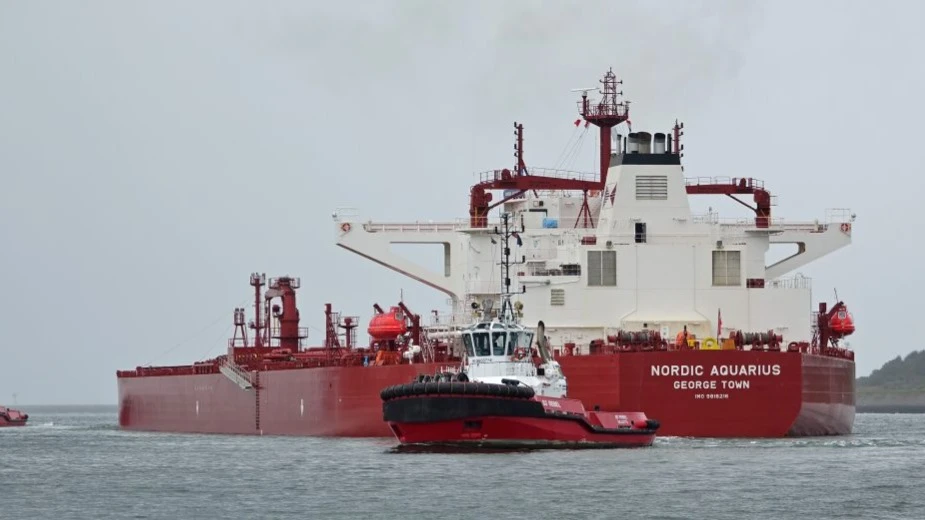
Armed confrontation in the Middle East will be in the center of attention of the participants of the upcoming trades. Last weekend, the U.S. and Israel struck Iran as part of Operation Epic Fury, which resulted in the elimination of the Islamic Republic's supreme leader Ali Khamenei and a number of high-ranking military officials. Tehran responded to these actions by missile strikes on U.S. military bases in Bahrain, Qatar and the UAE, and attacked three oil tankers near the Strait of Hormuz. Traffic through the strait has come to a virtual halt, with major shipowners suspending transit and insurers withdrawing policies for ships entering the Persian Gulf. In Sunday trading, the price of Brent crude oil rose 13% to over $82 per barrel. Gold and silver are also rising in price, confirming the steady demand for protective assets amid foreign policy instability.
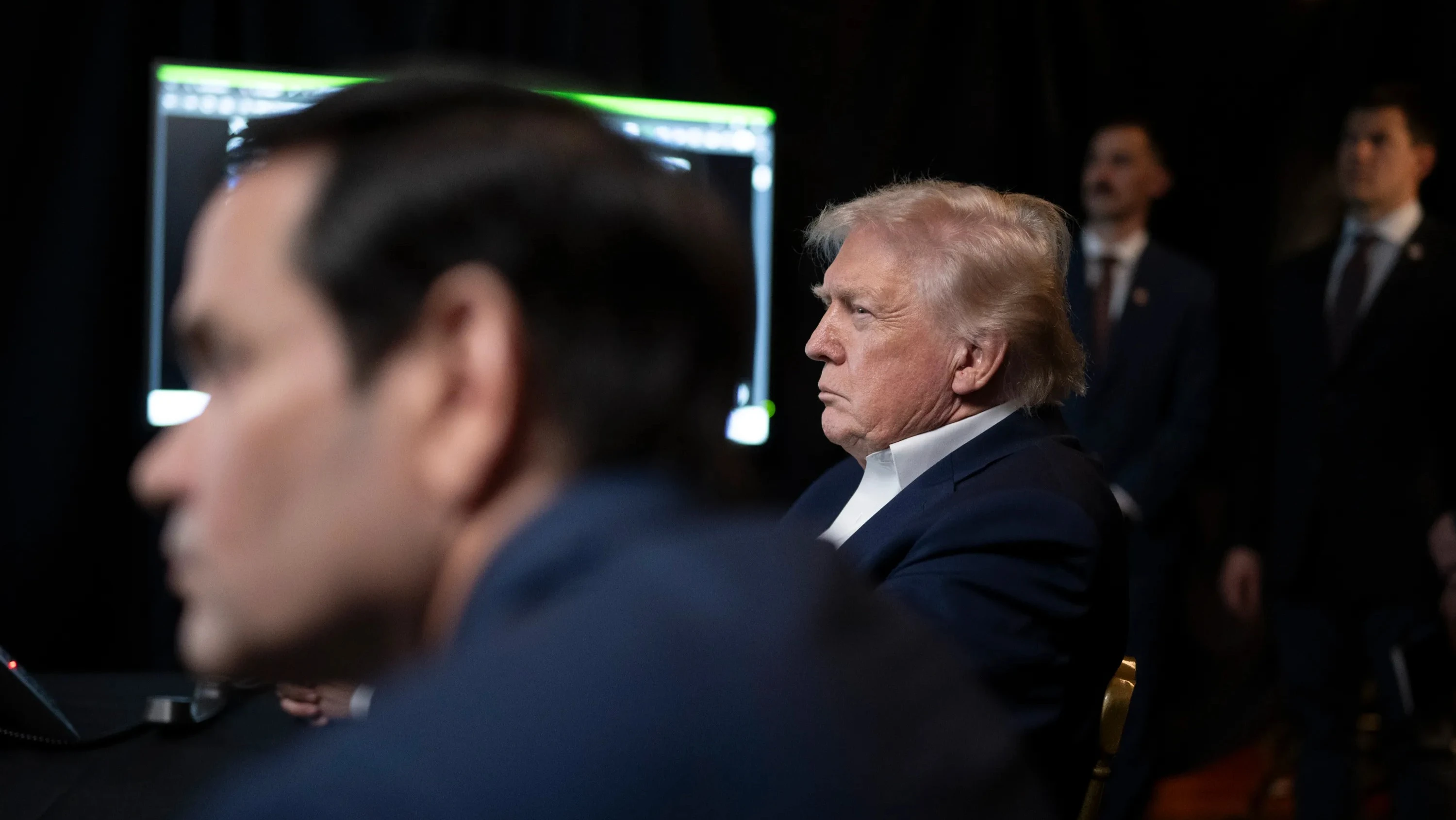
US President Donald Trump said the military operation was "ahead of schedule" and expressed readiness for talks with Tehran.
Following the results of the scheduled OPEC+ meeting held on March 1, it was agreed to increase production in April by 206,000 barrels per day, but these volumes are not enough to compensate for possible disruptions in the supply of hydrocarbons. The key indicator for the market in the coming days will be the dynamics of shipping through the Strait of Hormuz.
On the macroeconomic calendar, the ISM Manufacturing PMI for February is of interest (consensus: 51.7 points, January: 52.6 points with an average of 49.5 over the last three months). Recall that the preliminary estimate of the S&P Global Manufacturing PMI for February was 51.2 points, which did not reflect the growth of industrial production and durable goods orders. With this in mind, we forecast the revised index from S&P Global to be in the range of 51.8-52.5 points.
More than 94% of companies in the S&P 500 Index reported quarterly results on March 2. EchoStar (SATS), Norwegian Cruise Line (NCLH), Sealed Air (SEE), Venture Global (VG), AAON (AAON) and RadNet (RDNT) will report before the main session opens. AST SpaceMobile (ASTS), Credo Technology (CRDO), MongoDB (MDB), Riot Platforms (RIOT), BigBear.ai (BBAI), Archer Aviation (ACHR) and Core Scientific (CORZ) will release their results after the results are finalized.
Futures on American stock indices show a pronounced decline. We assess the balance of risks for the upcoming trades as negative with increased volatility. The most important factor remains problems with oil transportation through the Strait of Hormuz. If disruptions with its supplies prolong, it will lead to a significant increase in prices and provoke an inflationary shock, which will complicate the Fed's position on the eve of the March meeting. As long as the conflict does not get clear contours of de-escalation, protective assets will continue to be in high demand. Fixation of S&P 500 below 6800 points will contribute to the continuation of correction. If the benchmark holds above 6900 points, it will be a signal in favor of further growth.
In sight
- Nvidia (NVDA) is preparing to unveil a new query AI chip developed with Groq at the GTC conference. OpenAI has already confirmed its intention to use it to develop the Codex platform. Anthropic has announced its intention to challenge in court the Pentagon's decision to recognize the company as a supply chain threat. OpenAI has entered into an agreement with the Department of Defense to provide technology for classified systems.
- Quotes of RTX Corp (RTX), Lockheed Martin (LMT), EOG Resources (EOG), APA Corp (APA), Devon Energy (DVN), Halliburton (HAL) and Occidental Petroleum (OXY) rose sharply amid a jump in oil prices and on expectations of increased military spending.
- Carriers including United Airlines (UAL), Southwest Airlines (LUV) and Delta Air Lines (DAL) have come under pressure due to rising kerosene prices and airspace closures over the Middle East that are raising operating costs and shrinking the companies' route networks.
- Berkshire Hathaway (BRK.B) presented its annual report, which shows that the fund's free cache remains near record levels. However, CEO Greg Abel said that this does not mean abandoning its strategy in the M&A markets.
- Ascendis Pharma (ASND) added over 4% thanks to the FDA's accelerated approval of Yuviwel for the treatment of pediatric achondroplasia. The decision strengthens the company's position in the high-margin but narrow endocrinology segment. The approval of the new product is perceived as a confirmation of Ascendis' ability to successfully compete with the market leader and gradually increase revenue by expanding the indications for the drug.
The market on the eve of
Trades on February 27 on American stock exchanges ended on the negative territory. S&P 500 fell by 0.43%, Nasdaq 100 lost 0.3%, Dow Jones corrected by 1.05%, Russell 2000 fell by 1.68%. The last week of February ended in the negative, the past month was the worst month for the market since March 2025.
The health care industry (XLV: +1.77%) and energy sector (XLE: +1.58%) were the leaders of growth, which was supported by the increase in oil prices. Financials (XLF: -2.04%) and IT sector (XLK: -1.6%) were the outsiders. The most active sell-offs in the "Magnificent Seven" were Nvidia (NVDA: -4.17%) and Apple (AAPL: -3.21%).
The markets were influenced by growing concerns about the reduction of employment among office workers due to the introduction of AI, which intensified after the publication of the Block report (XYZ: +16.8%). Also, the stock market dynamics was determined by the renewed exit from the securities of software manufacturers. The focus remains on the sustainability of capital investments in AI with its "closed-loop" model, as well as cautious signals regarding the attraction of non-bank financing (private credit).
The uncertainty of the situation around Iran and the inconclusive round of negotiations with the U.S., increased demand for protective assets. Against this background, silver rose in price by 6.5%, gold - by 1%.
WTI crude oil gained 2.8% in price, although it ended trading well below intraday highs due to the aforementioned disappointing outcome of the US-Iran talks.
The core producer price index for January rose 0.8% against a forecast of 0.3%. At the same time, the yield on two-year Treasuries hit its lowest since August 2022, falling below 3.4%, while the ten-year Treasury yield fell below 4%, which also signals a flight from risk.
Company News
- CoreWeave (CRWV: -18.5%) reported generally successful results. However, the investment community was disappointed with its profitability as it doubled its capex spending to more than $30 billion in 2026, putting pressure on the company's cash flow. At the same time, its order book stood at around $67 billion and demand for computing power remains strong.
- Flutter Entertainment 's (FLUT: -13.8%) revenue, earnings and profitability came in below expectations in both the sports betting and online casino segments. Analysts point to weak betting volume dynamics in the U.S. and growing competitive pressure.
- Autodesk (ADSK: +5.3%) beat forecasts for earnings per share, order book, and revenue. Haydens for the current quarter and year also turned out to be stronger than average market expectations. Investors note the growth in the order book and market expansion due to artificial intelligence.
- SunRun 's (RUN: -35.1%) capacity additions in the fourth quarter fell short of consensus, while the number of new customers was also below forecasts. The market ignored the company's revenue, which exceeded average expectations, focusing on negative operating signals.
- Dentsply Sirona (XRAY: +15.5%) reported better-than-forecast revenue and announced a restructuring program with targeted annual savings of $120 mln. The company completely eliminated dividends, redirecting funds to debt repayment and share buyback.
- The official postponement of Neutron's first rocket launch from Q1 to Q4 2026 has left Rocket Lab's (RKLB: -4.9%) generally good results to investors.
This article was AI-translated and verified by a human editor