Nasdaq 100 companies lost $1.3 trillion in market capitalization in two days
"Such episodes of volatility will continue," says a strategist at State Street Investment Management

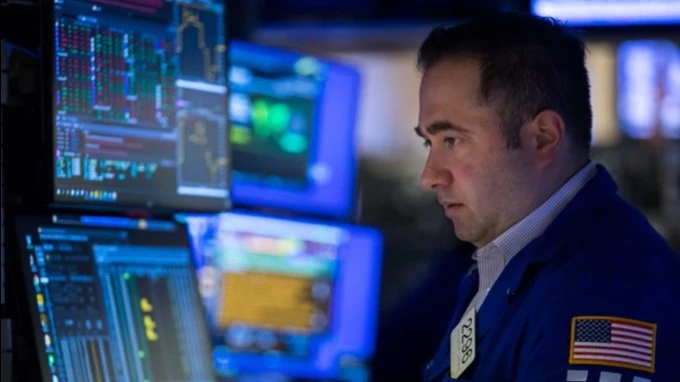
On Tuesday, the Nasdaq 100 and the S&P 500 are expected to open higher following the previous day's massive sell-off / Photo: X / NYSE
A sell-off of tech stocks wiped out $1.3 trillion in market capitalization from companies in the Nasdaq 100—an index comprising the 100 largest companies traded on the Nasdaq exchange—over the course of two days, according to Bloomberg.
Details
The largest companies on the Nasdaq—those included in the Nasdaq 100 index—lost $1.3 trillion in market value on Monday and Tuesday amid a sell-off in tech stocks.
At the same time, despite the current decline (the Nasdaq 100 fell 3.29% yesterday and has lost nearly 3.5% since the start of the week), the Nasdaq 100 technology index of the 100 largest companies still remains about 28% above the local low reached on March 30—against the backdrop of the war in the Middle East, Bloomberg notes. Nevertheless, according to the agency, traders are bracing for sharp price swings: summer is a period when liquidity often dries up.
In premarket trading on June 24, Nasdaq 100 futures are up 0.4% following the previous day’s sell-off, while S&P 500 futures are up 0.1% and Dow Jones futures are down 0.14%. Also on June 24, following the previous day’s sell-off, some Asian stock indices rebounded: in particular, South Korea’s Kospi, after plummeting nearly 10% on Monday, rose 3.26% on Tuesday, and the KOSDAQ gained 2%.
What People Are Saying in the Market
“We believe that such episodes of volatility will continue,” said Jennifer Bender, chief investment strategist at State Street Investment Management. “The changing geopolitical landscape means that political news is becoming less predictable, the world order is becoming increasingly competitive and power-based, and stock markets are becoming more concentrated,” she added (as quoted by Bloomberg).
The current market situation is beginning to resemble the final months of the dot-com era, when investors were getting used to sudden 5 percent swings, noted Bobby Molavi, a partner at Goldman Sachs Group.
Meanwhile, Andrew Slimmon, a senior portfolio manager at Morgan Stanley Investment Management, told CNBC that, given the intense competition in the AI market, the recent sell-off was, in his view, a positive development: “It reflected the spirit of the times, typical of momentum traders,” he said, noting that such dynamics were, in fact, a positive factor because “ultimately, no one wants to see such intense euphoria in the markets, which could end badly.” The decline in stock prices, Slimmon added, presents an opportunity for investors looking to increase their exposure to chipmakers and technology companies, given the sector’s strong earnings performance.
This article was AI-translated and verified by a human editor