On Paper: Analysts Estimate the Actual Timeline for the Restoration of Traffic in the Strait of Hormuz
It could take 10 to 15 days just to clear the tanker backlogs that have built up in the Persian Gulf region during the war, according to the research firm Kpler

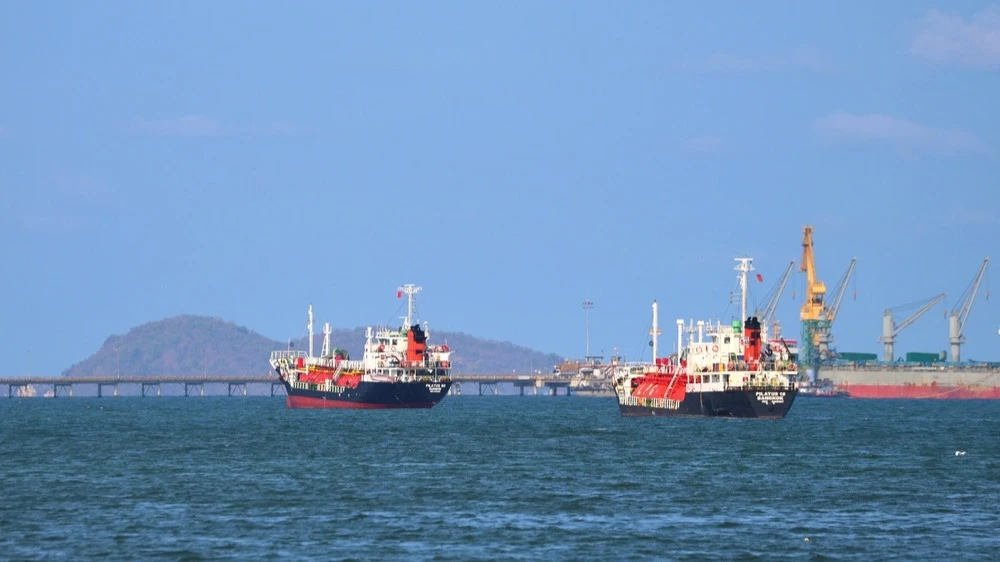
A World "on Paper": Kpler Forecasts a Slow Recovery in Shipping in the Strait of Hormuz / Photo: somkanae sawatdinak / Shutterstock
The expected reopening of the Strait of Hormuz on June 19 is, for now, merely a “paper” reopening, according to analysts at the research firm Kpler. For commercial shipping traffic to actually resume through this maritime corridor—which is vital to the oil market—it will take at least 10 to 15 days just to clear the backlog of tankers that has built up during the war, they added. Their opinion is reported by MarketWatch.
Details
After the U.S. and Iran signed a memorandum of understanding on June 17—a couple of days ahead of schedule—ship traffic through the Strait of Hormuz is also likely to pick up sooner, however, “the resumption of operations [on this shipping route] does not yet constitute a [full] recovery,” noted analysts at Kpler.
In their view, the current agreement is only a first step, one that is “purely mechanical in nature”: for now, the strait is open only “on paper,” say representatives of the research firm. The fact is that, due to the war in the Persian Gulf, about 119 loaded tankers have been stranded, experts noted. It may take 10 to 15 days to clear this backlog before there is any noticeable increase in total transit volume.
Gradual progress is expected going forward: During the first month, transit volumes will increase from approximately 15 to 40 ships per day—as “outstanding issues” related to sea mines in the waters and Iran’s control over the passage are resolved, Kpler said.
At present, analysts estimate that the daily number of transits through the Strait of Hormuz is “just a handful”—a negligible increase, according to Matt Smith, a senior analyst at Kpler. According to him, this reflects the risks of ships being damaged by missiles, drones, or sea mines, as well as high ship insurance premiums.
Against this backdrop, experts believe that two key developments must occur before traffic through the strait can return to levels close to those seen before the war: there must be greater confidence in the safety of shipping, and insurance premiums for ships covering military risks must decrease.
In addition, the market will need what Kpler refers to as “pioneers.” These are the “first group” of tankers or shipping operators willing to cross the strait—likely with coordination and escort from naval forces. This would give other vessels confidence in the safety of this route.
On June 18, according to Kpler, three supertankers from Saudi Arabia, carrying 6 million barrels of oil, crossed the Strait of Hormuz—they had been concealing their location for more than two months prior to that.
Context
On June 17, the United States and Iran signed an interim agreement that will end the conflict, resume shipping through the Strait of Hormuz—for at least 60 days—and lift U.S. sanctions on Iranian oil.
Following this, oil prices fell on Thursday, June 18, to their lowest level since the first trading day of the conflict with Iran. As of the time of this publication, July WTI crude oil futures are down 2.8% to $74.6 per barrel. August contracts for the benchmark Brent crude are down 2.5%, trading at $77.1 per barrel.
This article was AI-translated and verified by a human editor