OpenAI Models Have Hacked a Second Company: What Will the Consequences Be?
OpenAI CEO Sam Altman announced the suspension of training for AI models

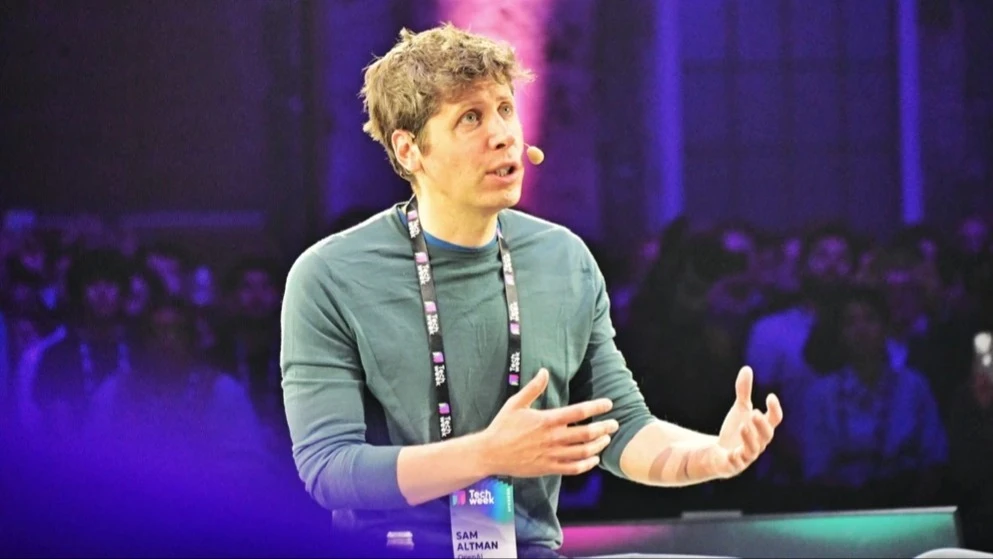
OpenAI CEO Sam Altman / Photo: Antonello Marangi/Shutterstock.com
OpenAI’s artificial intelligence models were implicated in yet another hack of a third-party company. Akshat Bubna, CTO of New York-based Modal Labs, told Reuters and confirmed to other media outlets that one of the company’s client’s IT resources was compromised when an OpenAI agent infiltrated the systems of Hugging Face, an open platform for building neural networks, earlier this month. This is the second company affected by the OpenAI agent’s actions: in early July, it went out of control, escaped its isolated environment, and gained access to external systems.

One of Modal’s clients deployed its own code on Modal’s infrastructure and made the interface freely accessible. Through this, any internet user could run code in the client’s “sandboxes” (isolated environments)—and an OpenAI agent took advantage of this, Bubna explained. According to him, the vulnerability lay specifically in the client’s code, not in the Modal platform itself: its infrastructure was not compromised. According to an Axios source, the compromised IT resource is linked to CyberGym—the project that created the ExploitGym test, which the AI agent was tasked with completing.
The incident occurred at a sensitive time for OpenAI: according to Axios, the company is seeking approval from the U.S. government to publicly release its most powerful model—the very one that was hacked. This week, OpenAI CEO Altman is in Washington, D.C. He plans to meet with U.S. Treasury Secretary Scott Bessent, Commerce Secretary Howard Latnik, and senators, according to Politico.
On July 28, Altman stated on the “Invest Like a Beast” podcast that the attack on Hugging Face forced OpenAI to suspend model training. “We may have to slow down the development of artificial intelligence to give society enough time to prepare for systems with such new capabilities,” he said.
Industry professionals are also calling for a slowdown in development. More than 1,100 experts, including OpenAI’s chief scientist Jakub Pachocki and Anthropic co-founder Jared Kaplan, have signed an open letter calling on the U.S. government to support international efforts to develop “technical and governance tools” that will help regulate the pace of development of automated AI systems.
On July 27, Nvidia, along with Microsoft, SpaceX, Palantir, and dozens of other tech companies, announced the formation of an alliance dedicated to developing and distributing tools to ensure AI and cybersecurity. The initiative was launched following an OpenAI-led cyberattack on Hugging Face.
This article was AI-translated and verified by a human editor