Return to Dubai: Gulf Airlines Have Resumed More Than 80% of Their Flights
The largest Middle Eastern airlines are returning to their pre-war flight volumes

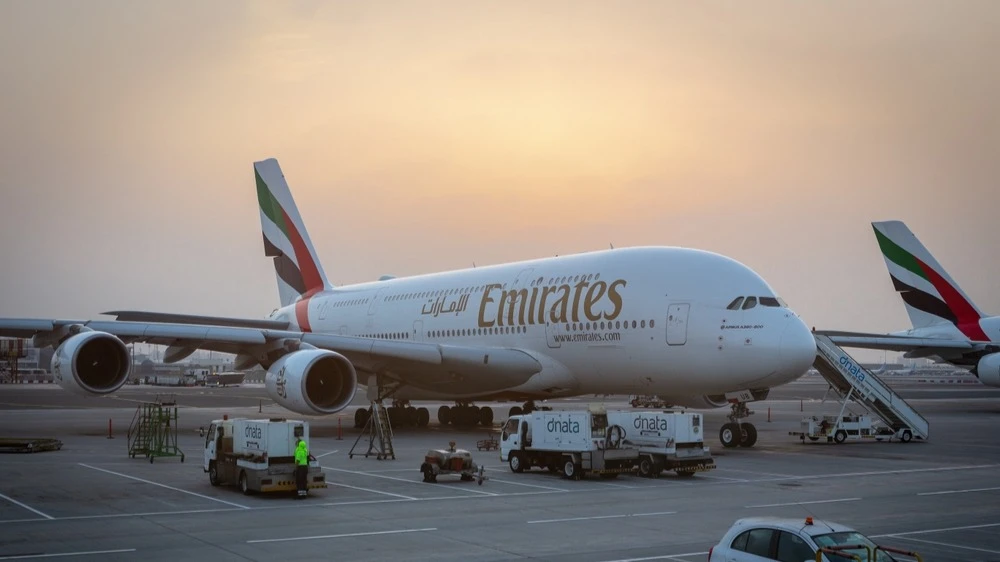
Gulf airlines are resuming operations. Photo: Aleksandra Tokarz/Shutterstock
The total number of flights operated by the largest Gulf airlines has now recovered to approximately 82% of the level recorded on February 27—the day before the war began— according to Reuters, citing data from the flight-tracking service Flightradar24.com. The outlook for the carriers has become more optimistic following the signing of a memorandum between the U.S. and Iran.
Details
Gulf Air (Bahrain) and Kuwait Airways (Kuwait) are restoring their route networks the fastest. On average, their traffic volumes have reached 93% and 86% of pre-war levels, respectively, but in recent days they have even exceeded 100%, according to Flightradar24.com.
The "Big Three" Middle Eastern airlines are also approaching 90% of their previous flight volumes: Etihad (UAE) has restored 93% of its flights, Qatar Airways (Qatar) to 87%, and Emirates (UAE) to 86%. For Etihad and Qatar Airways, this is a major leap forward, as just a month ago their operations had fallen to 40–50% of pre-war levels. At the same time, Emirates initially maintained a higher level of operations longer than the others, spending significant amounts of money to keep flights running. The situation is most challenging for low-cost carriers from the UAE: Air Arabia’s volume stands at 75%, while Flydubai’s is only 57% of pre-war levels.
Emirates CEO Tim Clark told Reuters last week that the airline will focus on restoring travelers’ confidence in flight safety and reliability. Etihad, for its part, is offering travelers arriving in Abu Dhabi free travel medical insurance for trips taken between July and December, Reuters reports.
Why Is This Important?
The Middle East is home to some of the world’s largest airlines, whose route networks have been disrupted by the conflict between the U.S. and Israel on one side and Iran on the other. In recent months, Iranian missile and drone strikes have periodically led to airport closures and forced flight path changes throughout the Persian Gulf region, Reuters reports.
European and Asian airlines have largely suspended flights to the region, and many of their restrictions remain in place. However, after the U.S. and Iran signed a temporary agreement on June 17 to end the nearly four-month-long conflict, the outlook for Gulf airlines has become significantly more optimistic, Reuters reports.
A cessation of hostilities will lead to the reopening of the region’s airspace, allowing local carriers to fully resume their flight schedules, according to James Halsted, managing partner at Aviation Strategy. “If things return to normal, I think they will operate as usual and return to the market in full force,” Halsted said (as quoted by Reuters).
This article was AI-translated and verified by a human editor