"Sell what you can": how gold prices pointed to a hidden $2 trillion market crisis
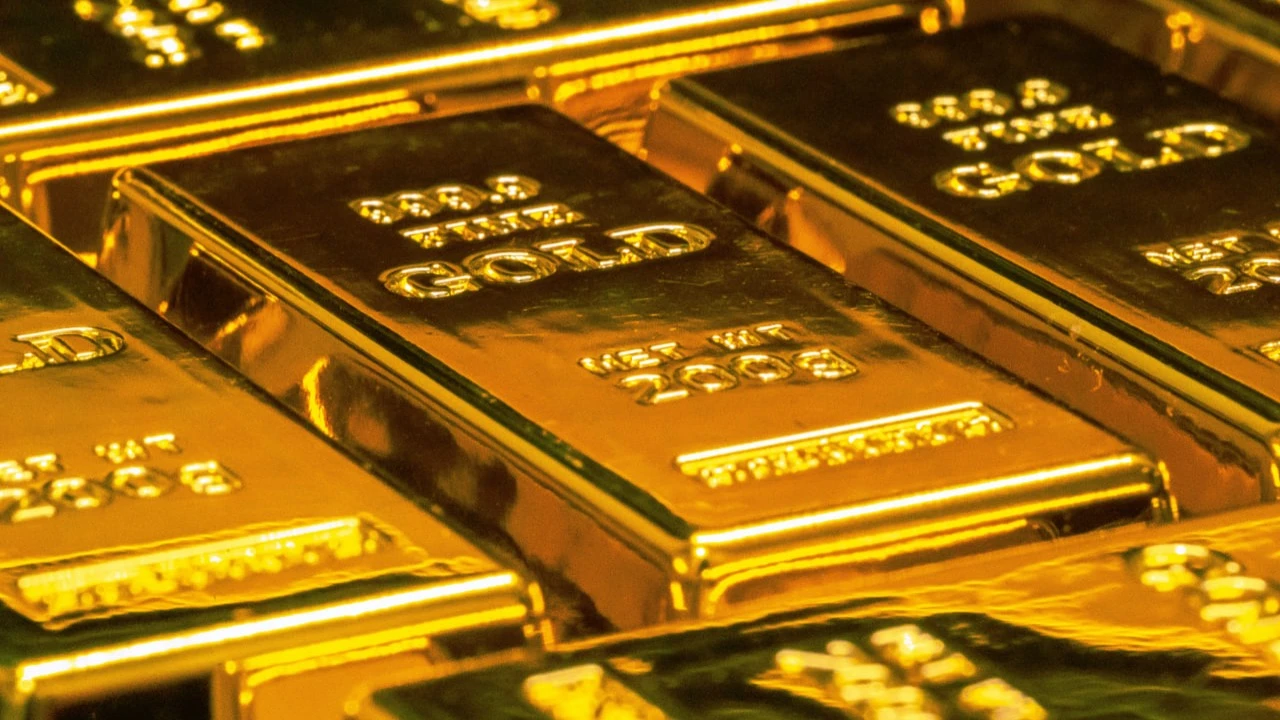
With the beginning of the war in Iran, gold began to fall in price, although it should have grown in value. At the same time, the situation on the "paper" and physical markets of the metal is radically different. Photo: Jingming Pan / Unsplash.com
War in the Middle East. Energy crisis. A spike in inflation. By all canons of macroeconomics, gold should have been rising, but it fell for most of March. The clue to this lies in the cracks that went down in the $2 trillion private credit market, believes Michael Portnoy, senior partner at Movchan's Group, who manages the Liquid Alpha Income Fund strategy.
A fall that shouldn't have happened
On January 29, 2026, the price of gold approached $5600 per troy ounce - it was a new high. Over the previous 12 months, the metal rose in price by 65%. The fundamental grounds for such growth seemed ironclad: central banks were buying gold at a record pace, the dollar was weakening, and the U.S. federal debt had passed $34 trillion.
But on February 28, the U.S. and Israel launched a military operation against Iran. And according to the standard scenario, gold as a classic protective asset should have soared. But instead it began to fall. And by March 26, its price fell by more than 20% from its January highs. In recent days, the cost of gold rose slightly on hopes of de-escalation of the conflict in the Middle East. Still, this March is still the worst month for gold in more than 17 years.
So what's going on?
The answer must be sought not on futures exchanges or in the vaults of central banks, but in the offices of the largest American management companies, where a quiet crisis is unfolding. It is this crisis that is forcing the most sophisticated investment market players to do what they would never voluntarily do: sell not what is profitable, but what can be sold at all.
It's about private lending - direct non-bank corporate lending, which has been the hottest topic in the institutional finance sector for the past five years. Pension and sovereign wealth funds and family offices have poured hundreds of billions of dollars into it. By the beginning of 2026, its volume exceeded $2 trillion, and it had become one of the largest and most systemically important segments of global finance. But unbeknownst to most, it was also one of the most vulnerable.
The internal contradiction of this market has never been a secret. The underlying assets of the funds - loans to non-public medium-sized companies - are extremely illiquid: there is no special exchange, no quotations, and no buyer on demand. Nevertheless, many funds promised investors quarterly redemption of units.
But this system works as long as exit requests are few and diffuse in time. When geopolitical shock causes synchronized mass requests for redemption, it breaks down. And in early March 2026, the system cracked.
HPS Corporate Lending Fund managed by BlackRock, the world's largest management company, received withdrawal requests for $1.2 billion (just over 9% of net assets) and paid out $620 million in one quarter. Reputationally, it's a blow.
Blackstone's flagship private credit fund - BCRED ($83 billion under management) - in February recorded its first monthly loss since September 2022, minus 0.4%. The company was forced to inject $400 million into the fund. Morgan Stanley North Haven, finding itself in a similar situation, has only satisfied 46% of redemption requests. Blue Owl stopped repayments completely in one of its funds.
Bank of America Chief Investment Strategist Michael Hartnett compared the current situation with the period from mid-2007 to mid-2008. JPMorgan has started to reduce the valuation of loan portfolios, including in the SaaS sector. Because of this, funds are reducing their borrowing limits, and they have to reduce their debt. As a result, a chain reaction is set in motion: sales intensify the decline. The liquidity crisis works hard: you sell what you can sell, not what you want. Gold is liquid. Private fund loans are not.
The geography of panic
The geographic context of the crisis helps to understand such a sharp and massive increase in redemption requests in funds that triggered an avalanche of selling in gold and beyond.
Over the past decade, the UAE - and Dubai in particular - has become a financial hub neutral to global political winds for global capital: Russian wealthy individuals after February 2022, entrepreneurs from the Iranian diaspora, family offices from South and Southeast Asia, and Gulf sovereign wealth funds have all placed significant assets here. When the UAE, and with it other Middle Eastern countries including Bahrain, Qatar and Kuwait, were hit by Iranian missiles and drones, investors' mood changed overnight. Exiting risky positions in such conditions is a rational decision.
It was these investors - holders of illiquid investment instruments, including units of private credit funds - who submitted the first and largest redemption requests.
How does this affect gold?
Private lending funds do not hold gold, their portfolios contain loans to private companies. But large clients of these funds - family offices and institutional investors - found themselves in a difficult situation: it is impossible to withdraw quickly from illiquid positions, because the funds have introduced restrictions on withdrawal of funds. But the need for liquidity has not gone away - investors have to keep funds on hand to cover losses or change positions in their portfolios. And they have to get rid of liquid assets - stocks, U.S. Treasuries and gold, especially units in gold ETFs (GLD and IAU), which are sold with one click in seconds.
Another large group of sellers are hedge funds with leveraged positions. The market is going against them, margin calls are coming, and their task is the same: to add cache immediately. Futures, stocks, "paper" gold - everything is for sale.
At the same time, the physical gold market behaved differently in March. Premiums for the real metal - coins, bars, dealer spreads - remained high throughout the entire sale.
The divergence between "paper" and physical gold is a sign of a forced sell-off by investors, not a fundamental revaluation of the asset. The precedents are well known. In 2008, hedge funds were forced to "dump" gold at $730 at the height of the Lehman collapse. Three years later the metal cost $1900. The fundamental demand for gold as an instrument of value preservation was restored as soon as the sales cycle ended.
Macroeconomic context: the dollar, rates and stagflation
Of course, it would be an exaggeration to say that gold collapsed in March only because of the crisis in the private credit market. The current macroeconomic context adds to it.
The DXY dollar index (its exchange rate against the euro, yen, pound sterling, Canadian dollar, Swedish krona and Swiss franc) has gained 2.75% since the conflict in the Middle East began. The war is provoking a "flight to the dollar", which gold investors have traditionally underestimated.
The Fed left rates unchanged in March and indicated only one 25bp cut this year - instead of two, which the market was counting on before the Iran conflict. With 10-year Treasury yields around 4.5% and after gold's 170% gain in two years, institutional investors have been methodically reducing positions in gold ETFs since mid-February.
At the same time, a stagflationary trap is triggered. The closure of the Strait of Hormuz accelerates oil prices, which leads to an increase in commodity prices. U.S. GDP in the fourth quarter of 2025 grew by only 0.7%. The Fed cannot stimulate a weakening economy by cutting rates without risking adding fuel to the "inflationary fire." This is a classic regulator's zugzwang.
Three scenarios for 2026
As is well known, only tarologists and psychics know the future. But if we talk about probable scenarios for 2026, there are three of them - pessimistic, basic and optimistic.
The baseline scenario - we give it a 50-55% probability, given the high level of uncertainty - assumes that the level of liquidity in the market will normalize, the Fed will cut rates once this year, and the dollar will moderately weaken. In that case, gold would be in the $5200-5800 range by the fourth quarter.
In the pessimistic case, we can assume that the dollar will continue to strengthen, the Fed will be in a stupor, and the crisis in the private credit sector will intensify. We believe that the probability of such a development is 20-25%. In this case, the gold price will range between $3800-4000.
Finally, the optimistic (for gold holders!) scenario assumes increased risks of stagflation and a serious weakening of the dollar. In this case, the Fed will reduce the rate. Then the metal price may soar to the level of $6000-6500. We also assign 20-25% probability to this scenario.
A signal for smart money
History does not favor those who sell an asset in moments of forced institutional liquidations. But not every drop in gold prices is an unconditional entry point either. Every time, you have to look closely at what is happening in the physical metal market.
In 2013, when Fed Chairman Ben Bernanke signaled the winding down of the quantitative easing program, "paper" and physical gold fell together: Asian retail buyers retreated and physical metal premiums collapsed. A "bearish" decade began in the gold market. In 1997-1998, Southeast Asian central banks sold physical reserves to defend currencies, and coins and bars could be bought below the official exchange quotation in several countries in the region.
A characteristic feature of the current situation is the divergence between the market of "paper" and physical gold. When futures and ETF shares are falling, while trading premiums for the real metal are holding or rising - this is a clear signal that the sales are technical, not fundamental.
The fundamental drivers of the bull market have not gone anywhere. Buyers of the real metal - central banks, jewelers, institutional investors who take bullion for storage - have not changed their assessment of the fundamental value of gold.
The current correction is real, painful and possibly not over yet. If the gold price falls below $4000, it will require a revision of the short-term thesis. But for the prudent investor with a multi-year planning horizon, the combination of factors is noteworthy: an "eternal" asset under temporary technical pressure, and signals point to the best entry points for a long-term investment.
Does not constitute an investment recommendation.
This article was AI-translated and verified by a human editor