Shares of memory makers have collapsed after a rally. Is it worth buying them on a downturn?
Bloomberg suggests that this is still a correction, not a trend for now

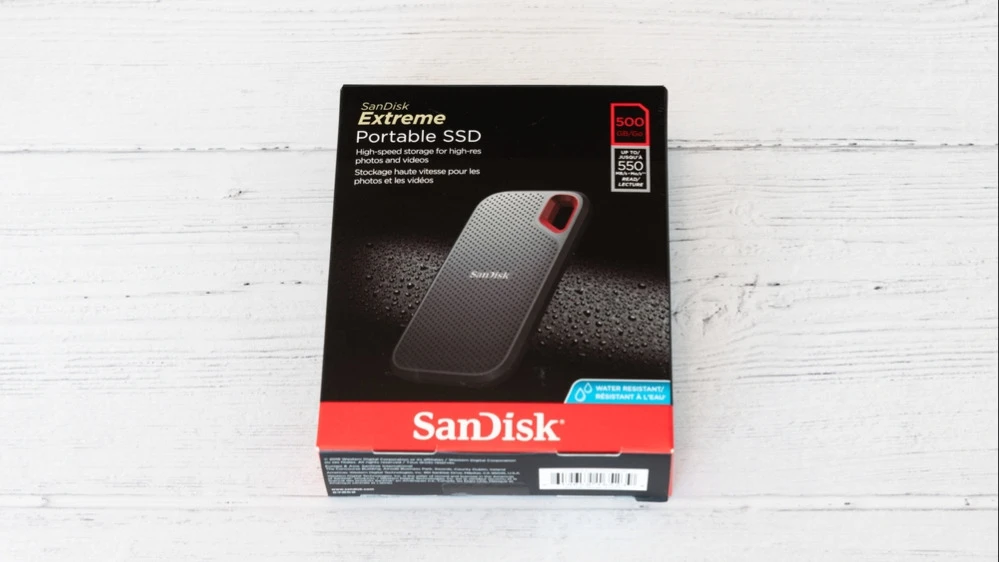
Shares of memory and storage manufacturers Sandisk, Micron, Western Digital and Seagate Technology fell sharply in trading on Thursday, January 8, after several days of rally. Sandisk, for example, soared 27% in one session after Nvidia CEO Jensen Huang said that AI will require large data storage. Bonds of RAM and physical memory makers have rallied rapidly over the past six months due to shortages in their products caused by high demand in AI. Analysts say the high demand will continue throughout the year.
Details
Shares of flash drive and storage system maker Sandisk fell 6.5% in Thursday trading, while chipmaker Micron fell 3.8%. Shares of Western Digital and Seagate Technology, which makes hard disk drives, lost 8.1% and 9.3%, respectively.
These four companies showed strong momentum in the second half of 2025 and the first trading days of 2026, Seeking Alpha notes. The leader of growth was Sandisk, whose market capitalization has increased by more than 800% over the past 12 months. Quotes Micron soared over the same period by 220%, Western Digital - by 280%, and Seagate - by 224%.
"The rapid rise [in memory maker stocks] has some Wall Street professionals increasingly questioning whether it's time for a correction," Bloomberg wrote on Jan. 8. The main drivers of the rally in the memory sector are high spending on AI infrastructure and rising component prices. But investors' concerns are growing louder: whether the scale of growth is justified, as it's unclear whether these capital investments can quickly yield returns, the agency notes.
What the analysts are saying
- Assessing the upside potential of memory maker stocks is very difficult right now, says Marquette Associates investment strategist Jessica Noviskis. "We are dealing with a transformational technology that is evolving right now, in real time. Retail investors who are afraid of missing the moment have probably entered the market, and they're grabbing at everything," Noviskis suggested in a conversation with Bloomberg. She explains that the big challenge for market participants is "identifying which companies are overheated and which are not."
- "Given the bet on AI and data center construction, it all seems logical. But I'm increasingly worried that the market is looking too far into the future, ignoring the cyclicality of the industry and the risks of overcapacity and pressure on prices," Peter Andersen of Andersen Capital Management told Bloomberg. It pays to be cautious about the growth drivers of these companies, even despite attractive valuations, he said. "If you agree that AI infrastructure is now over-scaling, it's best to stay away," Andersen warned. - All it takes is one major company announcing a reduction in investment and it could trigger a massive sell-off."
- "With the growing prevalence of multimodal AI, the amount of data created is expected to expand dramatically, increasing demand for low-cost storage," Bank of America analyst Vamsi Mohan wrote in a Jan. 4 note cited by Bloomberg. - That's backed by companies such as Seagate and Western Digital. And the growing need for fast data processing and offsite storage is playing into Sandisk's hands."
- Wedbush Securities analyst Matt Bryson noted last month that the surge in memory demand that began in March 2025 became "even more pronounced" in the fourth quarter. "We now expect this trend to continue into 2026 as cloud companies have significantly revised upward their purchase forecasts for next year," Bryson wrote, his note cited by Seeking Alpha.
- Needham believes that Micron's high-bandwidth memory (HBM) will remain the "king of AI memory" for at least another 5-10 years. Invesbank analysts also upgraded their recommendations on shares of memory maker Cohu and are positive on Camtek, Onto Innovation and Kulicke & Soffa. All of these securities have started 2026 with strong growth.
This article was AI-translated and verified by a human editor