SpaceX Is Set to Be Added to the Nasdaq 100 Index Ahead of Schedule: Five Key Questions for Investors

/ Photo: Ron Adar / Shutterstock.com
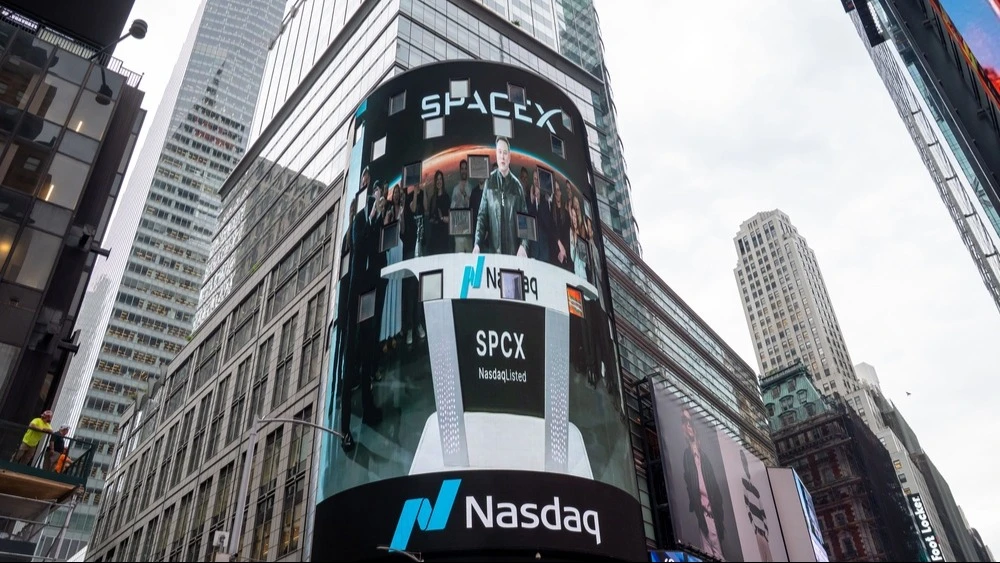
Elon Musk’s space company, SpaceX—which held the largest IPO in history in June—will be added to the Nasdaq 100 index. This means that investors who buy index-tracking funds will indirectly own shares in SpaceX, whether they want to or not, according to The Wall Street Journal. What do investors need to know about this development?
When will SpaceX be included in the index?
Before the market opened on Tuesday, July 7. This is one of the fastest additions to the Nasdaq 100 in history—Musk's company went public less than a month ago, on June 12.
What does this mean for investors?
Inclusion in the index creates automatic demand for the stock from funds that track the index—they will be forced to buy SpaceX shares in order to replicate the updated composition of the Nasdaq 100. Funds with a combined $800 billion in assets track this index. According to J.P. Morgan’s estimates, SpaceX’s inclusion in the Nasdaq 100 index could attract $4.3 billion in passive investment into the company’s stock.
Most of this trading volume will likely occur during after-hours trading on July 6, when index-tracking funds will no longer be able to wait for a more favorable price, according to The Motley Fool. According to the publication, on average, shares of companies included in the Nasdaq 100 index rose by about 1% during the five days between the announcement and their actual inclusion in the index.
So, will SpaceX's stock price go up?
This is not guaranteed. According to Dow Jones Market Data, of the 21 stocks added to the Nasdaq 100 index over the past two years, only six rose in their first week—AppLovin, Alnylam Pharmaceuticals, Monolithic Power Systems, Western Digital, Insmed, and SanDisk, according to Barron’s. On average, one week after being added to the index, stock prices fell by 3.8%.
Market conditions also played a role. For example, shares of Nebius, CoreWeave, and Rocket Lab fell by more than 15% a week after being added to the Nasdaq 100 due to a broad sell-off in tech stocks.
Although inclusion in the index could provide a significant boost to SpaceX’s stock in the short term, analysts still believe that, in the long run, the company’s financial performance and the number of investors willing to buy its stock directly will be more important factors, the WSJ notes.
In addition, lock-up periods for employees will expire over the next year, allowing them to sell their shares on the market. Analysts warn that in the past, this has put pressure on the shares of companies that have recently gone public—such as Facebook, the publication notes. Index funds will likely be able to buy some of these shares—but even they will be limited in the volume of their purchases due to the need to maintain the index’s weightings.
What will SpaceX's weighting be in the index?
Despite being one of the most valuable companies in the U.S., SpaceX will not be among the largest components in the market-capitalization-weighted index.
The reason is that during its initial public offering, SpaceX offered less than 5% of its total shares. Nasdaq adjusts the weightings of companies in the index based on free float—the number of shares available for public trading. A company’s weight cannot exceed three times its free-float-adjusted market capitalization.
SpaceX's initial weighting in the index will range from 0.47% to 0.7%, according to The Motley Fool. The upper end of this range means that funds will purchase approximately $7 billion worth of the company's shares.
What if an investor doesn't want to own SpaceX, even indirectly?
Indeed, there are investors who, as a matter of principle, want nothing to do with Elon Musk’s companies—due to his political activities and also because of SpaceX’s aggressive borrowing to finance untested technologies, Bloomberg reports, citing financial advisors who were surveyed.
Some investors are sharing advice on how to avoid investing in SpaceX on social media and Reddit forums. For example, one forum user, 30-year-old data analyst David Greer, shifted his $650,000 in retirement savings from U.S. index funds to international ones in April. Meanwhile, Christopher Beinar, a programmer from Philadelphia with a $1 million portfolio, invested $50,000 in European index funds and bought shares of Rocket Lab, a competitor of Musk’s company.
Investors who are avoiding SpaceX should keep one more thing in mind: being quickly added to the Nasdaq 100 index does not guarantee that the company will remain in it forever, notes The Motley Fool. Among the companies that have left the index in recent years were Moderna and Zoom, both of which were considered beneficiaries of the coronavirus pandemic.
This article was AI-translated and verified by a human editor