Stocks in the U.S. recovered some of their losses after Friday's selloff. Oil slowed down
S&P 500 and Nasdaq recover from collapse: chipmakers are getting more expensive again

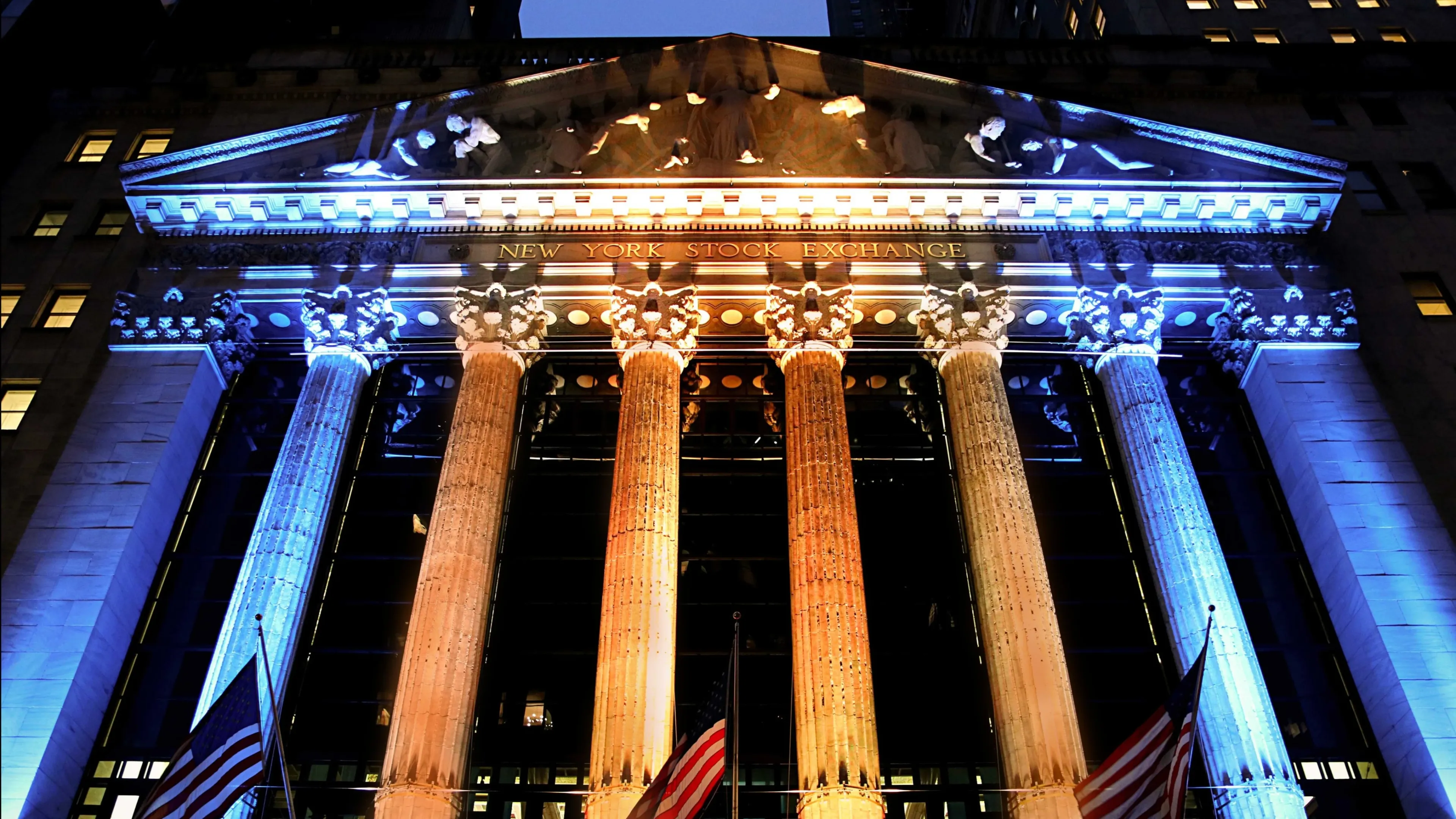
The S&P 500 and Nasdaq Composite indices rose at the end of trading on Monday, June 8, amid a recovery in chip maker stocks after a sell-off at the end of last week. Additional support for the market was provided by President Trump's attempts to preserve the delicate balance between Iran and Israel, which after a series of mutual strikes were able to stop, CNBC writes.
Details
- The broad market index S&P 500 rose by 0.3% on June 8. At the same time, more than 300 securities in the index, more than 60%, declined on Monday, MarketWatch wrote. This means that a narrower group of stocks with a higher weighting provided the index's rise, the publication noted. The S&P 500 was able to rise for the sixth straight time on the next trading day after falling 2% or more, the longest such streak since 2020, Barron's wrote, citing Dow Jones Market Data.
- The blue-chip index Dow Jones Industrial Average lost 0.16% on Monday.
- The Nasdaq Composite index of the technology sector rose 0.86%. This was provided by a wave of buying on the decline in chip maker stocks and other immediate bets, Barron's wrote. The Nasdaq 100 index rose 1.6%, also reflecting more pronounced gains in the most expensive companies.
- The Russell 2000 index of small and mid-capitalization companies added 0.77% for the day.
- Brent crude futures were up 1.2% to $94.2 per barrel and U.S. WTI crude futures were up about 0.8% to $91.2 per barrel. Brent exceeded $98 per barrel during the day, but then declined in parallel with the reduction of tensions in the Middle East.
- Bitcoin was up 2.9 percent to $63,190 per token. The cryptocurrency recovered some of its losses after falling below $60,000 per token on Friday, the lowest since Donald Trump won the U.S. presidential election in 2024.
What was driving the markets
Investors on Monday followed the escalation in the Middle East, where Iran and Israel resumed mutual strikes that heightened concerns about the sustainability of a truce. Oil prices jumped on Sunday and continued to rise on Monday. However, US President Donald Trump said Israel and Iran "seek an immediate ceasefire" and that talks were continuing despite the exchange of strikes. Trump had earlier demanded that both sides "immediately cease" the attacks.
Later, Iran's Foreign Ministry told CNBC that the country's armed forces had ended military operations against Israel. At the same time, Tehran warned that it would resume hostilities if Israel continued its attacks in Lebanon. After these statements, oil prices pulled back from intraday highs.
Technology stocks rose after the Nasdaq Composite collapsed 4.2% in the previous trading session on Friday, June 5, posting its worst performance since April 2025. Chip maker stocks in particular returned to the upside, with the iShares Semiconductor ETF industry fund climbing 6% on Monday after falling 10% on Friday - its worst in more than six years. Broadcom shares resumed gains after two days of declines, adding 2.8%. Intel shares returned to positive territory (+11.3%) after The Information reported that Google recently ordered Intel to produce more than 3 million of its own TPU AI chips. Shares of AI chip developer Marvell Technology rose 9.6% on June 8: it became known that they will enter the S&P 500. Shares of Micron Technology, a maker of RAM for AI chips and PCs, gained 9.9% after falling 13% on Friday. Nvidia rose 1.7%.
In addition, on Monday, investors took a negative view of the announcement of Apple's updated Siri voice assistant, which received AI integration, as well as the new iOS. Apple shares fell by 1.9%.
This week, investors' attention will be focused on U.S. inflation data and SpaceX's IPO: trading in its shares on the stock exchange is expected to begin on Friday. The offering could be one of the largest listings in Wall Street history and the biggest test of the current valuations of artificial intelligence-related companies, CNBC notes.
What the analysts are saying
- "In previous market cycles, high-profile offerings have often coincided with a peak in investor over-optimism, so there's an awkward silence about what this could mean for sentiment," CNBC quoted Ritholtz Wealth Management chief market strategist Callie Cox as saying. - Many investors seem aloof and skeptical, but can that mood persist when the biggest IPO of all time is ahead?"
- There are "too many red flags" flying over the U.S. stock market right now, Bank of America analysts warned. Their advice to investors is to lock in profits. Out of ten indicators, which the bank uses to track the signs of a "bearish" market, seven worked in May. There were five such signals in April and four in March. Seven is the average that has been seen before previous bear markets since 1990, the bank explains.
- The sell-off in stocks late last week, caused mainly by investors rebalancing their portfolios, was a "healthy reset" of the market, according to Morgan Stanley Wealth Management Chief Investment Officer Michael Wilson. He is quoted by Bloomberg. Wilson maintained a positive outlook on stocks, citing strong corporate reporting and solid economic data.
"Markets rarely move in a straight line at the speed we've seen since the March lows," Wilson said. - "A correction was inevitable and ultimately beneficial if this bull market is indeed going to last through the end of the year." That is the scenario that remains our baseline forecast: we continue to expect the S&P 500 Index to reach 8,000 points." Morgan Stanley's target is 8% above the June 8 closing level.
This article was AI-translated and verified by a human editor