Tesla has scaled back its capital expenditure plans for 2026. Why investors weren't pleased
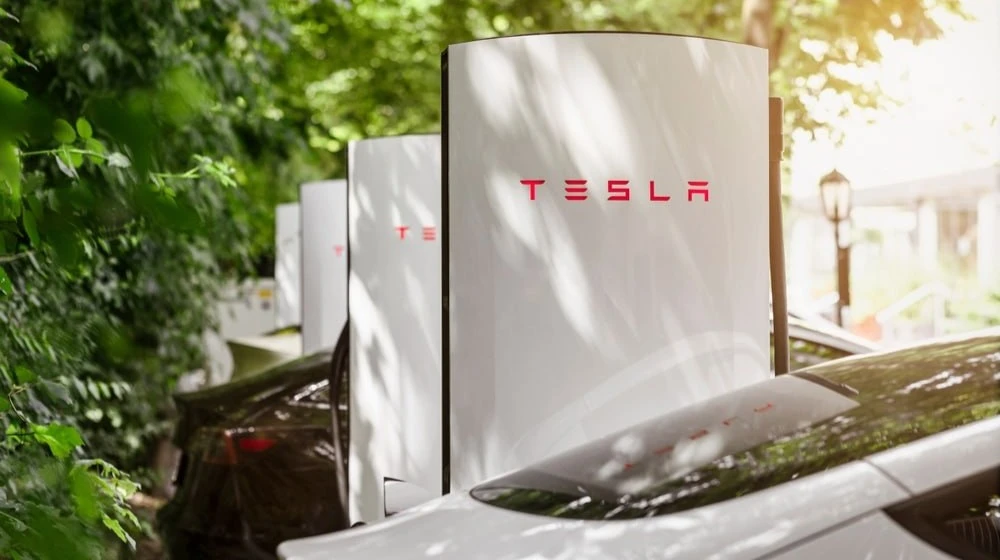
Tesla's net income attributable to common shareholders fell 29% / Photo: Mariana Serdynska / Shutterstock.com
Tesla's third-quarter earnings exceeded Wall Street's expectations. However, the company announced a $5 billion cut in capital expenditures, which raised concerns on Wall Street. Analysts are debating whether this signals delays in any projects amid Tesla’s heavy investment in robotics and artificial intelligence, or whether the company is trying to avoid taking on new debt.
Tesla shares fell 4.6% in after-hours trading. During regular trading on Wednesday, the stock rose 3.4% following Musk’s statement about a possible merger between the automaker and SpaceX. During the earnings call, he declined to comment on the matter, which also disappointed investors.
Details
In the third quarter, Tesla’s adjusted earnings per share came in at $0.48, the company reported on Wednesday, October 21. This was higher than analysts’ average forecast, according to Bloomberg. Revenue totaled $28.05 billion, compared with the expected $27.9 billion, according to LSEG data cited by CNBC. However, Bloomberg reports that revenue fell slightly short of estimates from analysts surveyed by the agency. Free cash flow fell 62% year-over-year to $1.53 billion, after Tesla posted negative free cash flow in the second quarter.
Net income attributable to common shareholders fell 29% to $787 million, or $0.22 per share, Tesla reported. The decline in profitability reflects a sharp increase in spending on robotics and artificial intelligence projects, CNBC notes. Capital expenditures more than doubled compared to last year, reaching $3.73 billion.
Tesla will spend less than it had planned
Tesla has revised its capital expenditure forecast for this year, lowering it from $25 billion to $20 billion, according to Bloomberg. The company spent about $13 billion in the first three quarters, which means it will have to burn through about $7 billion in the fourth quarter. It is noteworthy that just two quarters ago, Tesla raised its forecast by the same $5 billion.

“For almost any company, cutting costs and generating cash flow is good news,” Bloomberg quotes Dave Mazza, CEO of Roundhill Investments, as saying. “Tesla is an exception to this rule because its stock isn’t valued like that of an automaker.” Capital expenditures are the only hard metric investors can use to gauge how quickly the rollout of Optimus and Cybercab is actually progressing. And cutting the forecast by $5 billion just six months after raising it by the same $5 billion looks less like financial discipline and more like a delay in future production ramp-up.”
“The downward revision in the forecast is likely due to project timelines. The company is undergoing a major transformation that will require massive capital expenditures. The key now is for Elon Musk and his team to strike a delicate balance between future growth and current cash flows and financial results,” warned Andrew Rocco, an equity strategist at Zacks Investment Research.
Morningstar analyst Seth Goldstein believes that the new capital expenditure plan signals Tesla’s shift toward a less capital-intensive growth model. In his view, this is a sensible approach, as it “will allow Tesla to finance its growth with its own funds, without resorting to debt or issuing new shares.”
Revenue by Segment
Sales for Tesla’s core automotive business fell 3% year-over-year in the third quarter, to $20.56 billion. Revenue from the energy division declined 16%, to $2.88 billion. Revenue from the sale of carbon credits—which Tesla does not use itself but transfers to gasoline engine manufacturers—fell 74% to $113 million.
A standout performer against this backdrop was the services and other revenue segment, which grew by 33% to a record $4.61 billion. Tesla reported that the percentage of customers subscribing to FSD—a semi-autonomous driving system the company offers in the U.S. for $99 per month—rose by 20 percentage points compared to the second quarter. The number of active FSD subscriptions reached 1.74 million, up 67% from a year earlier.
“In fact, FSD has no competitor in any car you can buy,” said Tesla CEO Elon Musk during the quarterly earnings conference call. According to him, Tesla is actively seeking approval for FSD in new markets and expects to receive authorization to use the system throughout the EU in the first quarter of 2027, Bloomberg reports. Management also emphasized that the company continues to work on obtaining permits to use Autopilot in China.
What's New from Tesla
The company announced the start of mass production of the Tesla Semi electric truck in Nevada. The production line has an annual capacity of 25,000 vehicles.
Production of commercial versions of the Optimus humanoid robot has also begun in Fremont, and a dedicated facility is being built for it in Texas. “It will probably take us a year or a little more to reach a production rate of 20,000 robots per week,” Musk said during a conference call. “There are still some design aspects that need to be refined.” In the initial phase, the humanoid robots are planned for industrial use—primarily for hazardous operations that must be performed around the clock, Musk noted. In the future, Tesla plans to bring Optimus to the consumer market as well.
In addition, a new Megapack battery system manufacturing facility with a design capacity of 50 GWh per year has begun operations in Texas. Tesla attributes the continued demand for energy storage systems in part to the construction of data centers: grid constraints and the need to ensure a stable power supply create additional opportunities for Megapack. According to Musk, production capacity for 2027 is already almost completely sold out.
The company expects to increase its computing capacity for training its own AI models to 400 MW by the end of the year. This computing power is used to develop autonomous driving systems for cars and Optimus robots. At the same time, Tesla is continuing construction of its own semiconductor manufacturing facility, Austin Fab, where equipment installation is scheduled to begin in 2027.
Tesla executives are discussing the possibility of delivering a small number of Cybercab vehicles to customers by the end of this year. The company has already begun accepting applications from fleet owners interested in purchasing these vehicles. Elon Musk has stated that the Cybercab will primarily be used in a “transportation-as-a-service” model—that is, as robotaxis—and that the vast majority of these vehicles will remain the property of Tesla itself. The company plans to launch the Cybercab service in Dallas as early as next month, after which it intends to gradually expand it to other cities.
Musk revealed some details about the chip manufacturing plans. According to him, the equipment for the Terafab project will cost “tens of billions” of dollars, and the total long-term costs will exceed $100 billion—to be shared by Tesla and SpaceX. Tesla expects to produce its first test chip in May or June of next year, the billionaire said.
This article was AI-translated and verified by a human editor