"The character of our brand is fun, bold and premium": an interview with Sixt's CFO

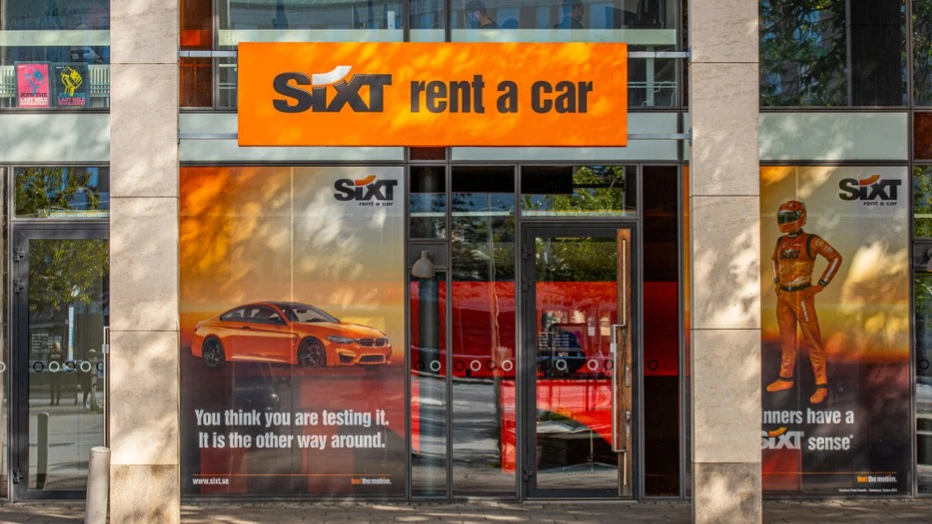
Sixt offers a wide selection of premium segment cars - BMW, Audi, Mercedes-Benz, Volvo Cars, as well as Porsche and Maserati / Photo: Trygve Finkelsen / Shutterstock.com
Over more than a century of history, Sixt has evolved from a modest German car rental company to an international operator of the mobility ecosystem, where in addition to traditional rentals there are carsharing, chauffeur-driven rides, premium transfers, car subscriptions, electric vehicle charging, truck rentals - all in one application. Sixt CFO Franz Weinberger told Oninvest in an interview what ensures the growth of the business today, how the escalating situation in the Middle East affects the company and what advantages help it to compete on the global p
What Sixt is known for
In Germany, Sixt has become a household name: "The brand is so ingrained in German culture that Germans say 'S as in Sixt' when dictating spelling words, just as Americans say 'X as in Xerox,'" writes industry publication Automotive Fleet.
Sixt is known for a wide range of premium segment cars - BMW, Audi, Mercedes-Benz, Volvo Cars, as well as Porsche and Maserati. The share of premium segment cars in the company's fleet is about 58%. This allows Sixt to keep higher prices and ensure higher margins: customers are willing to pay more for exclusive models and high level of comfort.
The history of Sixt began in 1912 with three cars. Large-scale business development started in the 1970s, when the third generation of the Sixt family, led by Erich Sixt, took over. In the 1980s, the company grew rapidly in its home German market, focusing on a strong presence in airports and working with corporate customers. In 1986, Sixt went public on the Frankfurt Stock Exchange, and in the 1990s, having strengthened its leadership position in Germany, it began its international expansion.
Over the past decade and a half, Sixt has transformed into a full-fledged mobility platform: in addition to car rentals, the company develops carsharing, truck and van rentals, electric vehicle charging and car subscriptions. Today, the Sixt network has about 2,300 branches worldwide - about 200 more than last year.
- Sixt remains a family business: the Sixt family's holding company, Erich Sixt Vermögensverwaltung GmbH, owns 58.3% of the group's shares. Erich Sixt himself has been chairman of the company's supervisory board since 2021, and his sons Alexander Sixt and Konstantin Sixt share the co-CEO positions. How does the status of a family company affect the business?
- Family ownership allows us to think in terms of generations rather than quarterly reports. This is reflected in our conservative balance sheet management philosophy, with an equity ratio of approximately 30%. We consciously maintain a compact and disciplined fleet.
- In 2025, SIXT reported revenue growth of around 9% - to €4.3 billion - and almost 20% profit growth. How did the business perform in the first quarter of 2026?
- We had a record first quarter, with revenue of €929 million, our 19th consecutive record quarter and the first time we have exceeded the €900 million mark. Revenue was up 12.6% in constant currency (i.e. excluding the impact of exchange rate fluctuations). At the same time, profit before tax turned positive to €2.1 million against a loss of €17.6 million a year earlier. This represents an improvement of around €20 million in the seasonally weakest quarter of the year.
Europe (excluding Germany) grew by more than 16%, Germany by almost 12% and North America by about 9% in local currency.
The main drivers of growth are consistent investments in the development of the brand, the new Sixt One loyalty program, the international network and the company's technology platform, as well as a strict approach to fleet planning, which allowed to increase its utilization rate.
- How is the current US-Iran conflict affecting demand and operations, what proportion of the business is related to the Middle East? Have you maintained your forecast for 2026?
- We still expect group revenues of between €4.45 billion and €4.6 billion in 2026, with a pre-tax profit margin in the neighborhood of 10% on a full-year basis. Of course, macroeconomic and geopolitical uncertainty has been heightened by the conflict in the Middle East.
In the conflict-affected countries, we operate exclusively through franchise partners. Therefore, the direct financial impact on the group level is relatively small. A much more important factor is the indirect decrease in demand from these customer source markets. We will see how the situation develops during the important summer season for us and whether this can compensate, for example, for stronger tourist demand within Europe.
- High fuel prices and inflation can reduce demand - how do you manage these risks?
- Customers typically book transportation only a few days or weeks in advance. We manage this uncertainty by maintaining a compact fleet size that remains below current demand and by keeping fleet vehicles well below one year in age. This allows us to quickly adjust our fleet structure to actual demand levels.
- What are the differences between your business in Europe and North America?
- The most important difference lies in the risk structure of the fleet: in Europe, more than 90% of the fleet is "risk-free" due to buy-back agreements with manufacturers. The U.S. market is structurally riskier because U.S. automakers do not have their own dealer networks of this type. Another key difference is the maturity of the markets: in Germany, we have a market share of around 40%; across Europe as a whole, around 18%; and in the US, only around 3.5%. This is why North America remains our most important growth market.
- Your advertising has long been known for its bold and sometimes provocative style, including political humor. Recently, however, it seems to be more restrained. What is behind this change?
- In fact, I would argue with the very statement of the question. The character of our brand - fun, bold and premium - hasn't changed at all. Our social media team always keeps a close eye on current events and is ready to respond quickly in our trademark ironic style - but only when it really fits our brand and our products. This applies to viral internet trends as well as political topics.
A recent example: when Chancellor Friedrich Ma was in the media spotlight, we published a photo of a Mercedes-AMG SL63 with the caption, "So poliert man sein Image auf" (from German: "This is how one polishes one's image").