There will be a virus-hunting technology race at the World Cup. Who's in the race?

This year's FIFA World Cup will be held in three countries - the United States, Mexico and Canada. Pictured are FIFA President Gianni Infantino, U.S. President Donald Trump, Mexican President Claudia Sheinbaum and Canadian Prime Minister Mark Carney. Photo: The White House
The 2026 FIFA World Cup kicks off on June 11 and is already being called the biggest sporting event in history. Matches will take place in stadiums in the United States, Canada and Mexico. But the celebration of sport will take place against a backdrop of numerous reports of outbreaks of deadly infectious diseases around the world. How can modern science and technology help nations with biosecurity?
Dangerous route
Perhaps one of the oldest mass events in the history of mankind can be called the Hajj, a Muslim pilgrimage to the shrines in Mecca and the surrounding area (now the Kingdom of Saudi Arabia). It is believed that the ritual was established by the Prophet Muhammad himself in 628 A.D. The Hajj has become one of the five pillars of Islam, and every Muslim, if his health and means allow, is obliged to make it at least once in his life.
According to official figures, more than 1.6 million Muslims from more than 170 countries will perform the Hajj in 2025.
At first, slow caravans or sailing ships on which pilgrims traveled served as a kind of quarantine, preventing the rapid spread of infections. However, with the advent of fast steamships in the XIX century, the situation began to change, say the authors of the article in the French journal MedSci.
Muslims from India, where there were cholera outbreaks, were increasingly traveling to Mecca. Those who were carriers of the infection infected others during the hajj, who, traveling home to different countries, spread the disease further.
During the Hajj of 1821, a global cholera epidemic that began in India in 1817 killed 20,000 pilgrims. Another cholera epidemic during the Hajj in 1865 killed 15,000 of the 90,000 pilgrims and spread around the world, including the United States and Europe, claiming a total of 200,000 lives.
These events prompted Western powers to realize that infectious diseases were not a local problem in their distant overseas colonies. International alliances to combat epidemics began to form, eventually becoming the basis on which the modern World Health Organization (WHO) was established.
To control infections during the Hajj, two huge quarantine stations were established in the late 19th century. One on the island of Kamaran in the Red Sea, where pilgrims returning from Mecca to Southeast Asia were quarantined. And the other was in the Egyptian city of Et-Tur. It was used by those traveling north to the Maghreb, Central Asia, Russia, Turkey, and Syria.
At first, people were simply quarantined there to see if anyone got sick. Later, more modern methods were used, including treating things with disinfectants and steam in special "baths". These stations operated for about 80 years and were closed in 1957 when control of Hajj biosafety was transferred to the Saudi authorities. Since then, the country has been generally successful in dealing with it, thanks to strict regulations on mandatory vaccination of all pilgrims and careful adherence to sanitary rules. Although incidents have occurred in recent times, such as the outbreak of smallpox brought by pilgrims in Yugoslavia in 1972, which killed 35 people.
The World Cup is also a kind of pilgrimage, only secular. And it creates about the same problems.
Sports drama
The 2026 FIFA World Cup will be unprecedented in scope. It will be held for the first time in 16 stadiums in three countries - the United States, Canada and Mexico. Moreover, it will bring 48 teams instead of the usual 32. And every additional national team at the mundial is, as you understand, a fat plus to the number of people who want to watch the matches, both remotely and in person.
FIFA President Gianni Infantino estimates that about 6 billion people will watch the World Cup. FIFA also believes that 6.5 million people will wish to attend the matches in person, of which about 40%, i.e. about 2.6 million people, will be foreign tourists. They will bring the host countries $7.5 billion, and the total economic effect of the mundial will reach $80 billion.
But besides money and good mood, millions of tourists from all over the world can bring with them less pleasant things, including a variety of diseases.
Viruses are already making their "corrections" to the sports agenda. In late March, the Congo Leopards won a ticket to the World Cup by beating Jamaica, which was a cause for national joy - the last time Congo managed to do so was more than 50 years ago.
"The minute, I kid you not, the minute it became clear that Congo was going to the World Cup, my wife and I bought tickets to the match. It's a once-in-a-lifetime chance," Tshizuna Kalubi, an American of Congolese descent, told Houston Public Media.
Fortunately for him, he is already in the United States, but Congolese fans are less fortunate. In May, an outbreak of the dangerous Ebola infection broke out in Congo and neighboring Uganda (already 223 deaths among 906 suspected cases, according to WHO).
As a result, on May 18, the Centers for Disease Control and Prevention (CDC) and the U.S. Department of Homeland Security temporarily suspended entry for non-U.S. citizens from Congo, Uganda, and South Ma. Canada also imposed similar measures.
"Leopards" trained not in their country, so they will be able to participate in the Championship, but fans from Africa to the matches of their national team, most likely, will not get to the matches. The Congolese government is asking FIFA to refund the money for the tickets to those who have already bought them, BBC reports.
But Ebola is at least a known threat. What about the unknowns?
"Everyone uses the restroom."
It is traditionally believed (and it is) that the biosecurity of the population and tourists is the responsibility of governments. Given the cross-border nature of the current World Cup, the Pan American Health Organization, for example, which brings together the countries of the Americas, began preparing for it as early as 2023, discussing in advance measures to monitor, coordinate and respond to epidemic threats.
However, biodefense is also a large commercial market. Mordor Intelligence estimates it to be worth $21 billion in 2026, with the prospect of growing to $31 billion in five years. Detection and surveillance systems will grow at a compound annual growth rate of 10.21% through 2031. They represent the fastest growing category of countermeasures, the report noted.
"The biggest challenge at a massive event like the World Cup is the unknown: a pathogen you don't even know about. You don't know about it, but you have to detect it - before it starts wreaking havoc," Bloomberg quoted Marty Setron, an epidemiologist who spent 30 years at the CDC tracking the spread of disease, as saying.
Canadian company BlueDot, founded in 2013 by Dr. Kamran Khan, is proud to have warned its customers about the dangers of COVID 5 days earlier than WHO.
BlueDot reported on the deadly hantavirus, whose outbreak on a cruise ship drew global attention in May, even earlier. "In December 2025, Dr. Kamran Khan warned his clients that the epidemiology of hantavirus was changing. It was showing up in places where it had never been seen before, and deaths were also on the rise," CBC Canada wrote.
BlueDot monitors information on known and emerging diseases worldwide, processing about 10 million reports per month. Using human expertise and artificial intelligence, it detects abnormal behavior of pathogens that could spread diseases beyond their normal "habitats.
The state of Kansas has contracted with BlueDot to monitor threats during the Mundial (Kansas City is one of the championship sites).
Georgetown University and MedStar Health, a network of medical centers, have also launched a joint center to monitor possible threats for the duration of the 2026 World Cup, CNN reported.
Another early warning method is wastewater-based epidemiology (WBE). How do you know which diseases have appeared, for example, in a city of many millions?
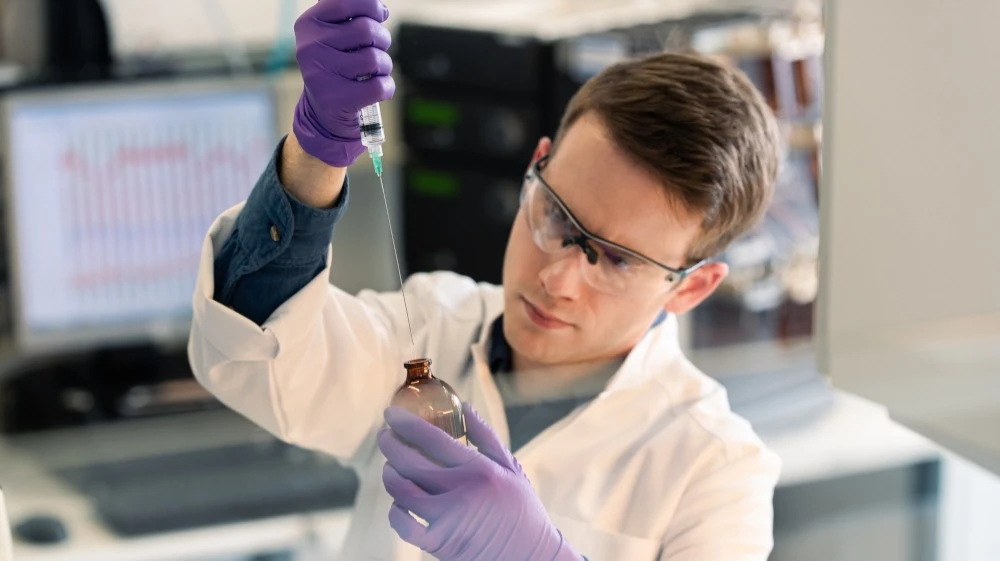
You can painstakingly sift through hundreds of thousands of medical reports, or you can go to your local wastewater treatment plant and take effluent samples. Modern nucleic acid analysis techniques can detect minute traces of pathogen DNA and RNA. And even before any of the sick people go to the doctors. For example, Verily, a subsidiary of Google, is doing this. It can detect more than 30 dangerous pathogens in wastewater, and the list is growing.
"Rich, poor, with or without good health insurance, everyone uses the toilet," says Newsha Gaeli, co-founder of Biobot Analytics, a startup founded in 2017. According to Gaeli, this makes wastewater monitoring an effective way to check on the health of an entire population. Biobot was the first company in America to detect the COVID-19 virus in wastewater, Bloomberg writes. Verily Health and Biobot Analytics will analyze effluent from 400 wastewater treatment plants during the 2026 World Cup.
This year's World Cup will reveal winners not only in soccer, but also in healthcare. Scientists predict that epidemic threats will only grow, and this is a good reason for an investor to think about the prospects - which companies could be a good bet in biosecurity.
This article was AI-translated and verified by a human editor