Bill Gates: AI is a technology powerful enough to cause “a billion deaths”
Self-regulation by AI developers is not enough, according to the billionaire

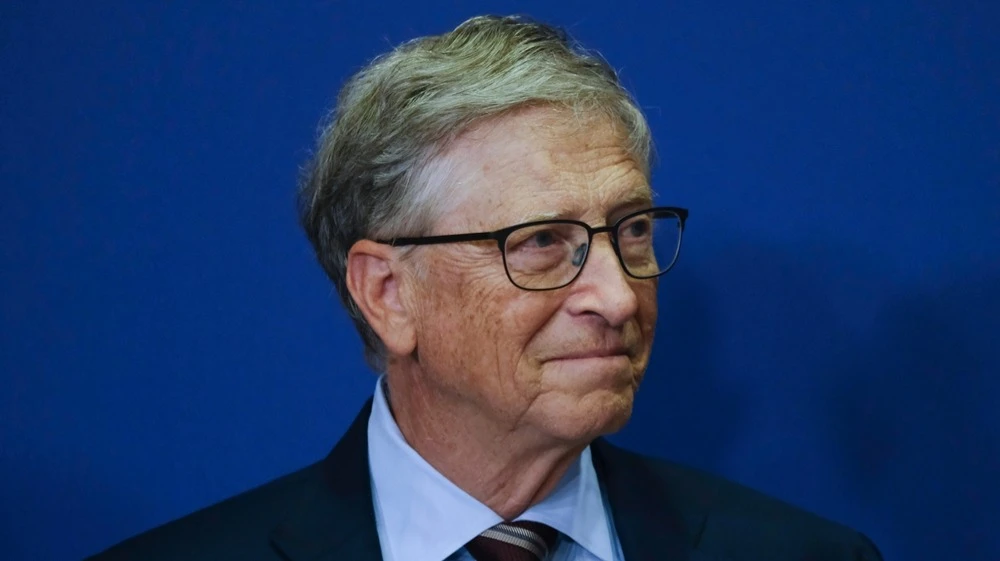
Bill Gates warned of the dangers that AI could pose / Photo: Shutterstock.com / Alexandros Michailidis
Artificial intelligence has enough power to trigger events that would lead to “a billion deaths,” said Microsoft co-founder Bill Gates. He called on governments to help regulate the development of the technology, as self-regulation by tech companies is not enough.
Details
"AI is certainly powerful enough to lead to events that could result in a billion deaths," Gates said in an interview with NBC's "Meet the Press." According to the Microsoft co-founder, there has never been a weapon as powerful as the combination of people with malicious intent and the latest AI tools.
Gates believes that voluntary measures by technology companies alone are not enough to ensure security. “It is essential that law enforcement agencies and policymakers participate in the discussion about what protection and monitoring measures should look like. And this must be a mandatory requirement. It will place an additional burden on the industry, but it won’t significantly slow down their operations,” he said.
In August, Gates also warned in an essay that malicious actors could use increasingly powerful AI systems for cyberattacks, fraud, and the spread of misinformation, and suggested safeguarding jobs for people to protect against AI.
What Other Market Participants Think
Gates’ warnings came amid a growing debate in Silicon Valley about the long-term risks of AI, according to Bloomberg. In early September, Anthropic employee Jacob Coxon resigned and accused Anthropic and OpenAI of “gambling with our lives” due to the race to create superintelligent AI. Another Anthropic employee, Evan Hubinger, stated that he estimates the probability of humanity’s complete extinction due to AI within the next decade to be more than 10%.
Anthropic CEO Dario Amodei called in September for a slowdown in the development of the most powerful AI models. His proposal was supported by OpenAI CEO Sam Altman and Elon Musk. Amodei also advocates for government involvement in creating mechanisms to oversee the development of the technology.
Not everyone shares the alarmism surrounding AI. For Jensen Huang, CEO of Nvidia (the main beneficiary of demand for AI infrastructure), AI is not a new form of “alien intelligence,” as one OpenAI employee described it, but rather human-created “hardware” and software. This means it can be controlled by its creators and through the law. Huang believes that the free market will prevent AI developers from releasing unsafe products.
Trust and AI’s alignment with human values are becoming key competitive advantages in their own right, and companies are interested in mitigating risks stemming from potential liability for harm, said Meta CEO Mark Zuckerberg. Meta is trying to catch up not only with Anthropic and OpenAI but also with Google, which have pulled ahead of it in the field of AI. The September launch of the AI agent Muse proved successful, driving the company’s stock to its best rally in more than 13 years.
This article was AI-translated and verified by a human editor