At its first meeting with Warsh, the Fed left the rate unchanged for the fourth consecutive time
At the same time, nearly half of the managers expect interest rates to rise this year

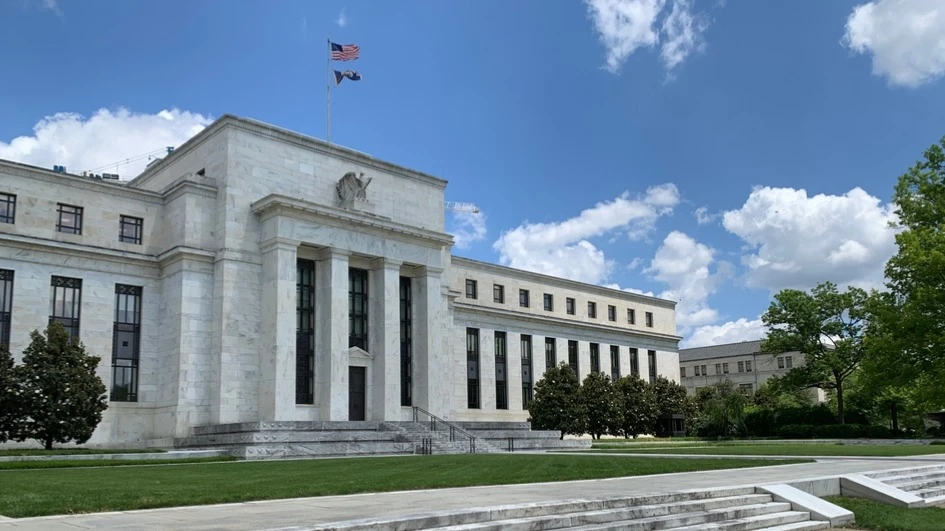
The Fed kept interest rates unchanged for the fourth consecutive time / AshleyRball / Shutterstock.com
Following its June 16–17 meeting, the U.S. Federal Reserve unanimously decided to keep the federal funds rate unchanged at 3.5–3.75%. In its statement , the Federal Open Market Committee cited steady growth in economic activity despite uncertainty stemming from the Iran crisis, but also noted higher inflation linked to disruptions in oil supplies.
This is the fourth consecutive time the decision has been made to keep the rate unchanged. The decision was fully in line with market expectations, but concerns are growing about a tightening of monetary policy at future meetings.
Bloomberg notes that Fed officials are divided on the future policy path. According to the regulator’s updated projections, nine policymakers expect at least one rate hike of 0.25 percentage points by the end of the year, with six of them forecasting at least two hikes. Another nine believe the rate will remain unchanged or be lowered. There was no 19th vote, suggesting that the new Fed Chair, Kevin Warsh—who had previously criticized the practice of such forecasts—abstained from participating in them.
Bloomberg notes that Fed officials are divided on the future policy path. According to the regulator’s updated projections, nine policymakers expect at least one rate hike of 0.25 percentage points by the end of the year, with six of them forecasting at least two hikes. Another nine believe the rate will remain unchanged or be lowered. There was no 19th vote, suggesting that the new Fed Chair, Kevin Warsh—who had previously criticized the practice of such forecasts—abstained from participating in them.
How did the market react?
U.S. stocks turned negative following the announcement, whereas they had been trading in positive territory prior to the release. The broad-market S&P 500 index and the tech-heavy Nasdaq Composite fell 0.5%, while the blue-chip Dow Jones index declined by just under 0.1%.
What About Inflation?
Price pressures remain the main argument in favor of keeping the rate at its current, high level. According to data for May, the U.S. Consumer Price Index (CPI) rose 4.2% compared to the same period last year. This is the sharpest increase in the index since April 2023. Core CPI, which excludes volatile energy and food costs, rose 2.9% year-over-year, compared with a 2.8% increase in April; the Fed’s target is 2%.
Furthermore, employment statistics confirm that the U.S. economy is not yet showing signs of cooling. Excessively strong macroeconomic data reduces the likelihood that the central bank will ease monetary policy, Freedom noted. U.S. job growth in May surged more than twice as much as expected. And the cumulative increase over the past three months was the strongest in more than two years.
Kevin Warsh's First Meeting
This meeting was the first under the leadership of Kevin Warsh, who was sworn in at the White House on May 22 as the new chairman of the U.S. central bank. The change in leadership at the regulator comes amid rising inflation and a shift in the rhetoric of U.S. President Donald Trump. While he had been calling for an easing of monetary policy over the past year, he made it clear in late May that he was prepared to “let Warsh do what he wants.” The new Fed chair himself had previously stated his commitment to preserving the agency’s independence from political pressure.
In addition, this meeting is the first in 75 years to bring the new and former chairmen together at the same table. Warsh’s predecessor, Jerome Powell, retained his position as one of the governors; his term in that role does not expire for another two years.
What Analysts Are Saying
A peace agreement between the U.S. and Iran could influence the Fed’s policy, noted Robert Brusca, chief economist at FAO Economics, in a MarketWatch report. However, questions remain about how quickly oil prices might fall. It is unclear how persistent inflation will remain and whether the deal on the Iranian crisis will hold, he added. “An agreement that reopens the Strait of Hormuz and restores global oil supplies could have a huge impact on the Fed’s policy,” Brusca said.
“Worsh faces a colossal challenge—striking a balance between President Trump’s push for lower rates and the need to demonstrate to the market that he is a trustworthy and independent Fed chair, — Bloomberg quotes Wolf von Rothberg, an equity strategist at Bank J Safra Sarasin. — Inflationary pressures in the U.S. are unlikely to subside quickly. Robust growth and elevated core inflation suggest a shift toward a “hawkish” policy, regardless of oil prices.”
This news story is being updated.
This article was AI-translated and verified by a human editor