The Oligarchy's Achilles' Heel: What a New Book Criticizes About the Residents of Silicon Valley
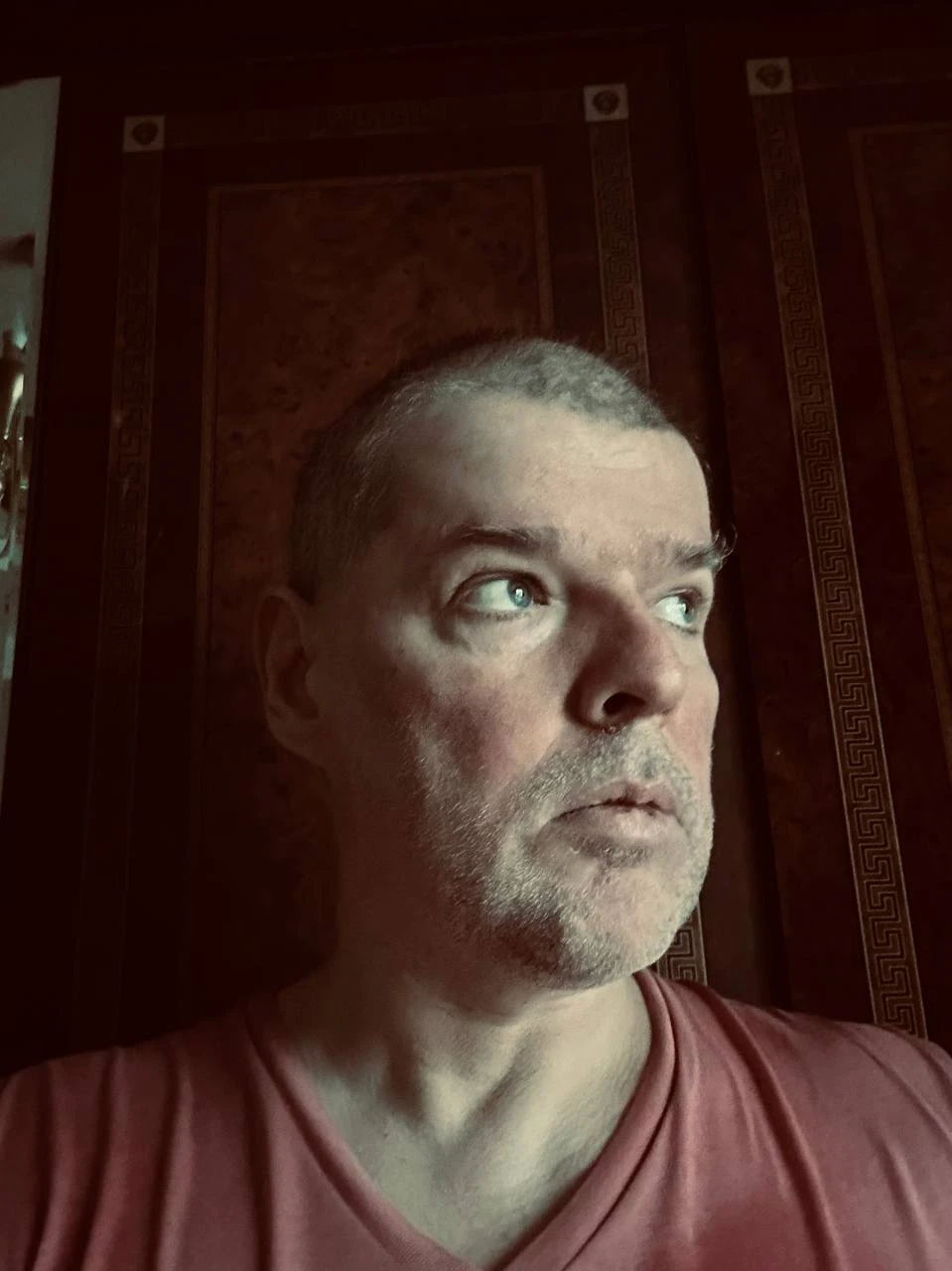

Jill Durand writes that technofascism is a unified system that includes AI, cryptocurrencies, military innovations, social media, and surveillance systems, all controlled by oligarchs / Illustration created using AI
Jill Duran’s book *The Nerd Reich: Silicon Valley Fascism and the War on Democracy* was published in August and made *The New York Times* bestseller list that same month. Durand, a journalist and former communications director for Kamala Harris during her tenure as California’s attorney general, takes a critical look at Silicon Valley’s billionaires. Oninvest editor Maxim Semelyak explains what’s wrong with this book.
Your dad's a fascist, and so is your son, and everyone, everyone, everyone
Not long ago, they were called “techno-optimists.” About three years ago, the term “techno-feudalists” came into vogue. Then people started talking about “techno-extremists,” and now, as they say, the masks have come off, and they’re simply called fascists.
They are Silicon Valley billionaires, tech giants,
AI pioneers, and all those whom Joe Biden, in his farewell speech, called an existential threat to democracy.
In fact, Gil Durand’s book *The Nerd Reich: Silicon Valley Fascism and the War on Democracy* begins with this quote from the former U.S. president.
"The Masks Have Come Off" is precisely the author's choice of words; the book is written in exactly that language.
In 2025, the tech industry showed its true colors. Devoid of any moral compass or commitment to democratic principles, many of Silicon Valley’s most prominent figures chose to openly align themselves with President Trump.
According to Duran, Biden realized this too late—the situation had gone too far, even though people had long been drawing attention to the peculiarities of how the California characters had developed.
Duran, in particular, recalls Paulina Borsuk’s scathing and compelling 2000 book, *Cyberselfish: A Critical Romp Through the Terribly Libertarian Culture of High Tech*. According to her, Silicon Valley was populated entirely by computer geeks and nerds, narcissistic libertarians well-versed in Ayn Rand, cyberpunk prodigies, anarcho-capitalists, and the like—as uninhibited and depraved as you like, yet still free-thinking and voting for Democrats. However, a quarter-century later, they’ve become much more conservative and Trump-like. And while during Trump’s first term there was a “Tech Against Trump” movement, and Apple, Facebook, Google, and Microsoft were among nearly 100 companies that filed a legal challenge in 2017 against Trump’s anti-immigration executive order, by his second term, Silicon Valley had already given the re-elected president every conceivable form of support—both moral and, more importantly, financial.
Duran wasn’t exactly the first to apply Godwin’s Law to the techno-elite. *The New Yorker* had already written about techno-fascism taking over America. Journalist and author Naomi Klein spoke of “end-times fascism.” Journalist Nafiz Ahmed preferred the term “Alt Reich”—a sort of transnational conspiracy of billionaires against democracy, with a tilt toward white nationalism. However, Duran’s *The Nerd Reich* is perhaps the most well-researched piece of propaganda and the most unrestrained pamphlet on the subject.
According to Duran, techno-fascism is a unified system that includes AI, cryptocurrencies, military innovations, social media, and surveillance systems. All of this is controlled by a group of interconnected oligarchs (it’s a shame that the author is unaware of the glorious term “semibankirshchina” and is forced to rely on official jargon), who are directly integrated into the U.S. government and possess unlimited capabilities to privatize all public assets and destroy democracy—which, in fact, stands in the way of their unchecked accumulation of capital. According to Duran, the new technological elites are far more dangerous and, above all, more powerful than any hypothetical world government or deep state. Techno-fascism is the very offspring of venture capitalism, with its proliferating “unicorns” threatening to trample the remnants of freedom.
The Legend of Thiel
Duran believes that the most dangerous person among the technofascists is not Elon Musk, but Peter Thiel. First, he directly “mentored” the Catholic J.D. Vance, and if the vice president were to succeed Trump in the future, Thiel, as his mentor, would automatically become the most powerful person in America and the world. As early as 2025, Bloomberg reported that people associated with Thiel, including David Saks and Michael Kratsios, were gradually taking up positions in the U.S. administration.
Second, while Musk is a physicist and economist by training, and his thoughts still revolve more around inventions than ideology, Thiel is a philosopher through and through. He studied under René Girard himself, one of the key thinkers of the 20th century. Few representatives of truly big business can boast such a lineage. The only other example that comes to mind is George Soros, who studied under Carl Popper. However, Soros himself is already a figure of the last century, whereas Thiel is clearly shaping the future.
To understand Silicon Valley’s politics of right-wing radicalism, you need to understand who Thiel is. And to do that, you don’t even need to read Girard— but the 1997 book *The Sovereign Individual*, which, according to Durand, shaped the billionaire’s views—on independence from the state and other foundations of “megapolitics.”
In recent years, however, Thiel has been delving less into philosophy and more into theology. He runs a private club called ACTS17 (Acknowledging Christ in Technology and Society), enjoys discussing miracles, universal forgiveness, and Christ, and gives lectures on the Antichrist and the Apocalypse. At the time, his sermons drew a scathing rebuke from Father Paolo Benanti, an advisor to the Pope.
Back in 2014, Thiel recommended structuring startups like religious cults, and, in turn, people in his inner circle began pretending to be devout Christians in order to get closer to their patron. The end of the world has become a business model—it’s easier to make billions off of apocalyptic sentiments, especially since it promises an almost religious escape into new realms of existence—whether it’s AI, life on Mars, or genetically modified immortality.
In 2020, Thiel said that AI could centrally manage the global economy, and specifically noted the Chinese Communist Party’s particular interest in this aspect. Thiel generally views technology as an alternative to existing global politics—after all, it can be used to change the world without worrying too much about people’s opinions. In this regard, he has certainly succeeded. After all, PayPal disrupted existing payment systems, and the scholarships Thiel established called into question the necessity of higher education in its current form.
According to Thiel, technology turns humans into gods. But since governments have the power to regulate it—and that is the worst thing that could happen to humanity—they are the embodiment of absolute evil and the Antichrist. The entire government bureaucracy must be replaced with chatbots, since it is precisely the bureaucrats and the scientists aligned with them—such as Eliezer Yudkowsky—who are playing it safe and resisting scientific progress (and, by extension, Trump), much like the “red directors” opposed privatization in
Russia in the 1990s.
Dark Enlighteners
That said, Thiel isn’t the only one. The book provides a detailed list of all the eccentric reactionaries and enemies of democracy. Even
biohacker Brian Johnson with his obsessive pursuit of health, since he, too, serves technologies that lead to world domination—it’s no coincidence that in one interview he outlined his five main ambitions: the first is to found a company, and the fifth is to become God.
Special attention was given to programmer and psychedelic blogger Curtis Yarvin (another acquaintance of Vance’s, whom Vance himself called a fascist—whether approvingly or not is unclear). A couple of years ago, he called for the removal of all ineffective bureaucrats from government structures and for the transformation of the U.S. into a corporate dictatorship. Yarvin was once praised by Nick Land himself, an English philosopher and herald of the so-called Dark Enlightenment (in fact, Durand refers to the key figures in his book as “captains of the Dark Enlightenment”). According to Land, revolutions are no longer necessary; it is enough simply to let technological progress run its course, and it will itself destroy all
states and social structures, and all that remains for rational people is to help accelerate the process. It must be acknowledged that these ideas turned out to be more like predictions than fantasies. And Thiel, in general, is saying roughly the same thing.
It's either them or us
Strictly speaking, the author hasn't revealed anything new. Alex Karp himself—one of the characters in this book—made it abundantly clear in last year's *The Tech Republic* and in his subsequent manifestos and actions where things are headed.
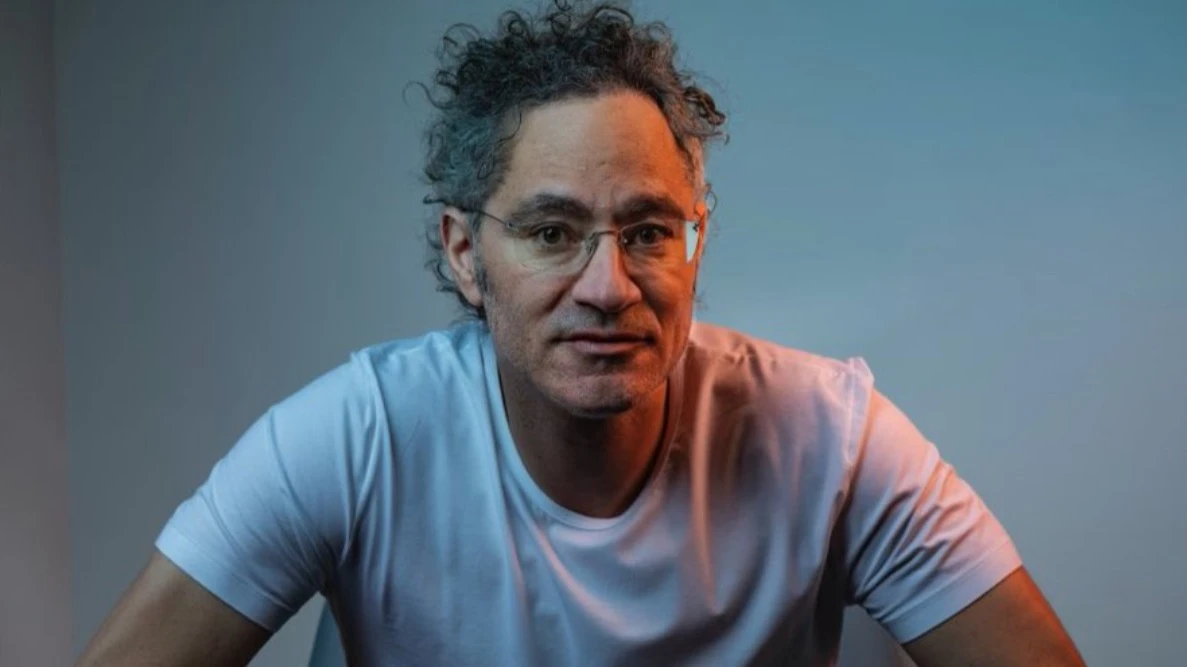
By the way, Karp’s and Duran’s books are written in roughly the same “we won’t forget, we won’t forgive” style. Although Karp is, of course, a far more terrifying person, since—unlike Duran—he’s the one who calls the shots.
As for the latter—Kamala Harris’s former communications director—all he can do is keep insisting that, of course, it’s a bit hard to imagine a world where billionaires have disappeared, but it’s still better and simpler than living under the tyranny of their multibillion-dollar technological fascism. He believes that democracy and billionaires (as well as trillionaires) are two incompatible things, and the question of the planet’s future boils down to this: it’s either them or us. Duran believes that “we” certainly deserve all the joys of new technologies, and the task is simply to take them away from the Silicon Valley oligarchs. He does not specify exactly how to do this.
Like all propaganda literature, the book is guilty not so much of inaccuracies as of regular exaggerations. For example, Durand asserts (citing David Golombia’s book with the telling title *The Politics of Bitcoin: Software as Right-Wing Extremism*) that blockchain technology itself is needed first and foremost by right-wing politicians to wield power independent of government structures. Duran also believes that AI is a weapon of the right, although according to a recent Political Compass test, dozens of models actually support left-wing ideas—with the exception, of course, of Moscow-based Grok.
And in general, the author’s logic is characterized by a certain inflexibility: “They’re all fascists because they’re fascists.” Thiel’s ideology is fascist because it aligns with the ideals of the MAGA movement, which, in turn, is fascist because Umberto Ek and later scholars identified ten key characteristics of the phenomenon, and MAGA meets them all—whether it’s an almost religious cult of the leader, a strict hierarchical structure, a reliance on absurd but effective propaganda, the purging of society of foreign elements, etc.
Strictly speaking, it’s hard to argue with Duran on most points, especially when you look at Trump’s recent posts on Truth Social featuring the design of the new ceremonial uniform for the U.S. Space Force. It looks exactly like a Nazi uniform—which, incidentally, was predicted by the great Paul Verhoeven in the movie *Starship Troopers*.
However, the style of Duran’s book is all too predictable and therefore flawed, and his invocation of fascism comes across as a trite and facile rhetorical device. This is especially true when one considers the widely held view that the sought-after shift to the right was, after all, a reaction to the leftist bias with its woke ideology, relentless agenda, bureaucracy, and other self-destructive measures—and this bias, too, many liked to call “fascist.”
Actually, that’s what’s most striking: technological progress truly extends beyond the horizon, while human consciousness just keeps spinning in a spiral, going round and round with the same old contradictions and arguments: the Democrats versus the red-browns.
Everything that the notorious tech elite can come up with on an ideological level is limited, at most, to sectarianism and Epstein’s island (who, by the way, invested in Thiel’s funds, as claimed in the book).
In this sense, the naive psychopath Kanye West embodies every conceivable subversive trope: a religious cult, a naked beauty, and Hitler. So when Duran himself, with his blue, accusatory eyes, spouts platitudes about how cryptocurrencies are, it turns out, the preserve of pariah nations like Iran, it’s time to ask: Jill, are you really an anti-fascist?
This article was AI-translated and verified by a human editor