The tenge became the best-performing currency in Asia and Europe in 2026. Why is it strengthening?
Capital inflows into local government debt and high interest rates have made the tenge one of the most attractive currencies in emerging markets

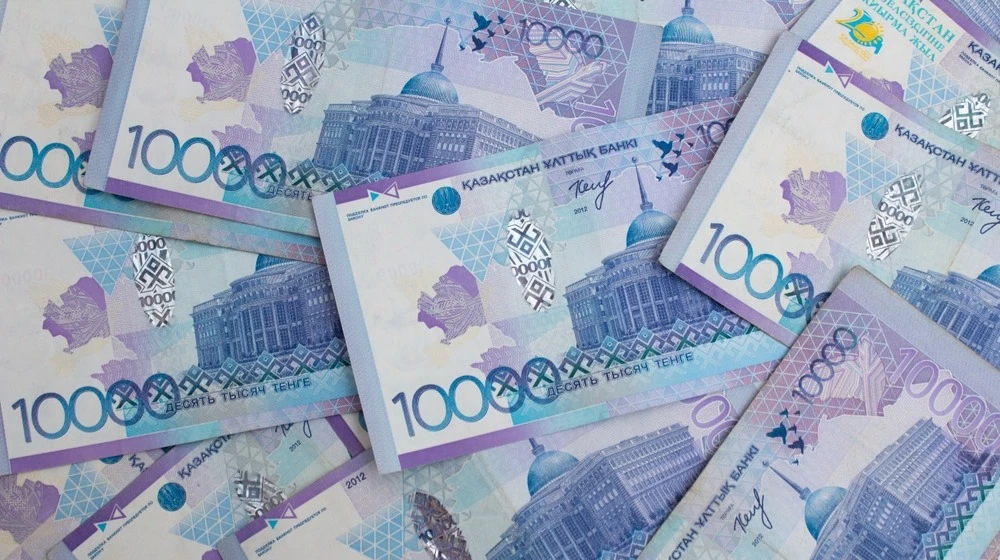
The Kazakh tenge was the best-performing currency in Asia and Europe in 2026, according to the Financial Times. Since the beginning of the year, it has appreciated by 9.7% against the dollar, outperforming all other currencies worldwide, with the exception of a few currencies from Latin America and Africa.
Why Is the Tenge Appreciating?
The tenge is traditionally viewed as benefiting from rising oil prices, but this time the main reason for its appreciation was capital inflows, Dmitry Dolgin, ING’s chief economist for the CIS, told the publication. As of June, foreign investment in tenge-denominated government debt reached $5 billion. This represents nearly one-tenth of the total volume of such securities in circulation, compared with approximately $2 billion a year earlier.
Foreign investors are drawn to Kazakhstan by its high interest rates. Even after the July cut to 16.75%, Kazakhstan’s base rate remains higher than those in many other countries. Kazakhstan’s investment rating also works in the tenge’s favor—unlike, for example, Egypt and Nigeria, whose currencies offer double-digit returns but deter investors who are not permitted to hold speculative-grade securities, the FT reports.
Another important factor is the simplification of foreign access to Kazakhstan’s government debt. Capital inflows into Central Asia’s largest economy accelerated after authorities announced plans in April to connect local government bonds to the Euroclear international clearing system, thereby simplifying trading in these securities. “The most active capital inflows have occurred in recent months,” Dolgin confirms.
“This is truly a strong fundamental story. ‘People want to diversify their portfolios,’ said Jethro Siekinen, head of the emerging markets debt division at LGT Capital Partners. According to him, access to Euroclear will likely increase the appeal of Kazakhstani bonds.”
In addition, Kazakhstan hopes to be included in the JPMorgan GBI-EM benchmark index of emerging-market government bonds denominated in local currency. The U.S. bank is also developing a separate index for frontier markets, where, according to the National Bank, Kazakhstani bonds could account for up to 8% of the index if included.
The tenge is receiving additional support from the growth in foreign direct investment, which rebounded to $6.3 billion in the first quarter. Kazakhstan is striving to become a transit hub for goods traveling from China to Europe in order to secure an alternative source of revenue beyond oil. “They are investing heavily, including foreign capital, in transportation infrastructure,” noted Clemens Graf, co-head of the EMEA regional economics desk at Goldman Sachs.
This article was AI-translated and verified by a human editor