The weight loss boom has hit sales of plus-size clothing at Macy's. What supported the growth?

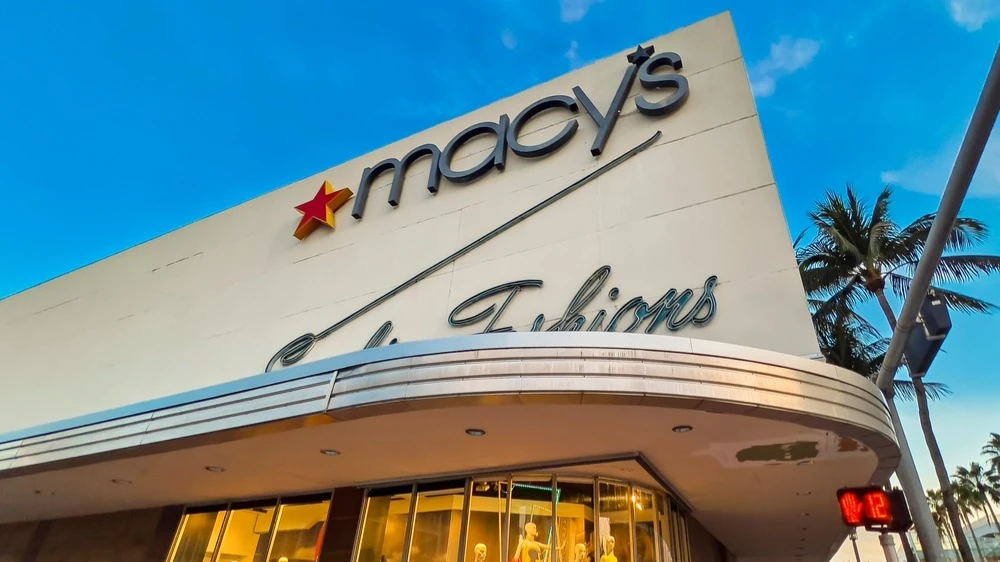
Macy's reported increased sales at all three of its chains / Photo: MDV Edwards / Shutterstock.com
Amid the popularity of weight-loss drugs, the U.S. department store chain Macy's saw its performance in the oversized clothing segment weaken, Bloomberg reported, but that didn't stop the retailer from achieving the fastest expansion in comparable sales in four years. All three chains in the group showed growth: in addition to the flagship Macy's, they are luxury department stores Bloomingdale's, as well as stores selling premium cosmetics and perfumes Bluemercury.
Details
Macy's is actively trying to improve its assortment in the plus-size apparel category because of its lingering underperformance, CEO Tony Spring said during a conference call following the release of its quarterly report. He did not directly link the decline to the boom in GLP-1 drugs from Eli Lilly and Novo Nordisk, yet Bloomberg reminds us that many companies - from restaurants to fashion houses - are having to adapt to changing consumption. Spring, in particular, noted that Macy's is working to improve the quality of its plus-size offerings.
Thanks to a retail overhaul in which the company completely revamped its approach to 200 of its most promising outlets across the country, comparable sales for the quarter ended Ma. 2 rose 3%. That's the best pace in four years, CNBC calculated. The strategy includes closing unprofitable branches in declining malls and reallocating investment to stores that have been retained, the channel explained. The three-year recovery program is now on its second year.
All three chains of the group showed growth, in particular, at the flagship Macy's it amounted to 1.6%, while analysts predicted only 1.4%, writes The Wall Street Journal. But in Bloomingdale's comparable sales jumped by 10.2% - this in the first quarter at this division has not yet been. This marked the seventh consecutive quarter of growth, Quartz noted. A wide assortment of popular brands, as well as the recent bankruptcy of rival Saks Fifth Avenue, contributed to the result, Spring told CNBC.
"Are perturbations in the market useful to us? Of course it is. Is it the primary reason for our growth? No," said the head of Macy's. Customers are responding positively to the company's restructuring, he said.
The retailer's revenue last quarter increased 1.8% to $4.68 billion. Net income rose 65.8% to $63 million or $0.23 per share.
What's next
Amid the strong performance, Macy's revised its full-year forecast for comparable sales growth to 0.5%-1.2%. Previously, 0.5% was the upper bound of the retailer's expectations, while it also allowed for a drop in sales. Raising the forecast is a sign that the company's focus on developing the luxury segment and improving the assortment is paying off, Bloomberg notes.
Net sales through 2026 will be in the range of $21.5 billion to $21.75 billion, Macy's believes. The company expects earnings per share in the range of $2 to $2.2, up from the previous estimate of $1.9-$2.1.
What about the stock
Shares of Macy's traded volatile on June 3, at the moment of publication of this text they were getting cheaper by 0.7%. The broad market index decreased by 0.6%. Since the beginning of the year, the retailer's securities are down by 2.4%.
Now retailers are forced to work in a difficult environment: high gasoline costs coupled with other macroeconomic factors are forcing consumers to be more careful about where and what they spend their money on, Bloomberg notes. Nevertheless, the results, which were ahead of expectations, indicate that customers will continue to shop despite rising prices and persistent inflation,
Ten of the 15 analysts covering Macy's stock have a neutral stance and advise holding the stock in their portfolios. Four recommend buying, and only one recommends selling. Wall Street is more optimistic about the company now than it was three months ago. Back then, there were two bearish ratings and only three bullish ratings.
This article was AI-translated and verified by a human editor