"They Started Catching Up Late, but Quickly": Movchan's Group Guide to Investing in Kazakhstan
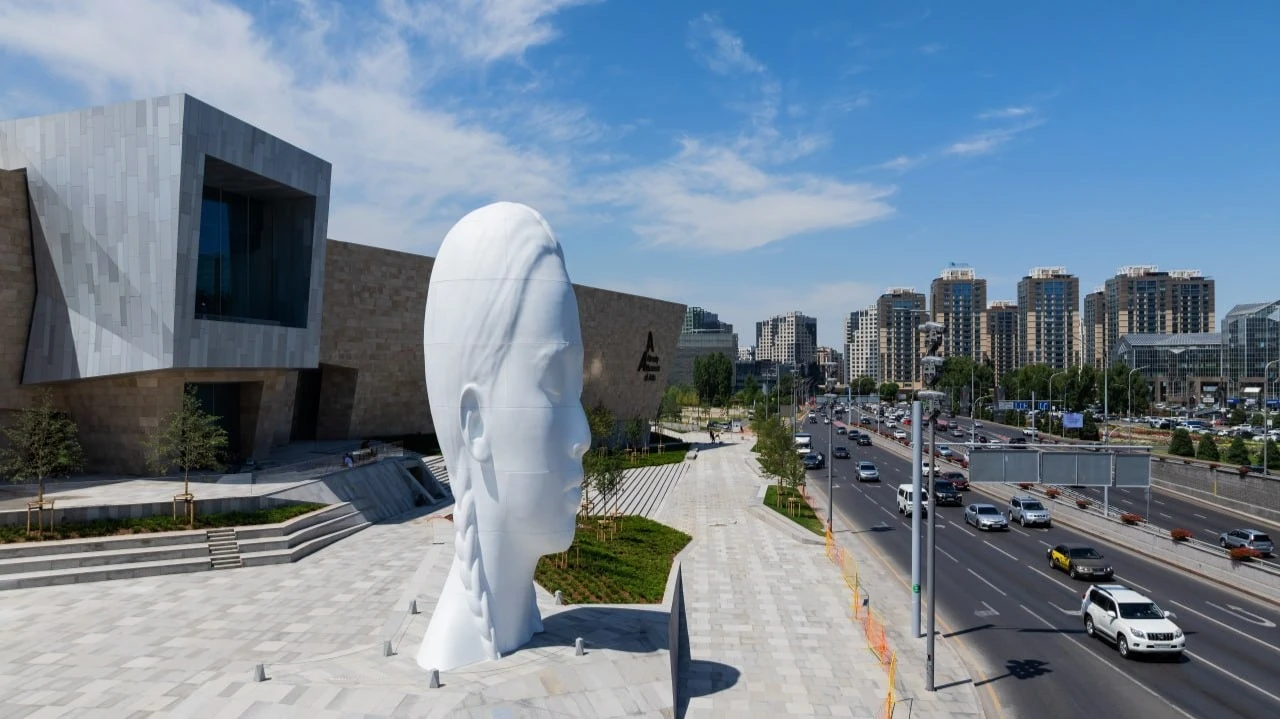
Kazakhstan "skipped" the era of checks and checkbooks and went straight to the next one. MaxZolotukhin / Shutterstock.com
The ninth-largest country in the world by area, the largest producer of uranium, and one of the countries with the most abundant oil reserves. In this analytical piece, experts from the investment firm Movchan’s Group discuss the paradoxes inherent in Kazakhstan’s economic model and what investors looking to invest in the country need to consider. We are publishing an abridged version here.
Today, Kazakhstan rests on three pillars. The first is the extraction of mineral resources: oil, gas, uranium, coal, and metals. The second is its position as a transportation hub: the country lies between China and Europe, and a significant portion of the overland trade between them passes through the Kazakh steppe. The third is agriculture: Kazakhstan is fully self-sufficient in food and exports grain.
It is noteworthy that Kazakhstan lacks the fourth pillar that underpins the economies of many of its neighbors in the former Soviet Union: remittances from relatives working abroad. In Armenia, such remittances have accounted for more than one-tenth of GDP in some years. In Kazakhstan, the flow goes in the opposite direction: migrant workers from Uzbekistan, Kyrgyzstan, and even Russia come to work in Kazakhstan and send money back home. This is a good indicator of income levels: a country from which people do not need to leave to earn a living has already crossed a certain threshold.
At the same time, raw materials do not contribute all that much on their own: in 2025, the oil and gas sector’s value added accounted for about 15% of GDP. But through exports, taxes, and the National Fund—where oil revenues are channeled—it is precisely these raw materials that determine almost everything else: the tenge exchange rate, the budget, the stability of banks, and consumer purchasing power.
Fitch, in affirming Kazakhstan’s investment-grade rating, lists the same weaknesses year after year: high inflation, excessive state involvement in the economy, and heavy dependence on the commodities sector.
Key Figures:
The world's 50th-largest economy, with a GDP of $306 billion (the same as Finland's) or $14,700 per capita (the same as Argentina's or Serbia's).
It is the world's largest landlocked country, yet more than 80% of land-based freight traffic between China and Europe passes through it.
Kazakhstan's arable land is comparable in size to the United Kingdom, but its grain yields are two to three times lower than those in Canada.
About 85% of Kazakhstan's oil exports travel through a single pipeline—the CPC—which terminates in Novorossiysk, Russia.
Over the past 13 years, the tenge has depreciated against the dollar by about a factor of three: $100 was worth about 15,000 tenge in 2013 and about 45,000 tenge in 2026.
How Does Kazakhstan Make Money?
The main source of revenue is oil. Kazakhstan has proven reserves of about 30 billion barrels, ranking 12th in the world. Only about one-tenth of this is consumed domestically; the rest is exported. Exports reached a record 76.3 million metric tons in 2025, but revenue was lower than the previous year: the average price per metric ton of exports fell from $604 to $524.
Growth in production volumes alone does not guarantee revenue growth—this is due to dependence on global prices, which are, by definition, volatile. It is also important to consider another factor: nearly all of the growth in production is driven by massive projects involving foreign companies: Tengiz, Kashagan, and Karachaganak. According to an advisor to the prime minister, production by Kazakhstani companies themselves has declined by 35% over the past ten years.
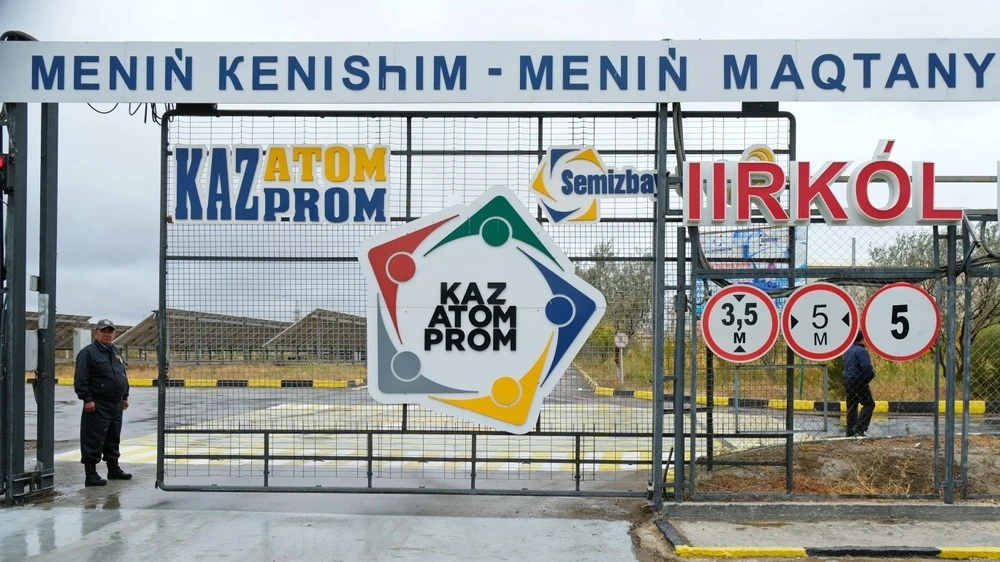
Kazakhstan has been the world leader in uranium production since 2009. In 2025, the country produced 25,800 metric tons, or about 40% of global output. Its main buyers are China and other Asian countries, which account for about half of Kazatomprom’s sales. At the same time, the country has no nuclear power industry of its own: its last reactor was shut down back in 1999. The first Balkhash nuclear power plant is being built by a consortium led by Rosatom near the village of Ulken on the shores of Lake Balkhash. Active construction will begin in 2027, with commissioning expected in 2035–2036; according to the government, subsequent plants will be built by China.
Domestically, the economy operates as a classic resource-based model. In 2025, Kazakhstan produced 120.5 million metric tons of coal, and thermal power plants—mostly coal-fired—account for about three-quarters of the country’s electricity. The share of renewable energy sources is growing, but currently stands at 7%. Coal is cheap, and logistics are well-established—which is both a competitive advantage and a hindrance.
The story is similar when it comes to agriculture. In terms of agricultural land area (including pastures), Kazakhstan ranks sixth in the world, trailing only China, the United States, Australia, Brazil, and Russia, and ahead of India. But arable land accounts for only a small portion of this: the total area under cultivation is 23.8 million hectares, roughly the size of the entire United Kingdom. The country exports more than half of the grain it produces, even though yields are two to three times lower than those of its Western competitors.
According to official data from the early 2020s, most tractors and combine harvesters are more than ten years old, and equipment is being replaced more slowly than the global norm, despite subsidies. This is a classic vicious cycle of a resource-based economy: subsidies make production profitable, so no one is motivated to improve efficiency; and since efficiency isn’t improving, subsidies become indispensable.
Kazakhstan’s largest companies, such as “KazMunayGas” and “Kazatomprom,” are powerful enterprises, but they are essentially “dinosaurs” of 20th-century industry. In modern value chains, they are losing ground to higher-margin, technology-driven services that rely on the latest technologies. It is precisely these sectors—rather than raw materials—that attract the bulk of investment in foreign markets, and it is precisely such companies that are capable of creating large and liquid stock markets.
Why Kazakhstan Depends on a Single Pipeline
As the world’s largest landlocked country, with its nearest export markets located in Europe purely from a geographical standpoint, Kazakhstan exports nearly all of its oil to the global market via a single route. In 2025, approximately 65 million metric tons of Kazakhstani oil passed through the Caspian Pipeline Consortium, accounting for about 85% of exports. The CPC stretches from the fields of Western Kazakhstan to a terminal near Novorossiysk, from where the oil is transported by tanker across the Black Sea.
This dependence constitutes a structural risk, and it manifests itself regularly. In 2022, several serious incidents occurred on the CPC pipeline, causing shipments to be halted. In 2026, the situation worsened: following drone attacks on the consortium’s infrastructure, KazMunayGas’s oil throughput via the pipeline system fell by nearly 25% in the first quarter, and in August, the government lowered the annual production target from nearly 100 million metric tons to 96 million metric tons. Losses are estimated at approximately 3.5 million metric tons.
If we were to describe Kazakhstan’s geography in the language of an asset manager, it would amount to a portfolio of risky assets: two large neighbors with unpredictable political landscapes, a belt of uncertainty to the south, and the small economies of the Caucasus beyond the Caspian Sea, which are themselves subject to geopolitical forces. Such a portfolio cannot be made risk-free; it can only be diversified: more routes across the Caspian Sea, more shipments to China, and new connections in the south. This is exactly what Kazakhstan is doing, but pipelines and ports take years to build, while risks materialize much more quickly.
How Kazakhstan Became a Transit Hub
More than 80% of overland freight shipments from China to Europe pass through Kazakhstan, and transit is the second pillar of its economy. Thirteen international transport corridors pass through the country. Freight volumes on the Trans-Caspian route—the so-called Middle Corridor—have grown from 0.8 million metric tons in 2020 to 4.5 million metric tons in 2024. Plans for the future are much more ambitious: up to 100 million metric tons per year by 2035—more than a 20-fold increase.
China, for which Kazakhstan is a key link in the “Belt and Road” initiative, is investing in local railways, logistics, petrochemicals, wind energy, and uranium production.
In foreign trade, Kazakhstan earns revenue from both Asia and Europe, while its spending is concentrated primarily among its closest neighbors. The main buyers of Kazakhstani exports are Italy, China, and Russia, while imports come mainly from China and Russia. Kazakhstan has a persistent trade deficit with its Eurasian Economic Union (EAEU) partners: over the first 11 months of 2025, exports to EAEU countries totaled $8.9 billion, while imports were twice that amount. However, some of the “Russian” imports are, in fact, European and Asian goods purchased within the customs union and shipped onward.
One import category is particularly noteworthy. In the early 2020s, Kazakhstan purchased approximately $4 billion more in professional services (consulting, auditing, accounting) from abroad each year than it sold. This amounts to about 2% of GDP, and these are areas of expertise that can be “developed” domestically.
The picture is gradually changing when it comes to foreign investment. Historically, the largest investors have been the Netherlands—through which global oil companies operate—and the United States. In recent years, U.S. investment has declined sharply, while Russia and China have taken the lead: in 2024, Russia took first place in terms of investment inflows. An interesting shift occurred in 2025: for the first time since 2011, investment in the manufacturing sector exceeded investment in the extractive sector.
Why Is Capital Leaving Kazakhstan?
Kazakhstani officials themselves unofficially estimate capital outflows over the past 20 years at approximately $200 billion, which is about two-thirds of all foreign direct investment during that same period. The official explanation for this is that the country lacks a developed domestic investment market; the unofficial explanation is that risks are high and investor protection is weak.
In the first decades of independence, the stock market existed more because it was necessary than because anyone actually needed it. It wasn’t developed with a specific goal in mind, and a market doesn’t grow on its own: it’s a complex infrastructure that must transparently facilitate the flow of money and securities. Moreover, Kazakhstan is a small economy, and market capitalization is ultimately determined by the aggregate profits of companies. Global investors move from the top down, from the largest markets to the smallest, and by the time they reach the smaller ones, there is no more room in their portfolios.
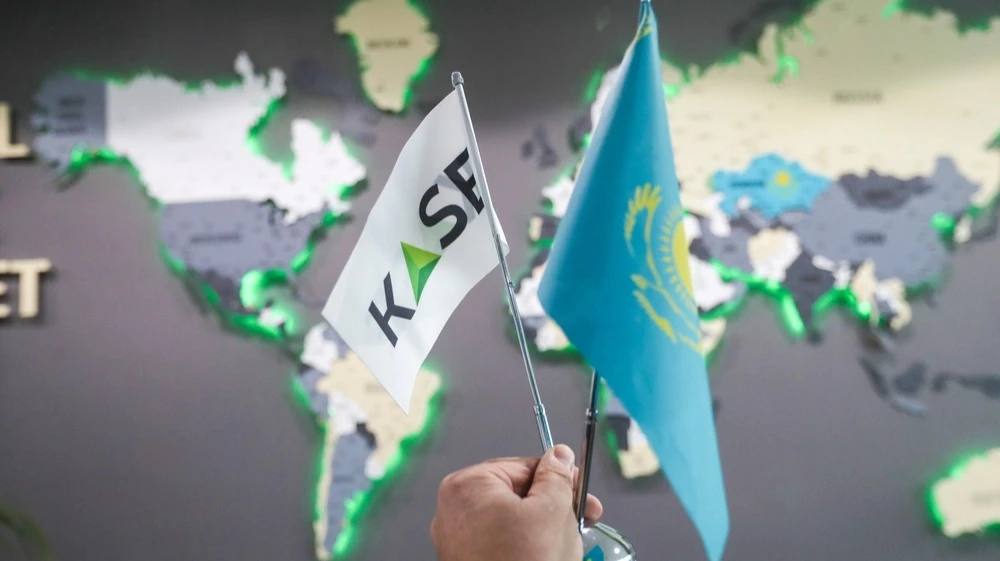
However, much has changed in recent years. Kazakhstan’s stock market capitalization rose to 39 trillion tenge in 2025 (about $77.6 billion, or 24% of GDP), and the KASE index gained 26%. Retail investors have opened 4.2 million brokerage accounts, and it is individuals who account for the bulk of stock trading. However, the scale remains modest: throughout 2025, trading on the KASE totaled 342 billion tenge, or an average of less than $3 million per day. Shares of 76 issuers are traded on the exchange, with commodity giants and banks accounting for the bulk of the market capitalization.
There is also a cultural barrier. Kazakhstani business owners are reluctant to hand over management to hired managers, and without trust in professional management, companies do not go public, which means the market does not gain new issuers.
What Is the MFCS, or Astana in English
The Astana International Financial Center (AIFC) is a special jurisdiction within Kazakhstan with its own regulator, a legal system based on English common law, and an independent court staffed by judges from common law countries, primarily the United Kingdom. Participants in the center are exempt from income tax on qualifying activities until 2066, provided they maintain a physical presence in the country. The center and the Astana Hub technology park are housed in pavilions left over from the EXPO-2017 exhibition.
This is one of the most successful institutional projects in the post-Soviet space. By comparison, in Moscow, the international financial center project was discussed for years, commissions were set up, and it was ultimately declared a success—yet it’s impossible to find it on a map. In Astana, however, the center is up and running—it’s a real place governed by English law, where English is spoken, and the rules are clear to international investors, much like Dubai’s DIFC.
We know this from our own experience: Movchan’s Group has been operating in the AIFC for several years, and today we have an office and a licensed company in Astana. We considered many jurisdictions, and the deciding factors were British law, the tax regime, licenses that meet European and American standards, and the fact that regulators and banks around the world understand this type of structure.
But the center does have its weaknesses. First, there’s the issue of name recognition. When we approached a major Swiss bank—one we’ve been working with for many years—with a proposal to conduct transactions through a company based in the MFC, they asked, “Kazakhstan? Astana? What’s that?” So we had to conduct an educational session for the bank’s employees on our own.
The Cayman Islands are known not because they have signed agreements with regulators, but because they have cultivated an entire ecosystem—comprising auditors, administrators, registrars, and lawyers—who promote the jurisdiction by promoting their own services. The IFCA currently lacks such an ecosystem.
Second, there’s the connection with the rest of the country: local banks sometimes view MFCAs as outsiders from a different legal jurisdiction. At the same time, the center’s administration is surprisingly open and quick to resolve issues. For example, they signed the agreement with the Dutch regulator—which was necessary for us to operate—in just two weeks.
What's Happening in the IT Sector in Kazakhstan
In short, Kazakhstan missed out on the IT boom—and missed it for the same reason it failed to diversify its economy. While young people in Kyiv, Minsk, and Moscow were pursuing careers in software development, everyone in Kazakhstan knew that the oil industry paid the best salaries, and universities were training oil engineers rather than programmers. In numbers, it looks like this: in early 2025, the average salary in oil production was about 1.7 million tenge per month—four times higher than the national average and twice as high as in the information and communications sector. The only difference is that IT salaries are growing faster than any other sector: up 31% over the past year.
The country started catching up late, but it did so quickly. Exports of IT services grew from $33.5 million in 2020 to 1.142 billion in 2025—a nearly 34-fold increase over five years. For the first time, the country became a net exporter of technology: it sold 2.6 times more services than it purchased. The Astana Hub technology park, which occupies the EXPO-2017 pavilions next to the Astana International Financial Center (AIFC), welcomed about 700 new companies in 2025, bringing the total to more than 2,000, including over 490 with foreign participation. Exports by the hub’s residents totaled $634 million, and the ecosystem created over 32,000 jobs.
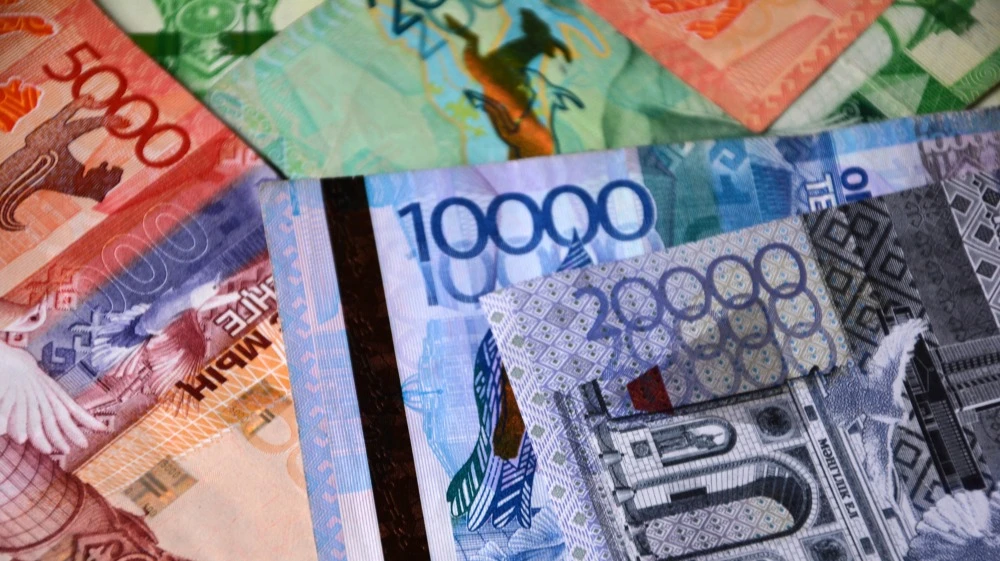
But Kazakhstan’s biggest non-oil success isn’t IT in general, but fintech. In terms of cashless payment penetration, the country ranks among the world leaders: about 88% of the total payment volume, 98% of the number of transactions, and about 90% in the retail sector, compared to 57% in 2020. On average across the CIS, this figure is below 60%. Kazakhstan simply “skipped over” the era of checks and checkbooks and landed directly in the next one. Although it’s worth noting that the volume of cash in circulation continues to grow by about 10% per year, and the money “stashed in the nightstand” hasn’t gone anywhere.
The flagship of Kazakhstan’s fintech sector is Kaspi, which grew out of investments by the legendary Baring Vostok fund, well known in Russia. Its management strategy is simple: a product manager is more important than a financier—in other words, an IT specialist was placed above a banker. For a time, the result was clearly evident in its market capitalization: Kaspi became the most valuable publicly traded company in Kazakhstan’s history, surpassing both KazMunayGas and Kazatomprom. But then something happened that perfectly illustrates this economy: in June 2025, KMG once again surpassed Kaspi, and by March 2026, Kaspi had slipped to third place, falling behind Kazatomprom. The commodities sector regained the top spot simply because commodity prices had risen again.
Exporting fintech turned out to be more difficult than implementing it domestically. The largest deal in Kaspi’s history was the acquisition of the Turkish marketplace Hepsiburada: 65% for $1.13 billion in January 2025; by the spring of 2026, the stake had grown to 85%, followed by the acquisition of a Turkish bank, which was renamed Hepsi Bank, and the announcement of approximately $300 million in additional investments. By the first half of 2026, Turkey was already accounting for about a quarter of the group’s revenue, but profits did not increase, and the margin shrank from 31% to 23%. The stock market reacted accordingly.
Freedom, the second major player, is building its ecosystem differently: as a “super app” that brings together payments, brokerage accounts, insurance, tickets, and media services. Its most notable product is the digital mortgage: the decision is made automatically in a matter of minutes, and the entire transaction—including the notary, who verifies biometric data via video call—is completed within a day. This has been made possible through integration with the systems of the Ministries of Digital Development and Justice.
The speed at which this product is capturing the market is impressive: under the government mortgage program, the bank captured 30% of the market in three weeks and 62% in seven months. Foreigners, however, are reacting differently: a German journalist who was shown the digital mortgage service argued that buying an apartment online and taking out a 25-year mortgage in a single day is a bad idea, because people need to go to a bank and feel that this is truly what they want.
Still, it’s important to keep the scale in mind. One billion dollars in IT exports is still a drop in the bucket compared to oil exports, which brought Kazakhstan 40 billion in 2025. Fintech remains primarily a domestic market story: banks are in no hurry to sell their services abroad, and initial attempts at expansion show that their advantages are less effective outside Kazakhstan. IT has not yet replaced the resource-based model here, but it proves that the country has the talent and institutions to eventually make that transition.
How Stable Are the Tenge and Kazakhstan's National Debt?
In terms of GDP, it is a small economy situated between four major economic centers: China, Russia, Europe, and Turkey. When prices rise in neighboring countries, inflation inevitably spreads to Kazakhstan as well, driven by the prices of imported goods.
The National Bank’s biggest lesson came in 2014–2015, when it tried to prop up the tenge’s exchange rate amid plummeting oil prices and spent billions of dollars in reserves to do so, but was still forced to let the exchange rate float.
Since then, the tenge has had a floating exchange rate, and the National Bank’s policy has become significantly more modern. Inflation, however, remains high: between 2021 and 2025, it averaged over 10% per year, reaching 12.3% in 2025. The National Bank kept the benchmark interest rate at 18% for a long time and only recently began to lower it; it currently stands at 16.25%. The tenge strengthened significantly in 2026: the dollar is now worth about 440 tenge.
There is a significant safety margin: the National Bank’s reserves and the National Fund’s assets together total about $140 billion, or nearly half of GDP, and in 2026, for the first time in several years, inflows into the National Fund exceeded outflows. At the same time, government debt stands at about 21% of GDP, which is low by global standards. In August 2026, S&P upgraded Kazakhstan’s rating to BBB for the first time since 2016, while Fitch maintains the same rating.
But there are some nuances: The debt is small, but servicing it is expensive: in 2025, interest on government debt amounted to 2.6 trillion tenge—one-tenth of all tax revenue—and the budget for 2027 already allocates 3.56 trillion. The budget is projected to run a deficit of about 2.5–3% of GDP, which must be financed. If global markets crash, borrowing costs will rise even further, and reserves—a significant portion of which is now held in gold and currencies other than the dollar—will show a revaluation loss rather than a gain. The problem could arise suddenly and severely damage Kazakhstan’s credit ratings.
What Is the Main Shortcoming of Kazakhstan's Economy?
A resource-based economy does not need many people capable of creating high-value-added products, and over time, it loses the ability to retain them. Historically, the mining industry has paid some of the highest salaries in Kazakhstan, and it is this sector that wins the competition for the best talent.
At the same time, the country’s human capital is stronger than is commonly believed. The proportion of urban residents with a quality foreign education is unusually high in the country. The “Bolashak” program has played a major role: since 1993, the government has funded the education of nearly 16,000 scholarship recipients at the world’s top universities, and about 98% of them have returned to work in Kazakhstan. We see this from our own experience: hiring in Kazakhstan today is a real pleasure. There are many qualified young people here with international educations who want to work in global markets.
But for a diversified economy, this is not enough yet. Kazakhstan ranks among the world’s top 50 largest economies—not bad for a country with a population equivalent to “two Israels”—but this ranking is largely due to oil, gas, gold, and uranium. For the country to develop world-class companies in technology, finance, and science, it needs a critical mass of specialists, and there are only two ways to achieve this: by training its own and by attracting talent from abroad. There are neighboring countries with young and rapidly growing populations—most notably Uzbekistan—and competition for talent in the region will only intensify.
What does this mean for an investor?
First, the local currency is inevitably tied to commodity prices. The tenge may strengthen, as it did in 2026, but in the long run, it follows the trends of oil prices and the balance of payments. Keeping all your savings in the currency of a commodity-dependent country means exposing your capital to the risk of devaluation.
Second, high deposit rates are compensation for those very risks that rarely materialize but do so dramatically. Deposits in tenge may yield 14–15% for years, but during the next round of inflation—including imported inflation—or a weakening of the national currency, the real return turns out to be modest.
Third, the local market is still too narrow for a well-rounded portfolio. With only a few dozen issuers, a high concentration of commodity companies, and low trading volumes, investors face concentrated risk in a single country and one or two sectors without international diversification.
This article was AI-translated and verified by a human editor