The index of high-risk stocks has entered a correction: The Russell 2000 has fallen 11% from its peak

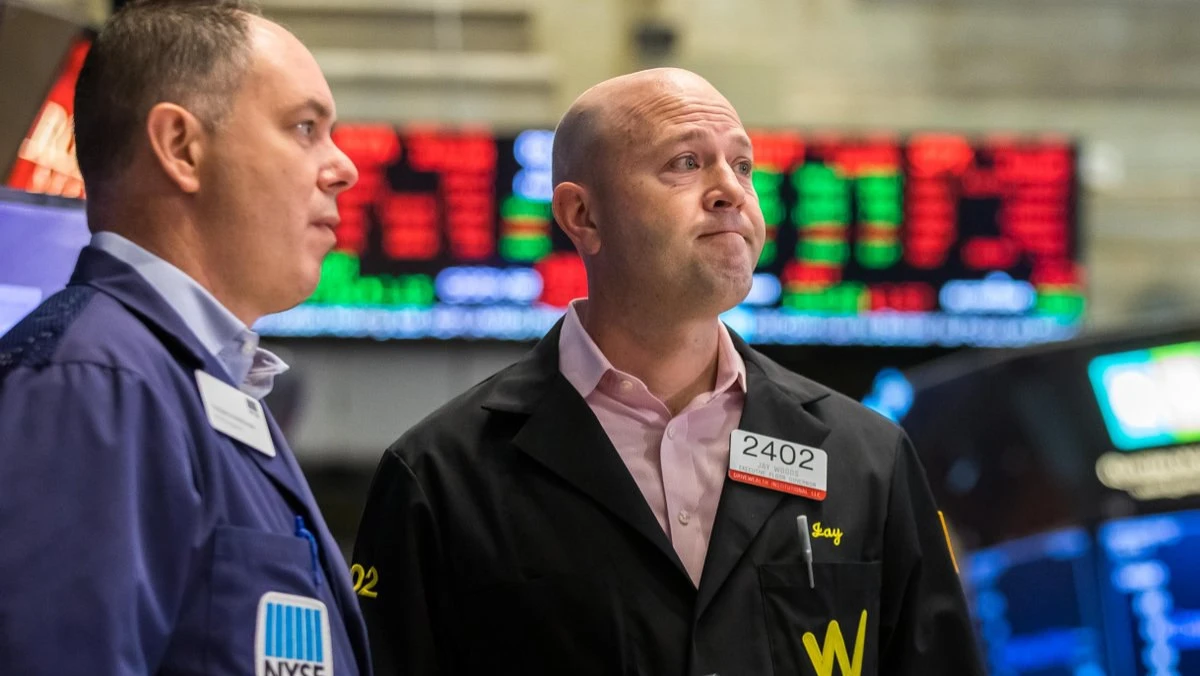
The Russell 2000 has fallen more than 11% since mid-August / Photo: X / NYSE
The Russell 2000 small- and mid-cap stock index entered a technical correction for the first time since March after falling 2.2% on Wednesday, October 14. This is the market term for a decline of more than 10% from the most recent peak. A decline of more than 20% is considered a shift into a “bear” market.
Since its August high, the Russell 2000 has fallen 11.3%. The sell-off on October 14 was broad-based: for every stock in the index that rose, there were about five that fell, according to Bloomberg.
On Wednesday, investors sold off risky assets as inflation data showed that consumer prices in September rose at the fastest pace since April, and core inflation came in higher than expected. Against this backdrop, traders revised their expectations for Fed rate hikes through the end of the year: the market now anticipates two more hikes in the coming months.

“Small-cap stocks are very sensitive to interest rates, and if today’s data increases the risk of a further hike in the benchmark rate, that’s a bad sign for these stocks,” Stefano Pascale, head of U.S. equity derivatives research at Barclays, explained to Bloomberg.
For most of the year, the Russell 2000 outperformed the S&P 500 broad-market index, as small-cap stocks are closely tied to the pace of economic growth. The economy was supported by strong consumer spending and large-scale business investments in artificial intelligence infrastructure, according to Bloomberg. However, last month the Russell 2000 lost its lead after the Federal Reserve raised interest rates and bond yields, including those on U.S. Treasuries, rose sharply. The agency notes that stocks of small-cap companies typically react more strongly to changes in interest rates than those of large-cap companies.
The acceleration of inflation in September increases the risk of further tightening of financial conditions, which will be a “long-term negative factor” for small-cap companies, as well as stocks in the consumer and transportation sectors, said Dennis DeBucher, president and chief market strategist at 22V Research, to Bloomberg.
The Russell 2000 had its strongest first half of the year in 35 years, after which it underwent a major rebalancing that removed several of its highest-quality and fastest-growing companies. Bloom Energy, Credo Technology Group Holding, Sterling Infrastructure, and TTM Technologies collectively accounted for about two-thirds of the Russell 2000’s gains through June 29, after which all four companies were moved to the Russell 1000 index.