"Too Old and Not Warren at All": Iconic Short Seller Burry Has Lost Interest in Abel's Berkshire
Berkshire Shares Rise Following Quarterly Earnings Report

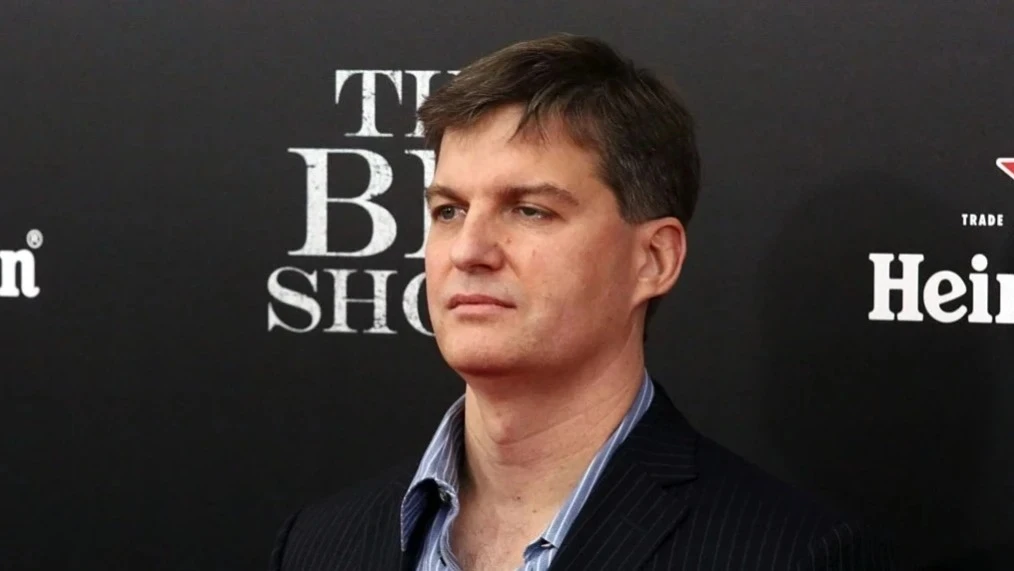
Michael Burry, the investor from *The Big Short*, has lost faith in Berkshire's new CEO following massive spending / Photo: Photo by Astrid Stawiarz / Getty Images
Michael Burry—an investor who was among the first to recognize the global financial crisis and profit from it—said that his worst fears about Berkshire Hathaway have come true. Burry believes that Warren Buffett’s successor lacks the founder’s trademark patience, and therefore no longer sees any point in buying Berkshire shares. This was the financier’s reaction to the quarterly report, which made it clear that under new CEO Greg Abel, the legendary investment firm is spending the cash Buffett had accumulated.
What Burry Wrote
“What I feared most at Berkshire Hathaway was this: when Warren [Buffett] finally steps down, it turns out that his successor is too old and simply isn’t Warren—which means he won’t have Buffett’s patience to wait for a ‘fat pitch,’” Burry wrote on August 10 on X. “I believe that fear has come true. Berkshire doesn’t strike me as an attractive investment for the future,” he added.
“Fat pitch” is an expression that Buffett himself borrowed from baseball several decades ago and popularized. Literally, it means “a fat ball” or “an easy pitch to hit.” In his 1997 letter to shareholders, the Oracle of Omaha explained Berkshire’s approach through a book by baseball player Ted Williams: Williams divided the strike zone into 77 squares and swung at balls only in the most favorable of them. According to this logic, a patient athlete is headed for the Hall of Fame, while one who swings indiscriminately is destined for the minor leagues.
In other words, Burry feared that Buffett’s successor as head of Berkshire wouldn’t be able to sit on piles of cash for years on end. Whether due to age or simply a different temperament, the investor believed the new CEO would start settling for mediocre acquisitions instead of patiently waiting for the rare, ideal deals for which the legendary guru was famous.
What the report revealed
From April through June, Berkshire’s cash cushion shrank to $364.7 billion in cash and short-term U.S. Treasury bonds—taking into account its obligation to pay off a portion of these securities— which is 4% less than the previous quarter and marks the first decline in four years, according to The Wall Street Journal. Berkshire repurchased approximately $4.5 billion of its own shares and, for the first time in more than three years, bought more securities on the market than it sold: purchases totaled $23.5 billion, compared with $3.7 billion in sales.
Specifically, Berkshire invested an additional $10 billion in Alphabet shares and acquired homebuilder Taylor Morrison Homes for $6.8 billion—these are among the investment firm’s most notable deals in recent years. The WSJ interpreted these moves as a sign that Abel, who succeeded Buffett as CEO in January, has begun reshaping the business that his predecessor led for 60 years.
Berkshire's largest holdings are Alphabet, American Express, Apple, Bank of America, and Coca-Cola. Berkshire is expected to disclose more details about its investments from the previous quarter this week in its regulatory filings.
What's next?
Analysts who follow Berkshire have no intention of pressuring Abel—they acknowledge that it’s not easy to invest the remaining cash, according to the WSJ. “It’s very difficult to expect Greg to make major deals in such a turbulent market,” said Paul Lountzis, president of Lountzis Asset Management, whose firm holds shares in Berkshire. “Private markets have gone crazy, and public markets look pretty ridiculous, too” (quoted in the WSJ).
Berkshire’s shares rose 0.7% in over-the-counter trading in the U.S. on August 10. Since the beginning of 2026, the shares have gained 3.4%, but they are still trading below the May 2025 record of $809,350 per Class A share—a high set shortly before Buffett announced his retirement, the WSJ notes.
This article was AI-translated and verified by a human editor