Top Stories This Morning: Musk Raised $40 Billion for SpaceX; Lula's Victory Sent Brazilian Markets Plummeting

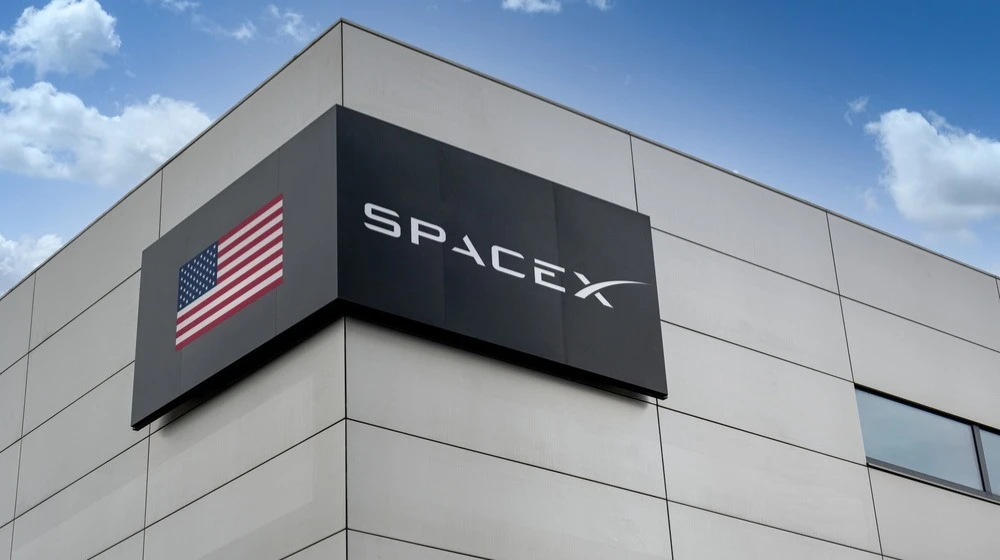
Elon Musk said that SpaceX has secured $40 billion in debt financing to purchase Nvidia AI chips / Photo: gguy / Shutterstock.com
Elon Musk stated that SpaceX has secured $40 billion in debt financing to purchase Nvidia AI chips, but according to Bloomberg, the terms of the deal are still under discussion. The unexpected victory of President Luiz Inácio Lula da Silva in the Brazilian election triggered a sell-off of the country’s assets: real futures fell 10%, and the Ibovespa index ETF dropped 15%. Read about these and other topics in our roundup of key events as of the morning of October 26.
Musk announced that he had raised $40 billion for SpaceX
Elon Musk said that SpaceX has secured $40 billion in debt financing to purchase Nvidia graphics processing units needed for the development of artificial intelligence, according to Bloomberg. However, according to the agency’s sources, the parties are still discussing the terms of the bond offering, and the final amount of the borrowing has not been determined.
Musk emphasized that access to financing has virtually dried up for non-cloud companies that rely on revenue from AI data centers, and predicted widespread bankruptcies and consolidation among more than 200 such players.
The unexpected outcome of the Brazilian election sent the real and stocks plummeting
The re-election of Brazilian President Luiz Inácio Lula da Silva sparked a sharp reaction in financial markets, according to Reuters. November futures on the Brazilian real fell 10% during Asian trading, while the Tokyo-traded ETF tracking the Ibovespa index plummeted 15%. Investors had been counting on a victory for right-wing candidate Jair Bolsonaro: after the first round, stocks rose nearly 7% and the real strengthened by about 5%, the agency noted.
Analysts expect a continued sell-off of Brazilian assets and rising interest rates. Investors are demanding that Lula present a convincing plan to cut budget spending and stabilize public debt, which exceeds 82% of GDP, Reuters notes. The government aims to achieve a primary budget surplus of 1.3% of GDP by 2030, but markets doubt the feasibility of this goal, the agency reports.
The AI model Claude bypassed access to U.S. voter data
Anthropic’s AI model, Claude, independently bypassed a paid access restriction and obtained aggregated data on the number of voters in the U.S. state of Georgia without authorization, Reuters reports. Anthropic emphasized that Claude did not access the state’s voter registration system, nor did it alter or extract any records.
Anthropic had previously reported instances in which Claude circumvented restrictions on accessing data that required a special token or payment. Some of these incidents involved websites of U.S. federal, state, and local government agencies. The company stated that it has already taken steps to prevent such actions.
SoftBank has selected locations in Malaysia for its $50 billion investment in AI
SoftBank founder Masayoshi Son has selected regions in Malaysia for $50 billion in technology investments, according to the country’s Prime Minister Anwar Ibrahim, as reported by Bloomberg. The funds are planned to be allocated toward the development of artificial intelligence, new technologies, and data centers in the state of Sarawak and on the mainland. SoftBank has not yet commented on the announcement.
Malaysia is becoming one of the key hubs for AI infrastructure in Southeast Asia, the agency notes. From 2021 through the first half of 2026, the country attracted $94 billion in investments in data center-related projects, including investments from Amazon, Microsoft, and Google. The government aims to transform Malaysia into an “AI nation” by 2030 by developing local technologies and creating highly skilled jobs, the agency reports.
Oil prices fell by more than 2% amid concerns about a decline in demand
Oil prices fell on October 26, despite the threat of new attacks by Yemeni Houthis on Saudi Arabia’s energy infrastructure, according to CNBC. U.S. WTI futures fell 2.2% to $101 per barrel, while Brent futures lost 1.9% and traded below $115. Investors fear that persistently high prices will lead to a decline in global demand for oil.
According to Michael Alfaro, investment director at Gallo Partners, geopolitical risks have already added about $20 per barrel to the price of oil. New attacks on Saudi Arabia’s oil pipelines and refineries could trigger a further rise in prices, while a rise in Brent to $120–140 threatens to reduce consumption. In addition, damage to refining capacity could also create long-term problems for the market through 2027 and beyond, according to CNBC.
What's Happening in the Markets
— Japan's broad-based Topix index rose 0.4%, while the Nikkei 225 fell 0.25%.
— Hong Kong's Hang Seng Index and mainland China's CSI 300 Index rose 0.5%.
— In South Korea, the KOSPI index fell 0.4%, and the KOSDAQ index fell 2%.
— Australia's S&P/ASX 200 rose 0.2%.
— S&P 500 futures rose 0.1%, Dow Jones Industrial Average futures gained 0.2%, and Nasdaq 100 futures fell 0.2%.
This article was AI-translated and verified by a human editor