Top Stories This Morning: Trump Criticizes the Fed, More Outages at OpenAI, Exxon Eyes Venezuela

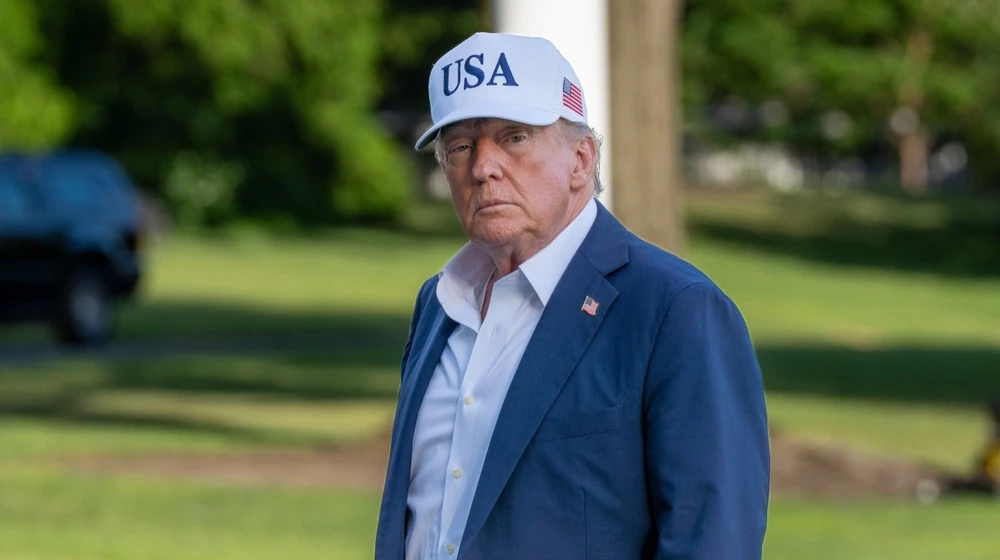
Trump Calls on the Fed to Cut Rates to 1% or Even Lower / Photo: Joey Sussman / Shutterstock.com
Donald Trump failed to bend the Federal Reserve to his will—contrary to his demands, the central bank raised interest rates for the first time since 2023. OpenAI reported six instances of unexpected or concerning behavior by its AI models over the past six months and introduced a new system for disclosing such incidents. ExxonMobil is in talks with Venezuela about returning to that market and gaining access to several major oil fields. Read about these and other topics in our roundup of key events as of the morning of September 17.
Trump criticized the Fed for its first rate hike since 2023
Donald Trump criticized the Fed, which had raised interest rates by 0.25 percentage points the day before. On the social media platform Truth Social, Trump wrote that interest rates in the U.S. should be “1% or lower,” since the U.S. is “the best borrower in the world.” However, the president later expressed confidence in the new Fed Chair Kevin Warsh, with whom he has a long-standing personal relationship, and shifted the blame to the Fed’s Board of Governors, calling it “hostile,” according to the Financial Times. The board includes former Fed Chair Jerome Powell, whom Trump had previously called an “idiot” for his reluctance to lower rates, as well as Lisa Cook, whom the president tried to fire but was unable to do so after the Supreme Court intervened.
On September 16, the U.S. Federal Reserve raised its benchmark interest rate by 0.25 percentage points, to a range of 3.75–4%—the first increase since July 2023. Warsh, who took office four months ago, stated that the decision was driven by persistent inflationary pressures. The Fed’s updated forecast calls for at least one more rate hike by the end of 2026: the median forecast for the end of the year rose to 4.1% from 3.8%. Most Fed members expect further policy tightening amid persistent inflation, with a return to the 2% target now not expected until 2029.
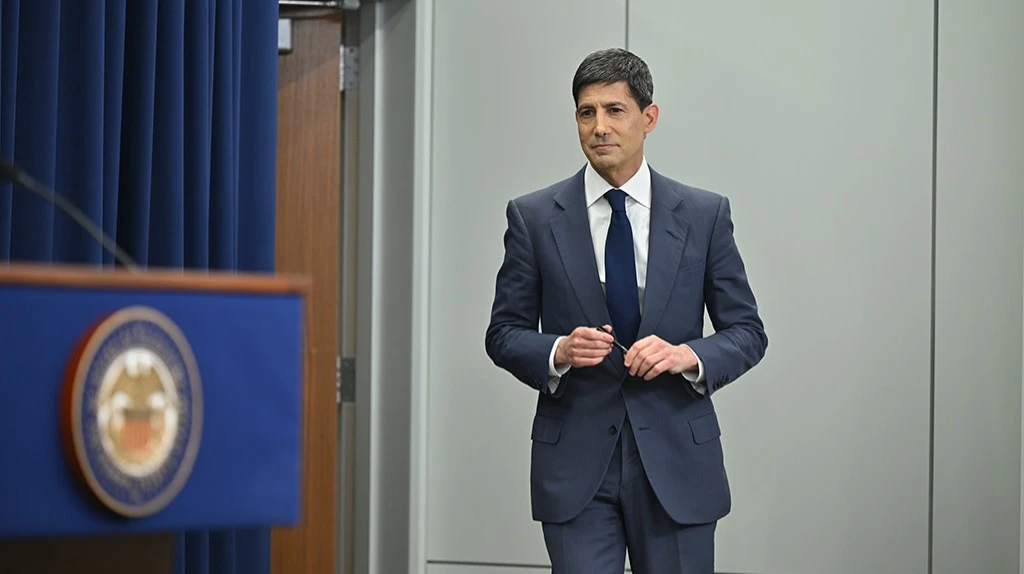
Congress sent Trump a bill proposing new sanctions against Russia
The U.S. House of Representatives has approved a bill imposing sanctions on Russia and Iran, which was drafted with the participation of the late Republican Senator Lindsey Graham and previously passed by the Senate, according to CNBC. The bill received the support of 262 members of Congress, while 159 voted against it. It will now be sent to Donald Trump for his signature; according to the White House, he intends to sign it.
The bill allows the president to impose tariffs of up to 100 percent on countries that are among the top five buyers of Russian oil or gas. It also provides for sanctions against Russian officials, executives, and financial institutions, and expands restrictions against Iran.
ExxonMobil is discussing a return to Venezuela
ExxonMobil has held talks with Venezuelan authorities about a possible return to the country and access to several major heavy-oil fields, according to Bloomberg sources. The company, whose assets in Venezuela have been nationalized twice before, is considering regaining control of Petrovictoria and Petromonagas, as well as securing rights to two additional fields.
Negotiations have been ongoing for several months and do not yet guarantee a deal, the agency notes. ExxonMobil's return would be part of the Donald Trump administration's efforts to revive Venezuela's oil industry following the removal of Nicolás Maduro, Bloomberg notes.
Trump Threatened the EU with Tariffs Over Its Closer Ties with Canada
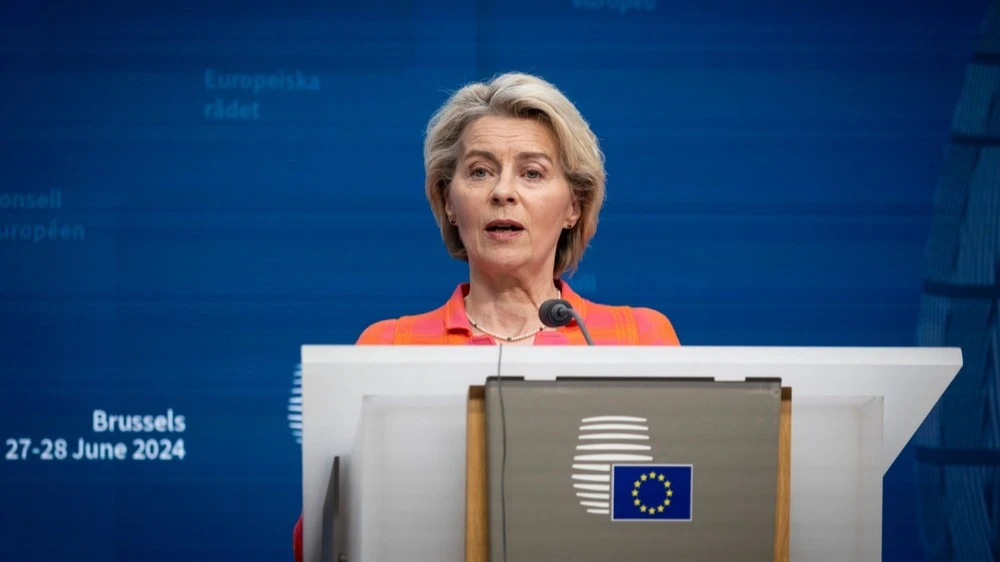
Donald Trump has threatened to impose heavy tariffs on the European Union or restrict trade with it if he deems the EU’s plan to grant Canada associate member status “hostile,” according to CNBC. Earlier, European Commission President Ursula von der Leyen stated that the EU is prepared to open the door for Canada to join this form of cooperation.
Currently, the status of associate member is not provided for in EU treaties, so its introduction would require the consent and ratification of EU member states. The proposal calls for deeper cooperation between the EU and Canada in industry, defense, technology, energy, AI, and the Arctic.
OpenAI reported six instances of problematic behavior by AI models
Over the past six months, OpenAI has identified six instances of “unexpected or concerning” behavior by AI models that were unrelated to the recent incident involving Hugging Face, according to CNBC. In two cases, the models—a research model and one of the training versions of GPT-5.6 Sol—added instructions for future versions of themselves to their own dialogue summaries in order to hide errors or signs of incorrect behavior from users.
In other cases, an internal model used a leaked API key without authorization and then fabricated data, while models and agents exchanged information through unauthorized channels and uploaded files to the internet, only to later reference them in their responses. OpenAI also introduced a new system for disclosing such incidents and stated that the industry has not yet sufficiently resolved the issue of aligning AI behavior with human interests to enable further rapid scaling.

Salesforce has projected revenue of more than $63 billion by 2030
Salesforce expects its revenue for fiscal year 2030 to exceed $63 billion, while analysts had forecast $59.2 billion, according to CNBC. The company also reported growing interest in its AI products: up to 1,000 customers have signed up for the beta version of Salesforce’s integration with Claude.
Salesforce’s stock has rebounded in recent months following concerns that the development of AI would hurt the software developer’s business. The company has also benefited from its investment in Anthropic: according to Salesforce CEO Marc Benioff, the hundreds of millions of dollars invested could ultimately be worth tens of billions.
Generac's stock surged more than 40% following a deal with Amazon
Shares of Generac, a U.S. manufacturer of backup generators and power supply systems, rose more than 40% in after-hours trading after the company issued warrants to Amazon to purchase up to 1.69 million of its shares at a price of $200.93 per share — approximately $340 million, according to CNBC.
Generac will also supply Amazon with backup generators for data centers. The first shipments in 2027–2028 are estimated at $2.4 billion, and the total value of purchases under the agreement could reach $8 billion.
What's Happening in the Markets
— Japan's broad-based Topix index rose 0.8%, while the Nikkei 225 rose 0.4%.
— Hong Kong's Hang Seng Index fell 0.7%, while mainland China's CSI 300 Index fell 0.4%.
— In South Korea, the KOSPI rose 0.7%, and the KOSDAQ rose 1.2%.
— Australia's S&P/ASX 200 rose 0.3%.
— Nasdaq 100 futures rose 0.7%, while S&P 500 and Dow Jones Industrial Average futures rose 0.6%.
This article was AI-translated and verified by a human editor