Saudi Arabia will restore 50% of the capacity of the oil pipeline bypassing the Strait of Hormuz in the coming days

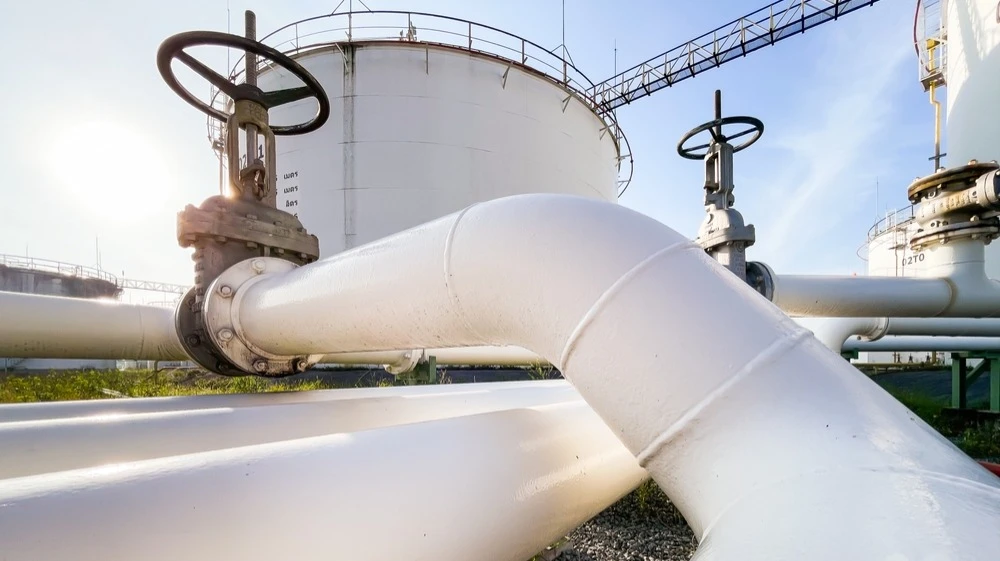
Oil prices fell after the U.S. Department of Energy announced that the oil pipeline in Saudi Arabia would resume operations within a few days / Photo: Shutterstock.com / SUCHIN1975
Saudi Arabia expects to restore about half the capacity of a key oil pipeline within a few days, a Bloomberg source said. This route has become an important alternative for energy shipments bypassing the Strait of Hormuz, but operations were halted last week following drone attacks.
Details
The state-owned company Saudi Aramco is working to bypass the damaged section of the East-West oil pipeline, which will allow for a partial resumption of oil flow, Bloomberg reported, citing a source. According to the source, full restoration of the pipeline’s capacity is expected to take about six weeks.
Saudi Aramco and the Saudi Arabian Ministry of Energy did not respond to the agency's requests for comment.
The day before, U.S. Energy Secretary Chris Wright stated that the shutdown of the oil pipeline was a “short-term disruption” that would last “just a few days,” according to CNBC. The network notes that independent analysts had estimated that restoration could take weeks.
Oil prices reacted to these assurances with a sharp decline. Futures for the benchmark Brent crude fell 3.2% on September 16 and dropped another 0.7% on the morning of September 17, to $105 per barrel. North American WTI traded just below $102 per barrel, posting its steepest drop since August 4 on Wednesday, according to Bloomberg. Since the beginning of September, oil prices have risen by more than 16% due to a sharp escalation of hostilities in the Persian Gulf.
Why Is This Important?
Traders are closely watching the timeline for the resumption of operations on the 1,200-kilometer East-West oil pipeline and the volume of oil that can be transported through it. During the war with Iran, this route became crucial: it allowed exports to be rerouted through the Red Sea, bypassing the Strait of Hormuz, where traffic had virtually come to a standstill. The pipeline has a capacity of 7 million barrels per day; by comparison, 20 million barrels were transported daily through the Strait of Hormuz before the Iran crisis.
However, on September 10, the East-West pipeline sustained damage as a result of drone attacks launched from Iraqi territory, and its operations had to be suspended. This dealt a serious blow to the oil market, according to Bloomberg.
Following the shutdown of the oil pipeline, Saudi Aramco increased its oil sales for shipment outside the Strait of Hormuz to partially offset the lost volume, Bloomberg previously reported. This week, the company sold about 20 million barrels to Asian refineries, including those in China, with delivery scheduled for September and October, traders who wished to remain anonymous told the agency.
In addition, Saudi Arabia is attempting to increase exports through the Strait of Hormuz with the support of the U.S. military, U.S. Energy Secretary Wright noted in an interview with CNBC. On September 15, four supertankers with a combined capacity of about 8 million barrels were spotted in the Saudi ports of Ras Tanura and Juwaiima on the Persian Gulf coast, Matt Smith, director of commodity market research at Kpler, told the television network. “They [the tankers] will likely be used for shuttle runs via Oman and the Strait of Hormuz,” he explained.
The route along the coast of Oman, established by the U.S. military, remains dangerous: at least two ships have come under attack since Saturday, according to data from the British Maritime Trade Operations Coordination Center, as reported by CNBC.
This article was AI-translated and verified by a human editor