U.S. indexes soar, Nasdaq Composite has longest streak of gains in more than 30 years

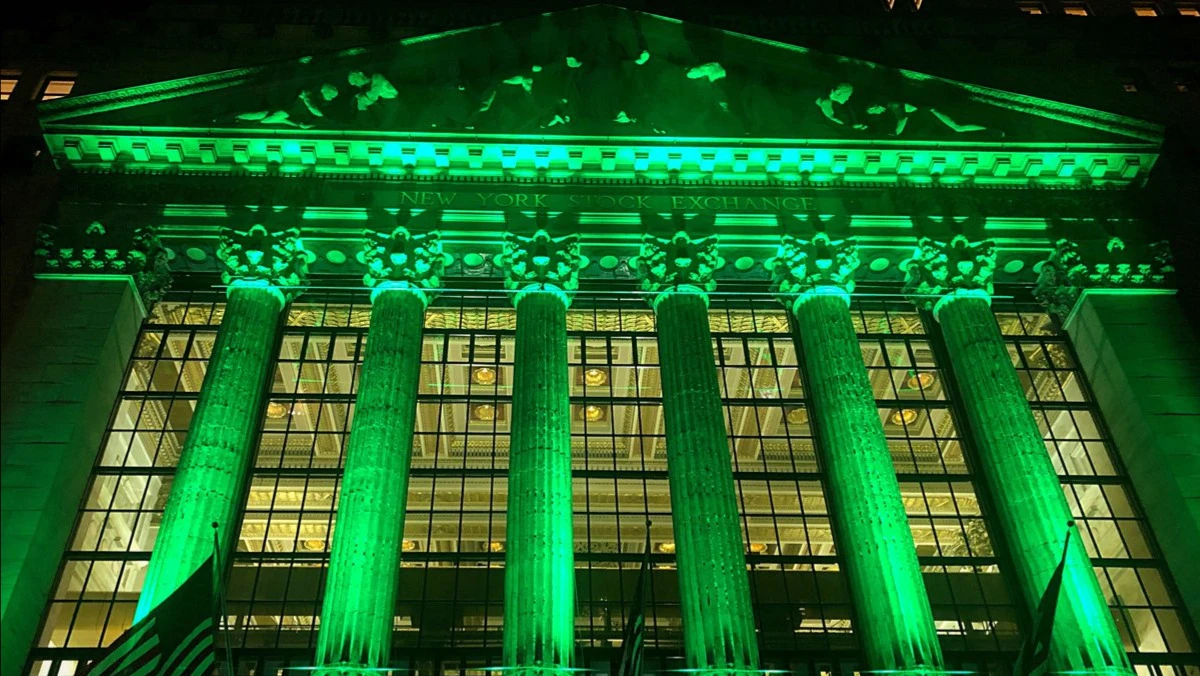
Photo: X / NYSE
The S&P 500, Nasdaq Composite and Russel 2000 indexes hit new records on Friday after Iran declared the Strait of Hormuz "fully open" to commercial shipping and U.S. President Donald Trump said Tehran also agreed to suspend its nuclear program. Oil prices collapsed despite the U.S. military maintaining a blockade of Iranian ports and Iranian media saying passage through the strait will remain closed to "unfriendly countries."
Details
- The S&P 500 broad market index rose 1.2% on April 17 and reached a new record, breaking the 7,100-point level for the first time. This is the third day in a row, when the index closes trading, having updated the historical maximum. The index rose 4.5% during the trading week of April 13-17.
- Technology Nasdaq Composite rose 1.52%, which was also the third record closing in a row. The index showed a series of 13 days of growth - the longest since 1992, notes MarketWatch. At the end of the week, it added 6.8%.
- The Dow Jones Industrial Average index of blue chips jumped by 1.79%. Weekly growth amounted to 3.2%.
- The Russell 2000 index of small and mid-cap companies also reached a new record, adding 2% for the day and 5.7% for the week.
- Bank of America Corp.'s cross-market risk indicator, which measures the level of turbulence embedded in global equities, interest rates, currencies and commodities, is headed for the second-fastest monthly decline on record - the only time the drop was faster was at the start of the post-pandemic recovery, Bloomberg notes.
- June futures for Brent crude oil fell by 8.7% to $90.7 per barrel. Similar exchange contracts for WTI lost 8.8% and traded at $83.1 per barrel.
Falling oil prices caused a decline in energy companies' quotations: Exxon Mobil shares fell by 3.7%, Chevron - by 2.2%. APA Corporation shares fell by 5.7%, Valero Energy - by 7.5%, Occidental Petroleum - by 5.4%.
At the same time, the companies, in whose expenses energy is a significant part: the shares of cruise operators and airlines recovered. In particular, quotes of Royal Caribbean rose by 7.3%, United Airlines - by 7.1%, and Expedia - by 4.5%.
European luxury players, which were under pressure due to lower sales in the Middle East, mainly in Dubai, strengthened, with Hermès shares up 5.2% and Kering and LVMH up 3%.
- Gold rose 1.45% to $4,878 an ounce.
- Bitcoin added 2.7% overnight to $77,410.
What the market is watching
A new wave of enthusiasm around AI, a stronger-than-expected corporate reporting season and increasing bets that the U.S. Federal Reserve will cut rates once more this year were already pushing the S&P 500 index to its biggest one-month gain since 2020 in April. Now, with hopes of renewed traffic through the Strait of Hormuz, economists say the risk of a prolonged oil shock that could stall global growth has fallen sharply, Bloomberg writes. And interest in risk has returned to Wall Street.
Iran on Friday declared the Strait of Hormuz "fully open" to commercial shipping for the duration of the ceasefire, and U.S. President Donald Trump said the Islamic republic was ready to suspend its nuclear program. At the same time, he warned that the US Navy's blockade of Iranian ports "remains in full force" until a peace agreement is reached with Tehran. Iranian media reported that maintaining the blockade would be considered a violation of the truce.
In addition, traffic through the strait may be restricted: Iran's Tasnim news agency reported that ships and cargoes linked to hostile countries will not be allowed to pass through, CNBC reported. It is also still unclear whether ships will have to pay a fee to Iran, the channel emphasized.
According to Trump, most of the points in the peace deal "have already been agreed upon." "Iran and the United States will meet this weekend," he told CBS. The Wall Street Journal, citing a senior White House official, reported that the talks are likely to take place Monday in Pakistan, although they have not yet been formally scheduled.
Tehran hopes to reach a tentative agreement with Washington in the coming days and did not rule out the possibility of extending the ceasefire to "create space for further talks on lifting sanctions against Iran and getting compensation for war damage," an unnamed senior Iranian official told Reuters. He also said that "no agreement has been reached on the details of nuclear issues."
What analysts advise
According to Rocky Fishman of Asym 500, the rebound of indices from late March lows to record levels has occurred faster than any other recovery of this magnitude, Bloomberg reports. Traders are pricing in a full recovery before the damage to supply chains, energy infrastructure and consumer confidence even begins to abate, the agency explains. At the same time, according to Daniel Ayvasin, chief investment officer at Pacific Investment Management, markets are underestimating the likelihood of sharp and extreme outcomes - a full-blown inflationary surge.
Here's what else analysts are saying:
- "I wouldn't trade based on these headlines," Victoria Fernandez, chief market strategist at Crossmark Global, cautioned investors on Bloomberg Television. - "Let's see how the situation develops, and next week we can start making changes to increase the risk share in the portfolio a little bit.
- "The crisis over Iran appears to be heading toward a tentative and fragile resolution that, even if reached, would leave many key issues unresolved, although it would relieve some of the short-term market pressure," Bloomberg quoted Sarah Bianchi, senior managing director and chief strategist for international political and public policy at Evercore ISI, as saying in a note.
- "Now that the dust around events in the Middle East appears to be starting to settle, market attention will shift back to fundamentals, primarily corporate reporting, as the season has just begun," Daniel Murray, deputy chief investment officer at EFG Asset Management, told Bloomberg. - Earnings expectations remain high, which is in line with solid underlying macroeconomic trends."
- "Investors are now starting to look beyond this conflict," Anthony Saglimbene, chief market strategist at Ameriprise Financial, told CNBC. - I think the market has given up on worst-case scenarios." At the same time, he emphasized that to continue the rally in the technology sector, and especially in the shares of the "Magnificent Seven", investors need to see not only the expectations of Wall Street, but also strong annual forecasts of companies in reports.
The news is supplemented.
This article was AI-translated and verified by a human editor