U.S. stock indices plummeted: Following the Fed meeting, markets braced for a rate hike

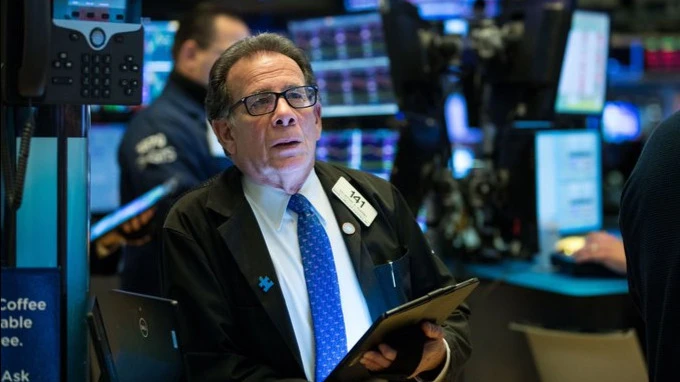
Photo: X / NYSE
Major U.S. stock market indices fell sharply on Wednesday, June 17, even though they had been trading slightly higher earlier in the day. Everything changed after the U.S. Federal Reserve announced its interest rate decision: the central bank left the rate unchanged, but many on the committee expect a hike this year, and JPMorgan believes this is a serious signal to the market.
Details
— The S&P 500 broad market index fell 1.2% at the close of trading on June 17. According to Bespoke Investment Group, as reported by CNBC, this marked the worst performance on the day of the Fed’s first policy decision under a new chair since 1994.
— The Dow Jones Industrial Average, a "blue-chip" index, fell 1%.
— The Nasdaq Composite technology index plummeted by nearly 1.4%.
— The Russell 2000 Small- and Mid-Cap Index fell 0.9%.
— The VIX volatility index, known as Wall Street’s “fear gauge,” rose 11% to 18 points. The 20-point mark is considered a psychologically significant threshold; crossing it signals high volatility.
— Oil futures fell by about 0.1%. August contracts for the benchmark Brent crude were trading at $78 per barrel, while North American WTI was trading at just under $76 per barrel.
— The dollar strengthened by 0.9% against a basket of other global currencies.
— The price of gold fell 2% to $4,264 per ounce.
— The price of Bitcoin fell 2% over the past 24 hours, dropping to $64,200.
What Affected Stock Prices
On Wednesday, the U.S. Federal Reserve left its policy rate unchanged at 3.5–3.75%. At the same time, according to updated projections, nine Fed officials see the possibility of a rate hike in 2026. The median forecast for the federal funds rate at the end of the year now stands at 3.8%. This indicates that the committee considers at least one round of rate hikes necessary, according to CNBC.
The TV channel notes that the new Fed Chair, Kevin Warsh, refrained from offering his own forecast, which made it more difficult to interpret the Fed’s assessments. Traders also noted that during the press conference, he repeatedly emphasized his commitment to “price stability.” This signaled that the new chairman may not push for rate cuts as aggressively as many had expected from a candidate nominated by President Donald Trump, CNBC reports.
Following the release of the Fed's decision, U.S. Treasury yields jumped: the yield on two-year Treasuries rose by 11 basis points to 4.161%.
Stock markets reacted with a decline, led by the largest technology companies. Microsoft shares fell 3.8%, Meta shares fell 5.4%, Alphabet shares fell 2.4%, and Amazon shares fell 3.5%, Tesla by 2.1%, and Nvidia by 1.3%. For the first time since its IPO, SpaceX shares closed the day in the red, falling nearly 5%.
Investors are waiting for clarity on the situation regarding the reopening of the Strait of Hormuz. Several publications, citing their sources, have released preliminary versions of a memorandum of understanding that representatives of the U.S. and Iran are expected to sign. However, at the G7 summit, Trump stated that the draft document is not final and that he may reject it if he does not like it. The document would allow for the resumption of shipping through the strait and would require Iran to clear it of mines.
What Analysts Are Saying
— “The Fed left rates unchanged but dampened market sentiment with a much more hawkish outlook. Rising inflation makes this understandable, but the committee is far from unanimous: only about half of the members still expect a rate hike this year,” Sonu Vargese, chief macro strategist at Carson Group, told CNBC. — “The key point is this: the [Fed’s] policy still appears accommodative for an economy where inflation remains a problem and the labor market is stabilizing.”
— “[The new Fed chair] has made it absolutely clear that he intends to achieve price stability. And that means... ...that we won’t have the kind of accommodative monetary policy that many might have expected from Chairman Warsh back at the beginning of this year,” said Jeffrey Gundlach, CEO of DoubleLine Capital, on CNBC. “Today, his words sound different.”
— “Half of the [Open Market Operations] Committee expects a rate hike this year, and that’s a real warning shot for the market,” — Bloomberg quotes Bob Michele, chief investment officer and head of the global fixed income, currencies, and commodities group at JPMorgan Asset Management. — “I think they’re preparing for a rate hike.” The strategist noted that the central bank appears to see a greater risk from inflationary pressures than Wall Street had anticipated. He emphasized that Warsh’s first meeting as head of the Fed had dampened market hopes that price pressures would subside quickly.
This article was AI-translated and verified by a human editor