Wall Street's New Leaders: Who Will Succeed Buffett and Dalio?


Young financiers who have already become Wall Street stars are dividing the market into two camps: some follow the rules of old-school investing, while others are betting on the AI boom. Collage by Oninvest
Young financiers are managing hundreds of billions of dollars and dividing the market into two camps: while some are betting on the AI boom and robotics, others are buying up real assets the old-school way.
What were these investment gurus doing when they were 24 years old? Warren Buffett began working as a securities analyst for his idol, Benjamin Graham. He wouldn’t launch his investment firm, Buffett Partnership, for another two years. Ray Dalio graduated from Harvard Business School. BlackRock founder Larry Fink moved to New York and got a job as a bond trader at the investment bank First Boston.
Today’s investors are evolving at a different pace—at just 24, Leopold Aschenbrenner is already having a direct impact on the market: when news broke that he had purchased a stake in solar energy producer T1 Energy, the company’s stock jumped 23%. The net return of his hedge fund, Situational Awareness, for the first five months of 2026 was 270%, and since 2024, the total return has exceeded 1,000%. When he launched the fund, Aschenbrenner had no professional investment experience whatsoever, but in terms of assets under management—$20 billion—Situational Awareness is closing in on industry giants such as Bill Ackman’s Pershing Square and Dan Loeb’s Third Point.

The reputation of Wall Street’s former titans was built over many years. Now the market has accelerated: tech-related themes are attracting capital more quickly, and the AI boom is driving large-scale investments with financial results that are hard to ignore. We’ve compiled our own list of Wall Street’s rising stars.
How We Selected Future Gurus
1. Capital. Guru status emerges when a strategy is backed by truly substantial assets. Peter Lynch took over management of the Magellan Fund in 1977, when the fund’s assets totaled about $18 million, and over the course of 13 years, he grew them to $14 billion. We looked at young investors who were able to build up significant capital—in a fund, bank, asset management firm, or venture capital firm.
2. Investment Strategy. Through his letters and speeches, Buffett popularized value investing. Ray Dalio outlined the concepts of major cycles and risk management in his books and essays. We also looked for the beginnings of these investment approaches among young applicants.
3. Transactions and Investment Decisions. Michael Burry rose to fame after betting against the U.S. mortgage market ahead of the 2007–2008 crisis. We also evaluated these up-and-coming gurus based on key case studies and the scale of their transactions.
4. Market recognition. Over time, established figures come to enjoy public—if not iconic—status: Buffett is called the Oracle of Omaha, and Soros is known as the man who broke the Bank of England. We tracked the first signs of such recognition among young investors: attention from the business media or inclusion in professional rankings.
Innovators: Focusing on the Technology Cycle
When a new technology begins to change asset valuations, innovative investors emerge. Their strategy is based not on the traditional search for undervalued assets, but on betting on new market niches. Their names tend to be on everyone’s lips: innovators operate in areas where a single successful bet can propel an investor into the ranks of Wall Street’s leading figures.
Jack Levendowski, Managing Director at JPMorgan

Jack Levendowski specializes in mergers and acquisitions in the technology sector. By the time he was appointed managing director in April 2026, he had already been involved in the $44 billion sale of Twitter to Elon Musk, the $21 billion merger of WWE and UFC, the privatization of the IT company Squarespace, and Palo Alto Networks’ $25 billion acquisition of CyberArk. For an investment banker, this represents a wide range of experience: from a deal in the private cybersecurity sector to a merger in the world of brutal sports entertainment. Business Insider estimates the total value of the deals Levendowski has worked on to be in the hundreds of billions of dollars.
The 36-year-old Levendowski has not yet publicly articulated his investment philosophy, but in interviews he sometimes shares practical observations about the deal market—which may eventually take shape as a distinct strategy. In 2025, Business Insider included Levendowski on its list of Wall Street’s rising stars.
Wei Guo, founder and managing partner of the venture capital fund UpHonest Capital

The amount of capital managed by UpHonest Capital is not publicly disclosed, but the scale of Wei Guo’s operations can be gauged by the number of deals. He has backed more than 400 startups, including “unicorns”: Boom Supersonic, a startup developing a supersonic passenger aircraft; the satellite company Astranis; and others.
Guo’s strategy is based on early-stage investment: UpHonest Capital helps startups from the U.S. and Asia secure initial funding, attract subsequent investors, and prepare for larger funding rounds. This is a way to invest in promising tech companies before their valuations skyrocket and to maintain a stake in the deal when large funds come on board. The fund’s portfolio includes companies that have already become major players in their respective sectors: The SaaS platform Rippling raised $200 million in April 2024 at a valuation of $13.5 billion, and the food tech company GrubMarket raised $120 million in 2022 at a valuation exceeding $2 billion.
Guo, 39, ranks 18th on Forbes’ list of the world’s top seed-stage investors and describes himself as a “very active investor.” He’s no “Oracle of Omaha,” of course, but why not—we’ll keep him in mind.
Neil Mehta, founder and managing partner of the investment firm Greenoaks Capital

Neil Mehta, 42, invests in technology companies—he is particularly interested in robotics and physical AI. The fund led a $150 million funding round for The Bot Company at a valuation of approximately $2 billion and has invested in the warehouse robotics company Mytra, the industrial robotics firm Mind Robotics, and Physical Intelligence, which builds universal AI models for robots.
Mehta selects companies that have the potential to become part of the S&P 500 in the future: businesses with strong fundamentals around which a new market can grow. Among his notable deals is Coupang. Greenoaks invested in the Korean e-commerce startup at an early stage, and Mehta serves on the company’s board of directors. Another high-profile case is the cybersecurity company Wiz: Greenoaks participated in all of the company’s growth rounds leading up to its $32 billion sale to Google in 2026 (the deal netted Greenoaks $2 billion). Mehta has also invested in Anthropic, Databricks, Stripe, Canva, and Revolut.
In 2014, Forbes included Mehta on its 30 Under 30 list in the “finance” category, and in 2026, it reaffirmed his standing by ranking him 39th on the Midas List: Top Tech Investors. Not everyone manages to make the leap from “promising talent” to the top ranks.
Fundamental Investors: Focusing on Value and Discipline
While innovators bet on technological shifts, fundamental investors base their decisions on the valuation of a specific company. They are interested in stocks where the price already reflects a discount to the business’s intrinsic value. The focus is on free cash flow, profitability, debt burden, management quality, and the sustainability of competitive advantage. Their approach is closer to that of Graham and Buffett: buy a business you understand at a reasonable price, hold it for the long term, and don’t overpay for hype.
Ryan Israel, Chief Investment Officer at Pershing Square Capital Management
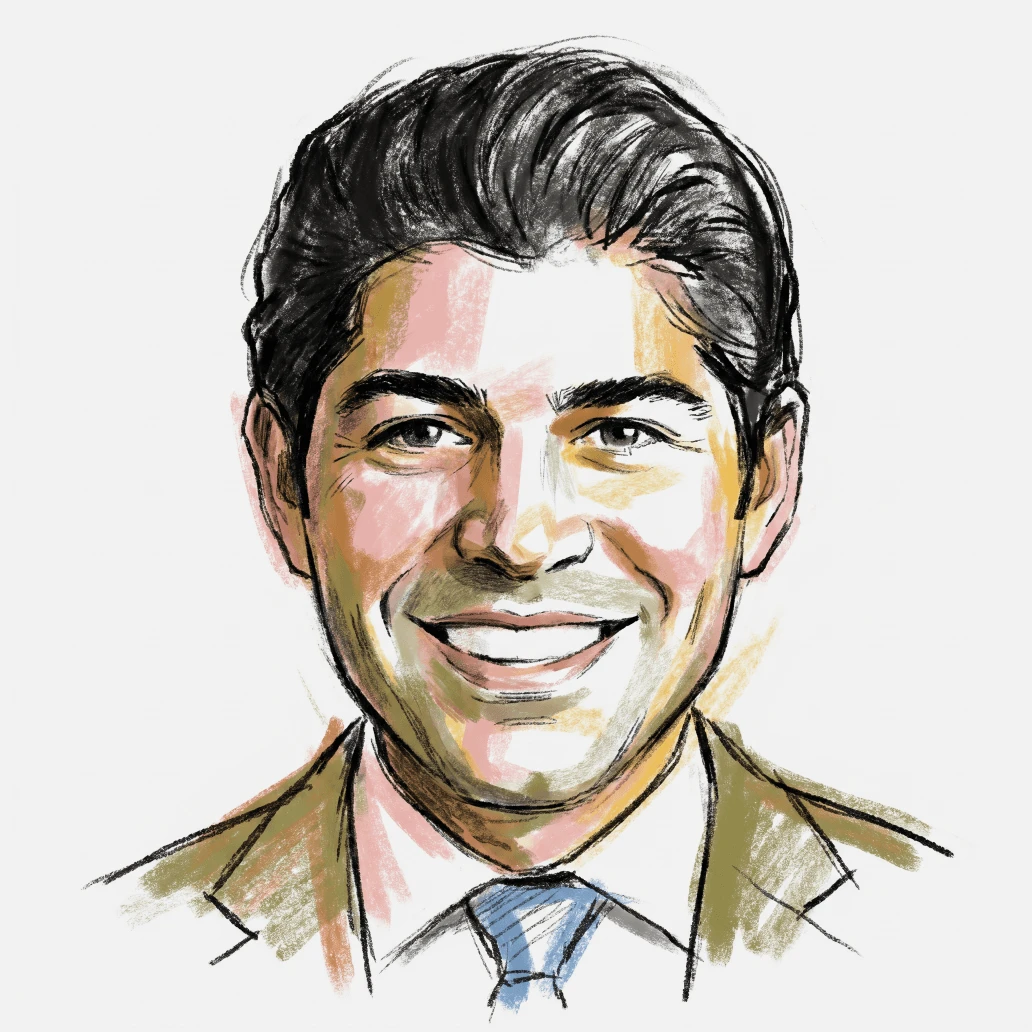
Ryan Israel came up through the ranks of Bill Ackman’s team—the founder of Pershing Square Capital Management. Israel joined the firm in 2009, and in 2022, Ackman appointed him chief investment officer and his successor in managing the $16 billion portfolio (the best compliment a boss can give).
Izrael, 41, essentially follows a Buffett-style approach to investing: a concentrated portfolio, fundamental analysis, and buying high-quality companies at a reasonable price. Among his notable investments are Lowe’s—which was the largest holding in Pershing Square’s portfolio from 2020 to 2022—and Burger King (a very clear example of the difference in investment approaches—fundamentalists invest in the “classic burger,” while innovators like Wei Guo invest in AI-powered food tech).
In 2015, Forbes included him on its “30 Under 30” finance list, and in 2018, Institutional Investor named him one of the rising stars of the hedge fund industry.
Mark Zhu, Managing Director at Blackstone

Mark Zhu works with energy assets: power grids, substation equipment, and backup power supplies. Over the past year, hehas been involved in investments totaling more than $2 billion. Among Zhu’s deals is the 2021 acquisition of the infrastructure company Sabre Industries. In 2023, Blackstone acquired Power Grid Components, a manufacturer of safety equipment for substations.
Zhu’s approach is similar to value investing: he focuses on straightforward businesses, tangible assets, contracts, capital expenditures, and a company’s ability to generate earnings over a multi-year horizon. In 2024, Business Insider named Mark Zhu one of Wall Street’s rising stars. It seems the experts recognized his foresight just in time: in an era when the development of artificial intelligence has run up against power shortages, investing in substations and generators has turned out to be perhaps the most promising strategy on the market.
Harrison DiGia, Vice President at General Atlantic

At General Atlantic, DiGia specializes in the consumer sector: food and beverage manufacturers, restaurant chains, and service companies. The investor notes that because of this focus, his lunch—for example, at the fast-food chain Torchy’s Tacos—automatically turns into market research. Since 2017, he has participated in deals totaling nearly $1 billion. His portfolio includes Joe & The Juice, Restore Hyper Wellness, and Athletic Brewing, and DiGia serves on the boards of directors for these companies.
DiGia evaluates brands based on unit economics, demand scalability, and return on capital. In particular, he worked on General Atlantic’s investment in Athletic Brewing: the fund led a $50 million funding round at a time when demand for non-alcoholic beer was growing faster than the traditional beer market, and Athletic was expanding into major retail chains.
In 2024, Business Insider named 31-year-old DiGia to its list of “Rising Stars of Wall Street” as one of the young professionals who could shape the future of the financial industry.
This article was AI-translated and verified by a human editor