Oil prices approached $80 per barrel amid renewed tensions between the U.S. and Iran
The escalation of the conflict between the U.S. and Iran has hampered tanker traffic in the Persian Gulf

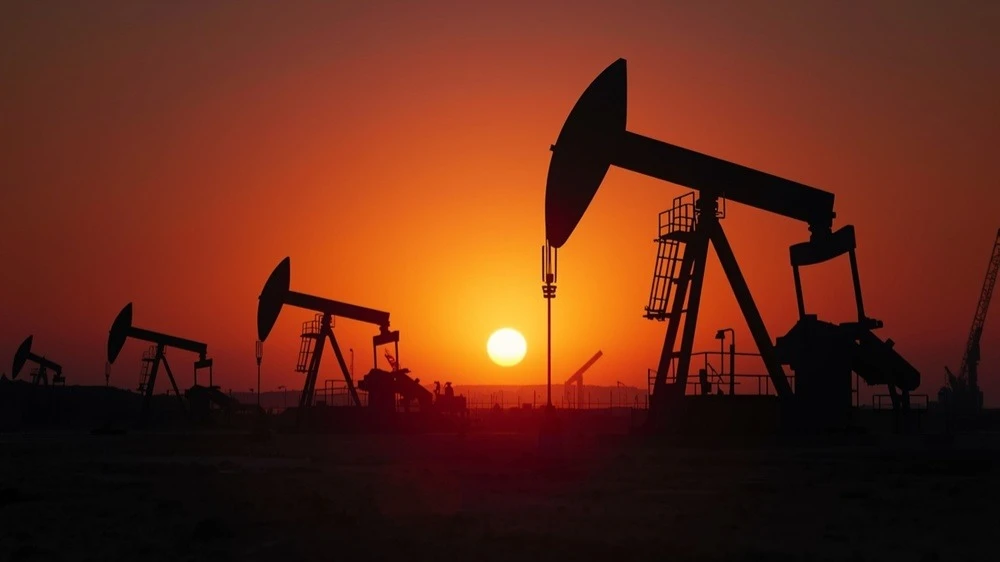
Prices for the benchmark Brent and WTI crude oil grades rose by more than 4% on July 13. Photo: Asif 31/Shutterstock
Prices for the benchmark Brent and WTI crude oil grades rose by more than 4% on July 13. The price of a barrel of Brent rose above $79 (peaking at $79.8 per barrel), while WTI prices were up 5% at one point, exceeding $75 per barrel. On Sunday night, the U.S. and Iran once again exchanged new strikes against each other’s positions in the Middle East, according to Bloomberg.
Natural gas prices in Europe also rose due to concerns that the escalation could disrupt supplies. Futures rose more than 3%—following a gain of nearly 8% last week.
Against this backdrop, shipping through the Strait of Hormuz—which in peacetime accounts for about one-fifth of global crude oil and liquefied natural gas (LNG) shipments—came to a near standstill on Monday, Bloomberg notes. According to the Joint Maritime Information Center (JMIC), this decline was a continuation of the logistical crisis that began last week. At present, the only available route in the region is the southern shipping corridor, traffic through which is coordinated by the Omani authorities.
Context
On Sunday, July 12, U.S. Central Command announced that it had carried out a new series of strikes against dozens of targets to prevent Iran from attacking international vessels in the Strait of Hormuz, according to Bloomberg.
Tehran then announced that the Strait of Hormuz would be closed “until further notice,” as the armed forces of the Islamic Republic launched retaliatory attacks using drones and missiles against U.S. allies in the Middle East, including Jordan and Qatar. In addition, Kuwait reported that an offshore drilling platform on its territory had been attacked and damaged, and Press TV reported that Iran had sent drones toward U.S. military positions in Kuwait.
The two sides launched new attacks on each other's positions in the Middle East on Sunday night.
Another wave of escalation has cast a shadow over the prospects for a diplomatic resolution to the conflict, Bloomberg notes. Iran’s chief negotiator—Speaker of the Iranian Parliament Mohammad-Bagher Ghalibaf—stated that “the era of unilateral deals is over.” For negotiations to resume, Tehran insists that Washington must fulfill its obligations under the memorandum signed by the parties in June and allow the export of Iranian oil (the license authorizing the sale of Iranian crude oil was revoked by the U.S. last week due to the escalation of the conflict). At the same time, U.S. President Donald Trump declared the ceasefire with Iran “over,” but added that the U.S. remains ready to continue negotiations.
Market Sentiment
The current deterioration of the situation is leading to an escalation, but it is still “far from full-scale military action,” noted Saul Kavonik, senior energy analyst at MST Marquee. “We will likely see oil prices rise gradually as long as the attacks continue and passage through the strait remains difficult” (quoted by Bloomberg).
The attack on a Kuwaiti drilling complex last weekend marked the first direct strike on energy infrastructure in recent weeks, Bloomberg notes. According to Kavonik, if the conflict escalates and affects energy infrastructure on a broader scale, the price of oil could soar to $100 per barrel.
This article was AI-translated and verified by a human editor