Why are young investors more afraid of regret than of actual financial losses?

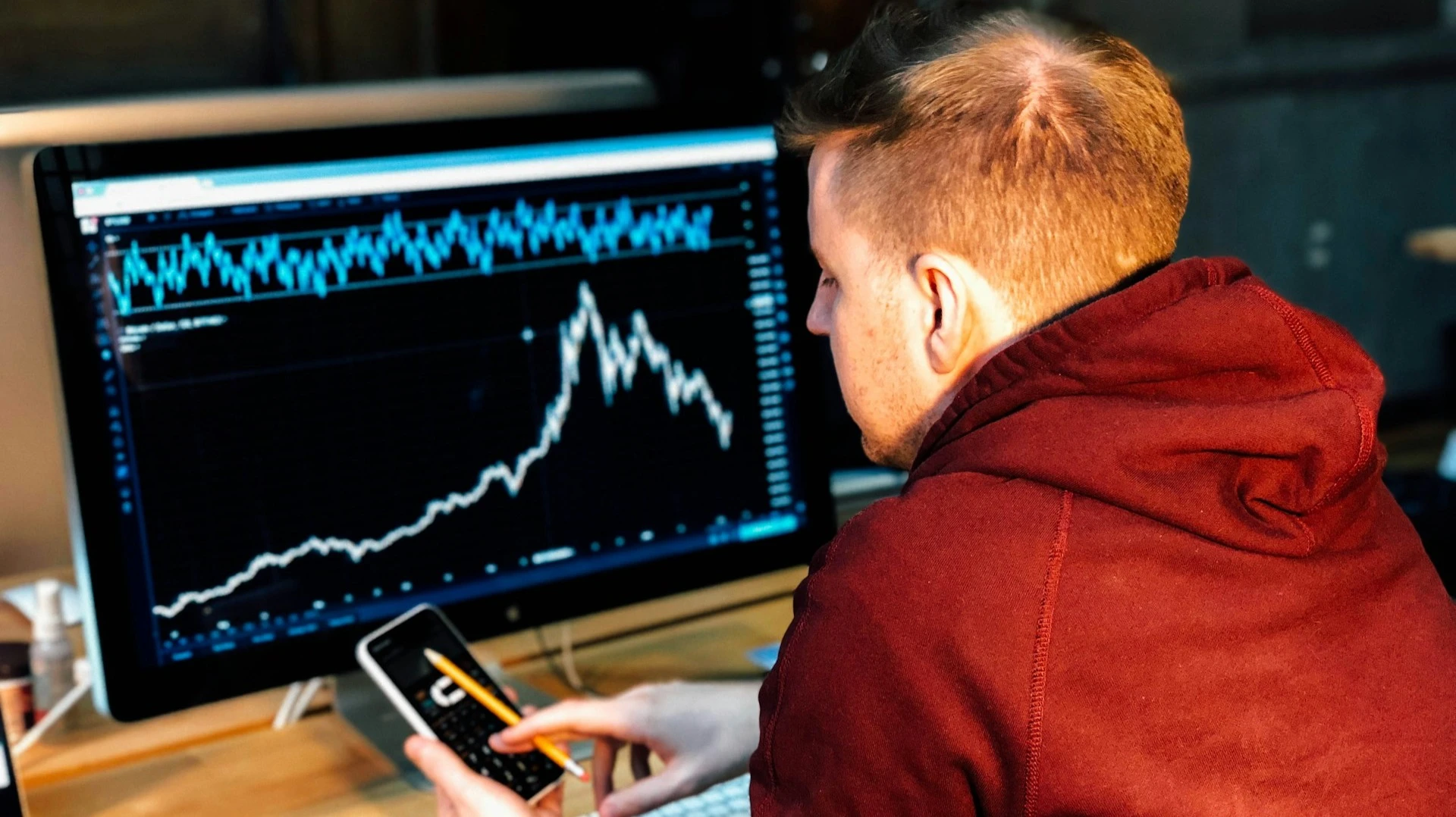
A study shows that young investors are more likely to be deterred from selling unprofitable assets not only by regret over the financial loss, but also by the fear that they might come to regret their decision. / Photo: Unsplash / Chris Liverani
Against the backdrop of growing nervousness in global markets—with government bond yields rising, oil prices climbing, and geopolitical tensions escalating—investors are increasingly forced to make decisions under the pressure of their own emotions. An investor may consider not only future returns but also how their own decision will make them feel later on. In fact, when it comes to young investors, the word “may” can be omitted from the sentence altogether, according to the results of a September study by professors at the University of Leeds Business School and Newcastle University. The researchers showed that the more an investor tends to avoid feelings of regret, the more strongly they dislike financial losses. Oninvest explored why this happens and how to prevent fear of unpleasant emotions from controlling an investment portfolio.
What Was Studied and How
Barbara Summers, a professor at the University of Leeds Business School, and Darren Daxbury, a professor of finance at Newcastle University, conducted their research using a sample of 222 young investors aged 18–35 who trade on the Nepal Stock Exchange. The authors examined four behavioral factors and their relationship to loss aversion. The strongest statistically significant factor turned out to be regret aversion.
Herding behavior proved to be slightly less significant, while the influence of available information and “mental accounting” had no statistical significance.
In other words, the study shows that the stronger a young investor’s tendency to avoid regret, the more likely they are to be loss-averse. In practice, this means that young investors are more likely to be deterred from selling losing assets not only by regret over the financial loss but also by the fear of regretting the decision they made. To put it even more succinctly, young investors fear unpleasant emotions more than they fear losses.
The Psychology of Regret
Regret is a unique emotion: for it to arise, a person must, in one way or another, compare what actually happened with what might have happened had a different decision been made. This is precisely why regret is closely linked to thoughts such as “if only… then…”. This is called counterfactual thinking. Studies on regret have shown that its intensity is influenced not only by the outcome of a decision but also by the ability to mentally envision a more successful alternative.
Regret has another characteristic—an element of self-blame, which might sound, for example, like “I made the wrong choice myself” or even outright self-flagellation. Because of this, a person begins to make decisions not only with financial considerations in mind, but also by taking into account the expected emotional outcome.
Studies have shown that the anticipation of receiving information about what happened to a rejected alternative can influence people’s decisions. In experiments—including those involving investment decisions—participants made different choices when they knew they would be able to find out the outcome of the option they had passed up. In other words, an investor may be deeply concerned not only with “How much will I lose?” but also with “How will I feel when I find out how much I could have earned?”
The human brain perceives the situation something like this: selling a losing position makes the decision final and its outcome visible. But as long as the asset remains in the portfolio, the story isn’t over yet—there’s still a chance it could turn around, and then the decision might not turn out to be so bad after all. In this hypothetical scenario, there is room for uncertainty and possibility, so holding onto the position can serve an emotional function of postponement—allowing you to delay putting an end to an unpleasant situation.
Here, the mechanisms of regret intersect with the “disposition effect,” a well-known phenomenon in behavioral finance. This is the tendency to sell winning securities too early and hold onto losing ones for too long. As early as 1985, Shefrin and Statman proposed the idea that regret is precisely one of the possible mechanisms behind this effect. The authors of the current study, Barbara Summers and Darren Duxbury, arrived at the same conclusion a little later.
It is interesting to note that in experiments from other studies, participants were sometimes even willing to forgo a material benefit in order to reduce the likelihood of future regret. In other words, under certain conditions, the prevention of an unpleasant emotion becomes, in and of itself, part of the value of a decision.
The Generation Gap
Research shows that as people age, the impact of negative emotions—including regret—weakens. In a study of young and older adults that specifically examined regret, older participants were found to be less sensitive to outcomes that evoked regret. At the same time, they were just as capable of using anticipated regret to inform subsequent decisions. In other words, they could take into account the likelihood of regret, but the emotion itself was less intense. From this, we can infer that the influence of a less intense emotion on decisions was also less noticeable.
A 2026 study showed that, as people age, they report fewer recent regrets overall and experience less anger and frustration when recalling past mistakes. The authors emphasize, however, that the difference in emotional perception may be linked not to aging, but rather to generational differences.
In other words, for young investors, the fear of regret can have a particularly strong impact on how they experience a loss. As they get older, the fear of future regret may diminish. It’s reasonable to assume that a young investor’s concern will focus more on the emotion of “I don’t want to regret selling,” while a more mature investor’s will focus on assessments, calculations, and rationality: “I can no longer afford this risk.”
How to Reduce the Impact of Regret Without Feeling Regret
A psychological technique that may be helpful here is to make investment decisions in advance, before emotions come into play. In other words, before making a trade, you should put in writing why you’re buying or selling an asset, what factors might cause you to reconsider your initial hypothesis, and under what conditions you should close the position. That way, if the price drops, you won’t have to panic and decide what to do all over again—you’ll already have a predefined “if …, then …” rule in place. Studies show that such strategies reduce the tendency to continue investing in a project after receiving negative feedback.
The second approach is to evaluate not the emotional impact of the trade or sale, but the quality of the decision itself. To do this, you can ask yourself: “If I didn’t own these securities right now, would I buy them at the current price?” This technique shifts the focus from regret about the past to the asset’s future prospects. Then, the decision should be evaluated using, for example, the “if …, then …” framework.
Planning, diversification, and avoiding impulsive decisions during periods of volatility—these are the three main principles.
This article was AI-translated and verified by a human editor