A Forbes billionaire outlined five scenarios for postwar Russia

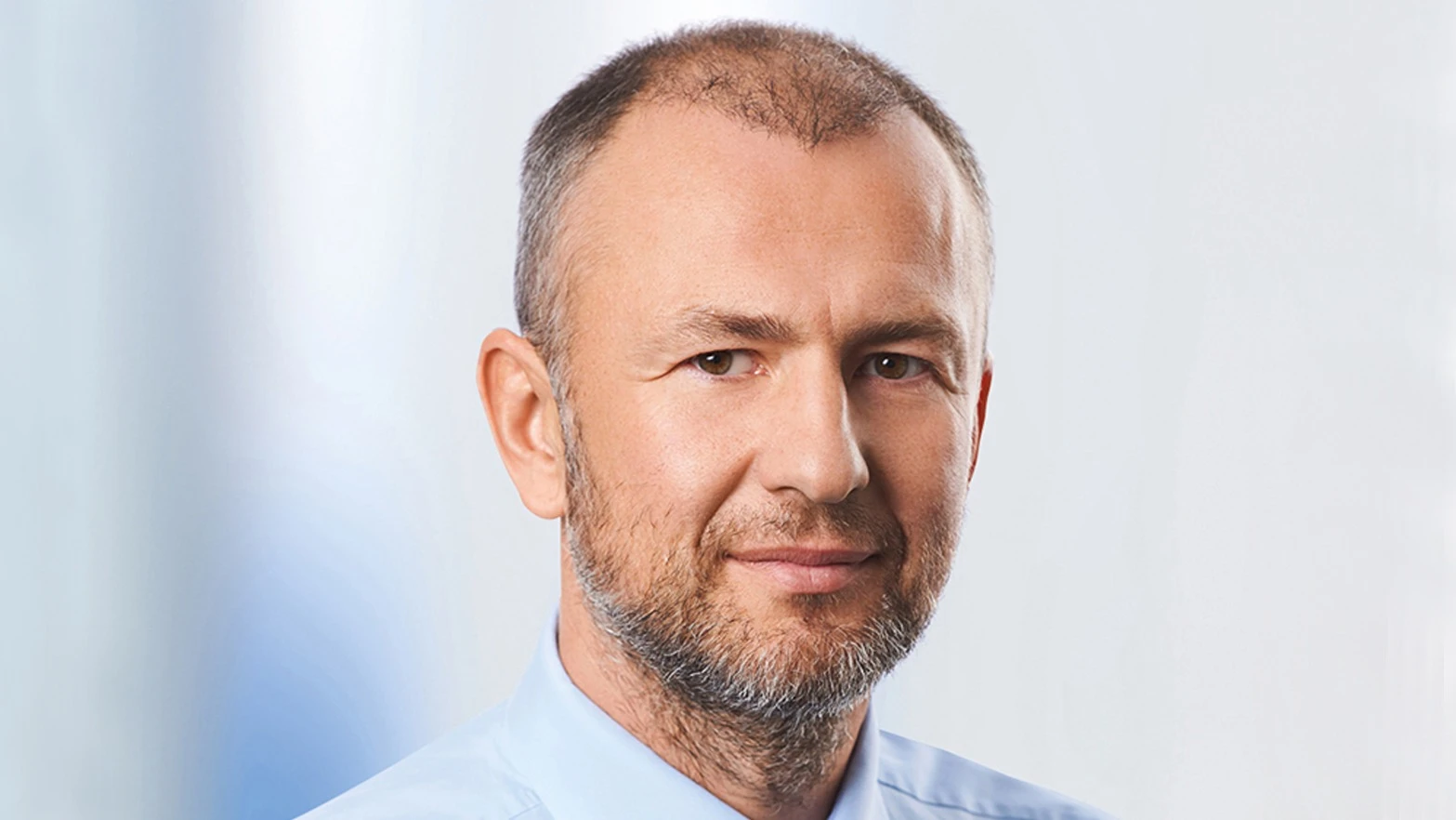
Photo: aimfond.ru
Andrei Melnichenko, the founder of EuroChem and the so-called “fertilizer king,” who ranks eighth on Forbes’ list of Russia’s richest businesspeople, outlined possible scenarios for Russia’s future in an essay for The Economist.
Melnichenko notes that in the West, there is discussion of four scenarios for the development of postwar Russia. Here is what he writes about them:
The first scenario is a humiliated Russia, stuck on the periphery of the West. According to Melnichenko, in the long term, this will give rise to aggressive revanchism. “Russia is not Weimar Germany, and the modern world is not a literal replica of the 1920s, but the structural logic remains the same: if the sovereignty of a major historical nation is shattered, it rarely disappears without a trace. It returns in a more dangerous form,” writes the billionaire;
The second scenario is Russia’s entry into China’s sphere of influence, with China potentially using Russia as a supplier of raw materials and a buffer in its relations with the West. However, a dependent Russia is of dubious value to China: it would bear responsibility for Russia’s problems and would ultimately face attempts by Moscow to break free from its subordinate position, Melnichenko points out;
The third scenario is the fragmentation of Russia. This would lead to a loss of control, Melnichenko warns: a struggle for the nuclear arsenal, resources, and borders would ensue, which would destroy the foundation of effective nuclear deterrence. “The price paid in post-Soviet conflicts, including the tragedy in Ukraine, makes such an outcome, in my view, impossible,” he writes;
The fourth scenario is isolation along the North Korean model: turning Russia into a closed fortress in a state of constant mobilization. According to Melnichenko, the development of technology, science, and capital would be impossible in such a situation.
Each of these scenarios being considered by the West is aimed at destroying or radically curtailing Russia’s sovereignty; however, this is a dead-end path: it would place Russia in a subordinate position in which it would bear no real responsibility for its decisions, Melnichenko believes. Any deal concluded under such circumstances will not lead to lasting peace, but only to a temporary lull between phases of the conflict, he warns.
The only alternative scenario that Melnichenko envisions is Russia’s transformation into what he calls a “sovereign” state—one that prioritizes the well-being of its people and whose behavior is predictable to the outside world.
In this scenario, as Melnichenko describes it, sovereignty creates unity between the people and the institutions. “For citizens, a country’s greatness is measured not by the number of its slogans, but by how well it protects the interests of its people. People vote with their feet and through their life strategies. If a country is deprived of sovereignty, sooner or later it loses those who are capable of becoming its resource,” writes Melnichenko. And in this scenario, he says, the state views big business as part of its strategic potential.
“For external actors, the choice is not between a friendly and a hostile Russia, but between a Russia whose behavior is predictable and a Russia whose future course is unknown,” Melnichenko writes. He believes there is currently a high probability that the Russian-Ukrainian conflict could spread to other countries and does not rule out the use of nuclear weapons, according to The Economist in an article summarizing a 60-hour interview with the businessman.
Context
After the war in Ukraine began in 2022, Melnichenko was subjected to sanctions by the U.S., the European Union, and other jurisdictions. Before the war, he spent only a few weeks a year in Russia, spending the rest of his time in Switzerland or on his yacht, according to The Economist. In an interview with the publication, the businessman said that now, for the first time in his life, he feels that he has “no other country but Russia.”
In 2023, Russia nearly nationalized the energy company “Sibeko,” owned by Melnichenko, but the lawsuit was later withdrawn. According to a source cited by The Economist, this became possible after Melnichenko donated 32 billion rubles to the “Sirius” school for gifted children in Sochi, which is personally supported by Vladimir Putin.
Melnichenko is not a dissident, nor is he a hero of the anti-war movement, nor does he criticize the war in Ukraine; rather, the ammonia produced at his plants is used in ammunition, notes *The Economist*. “He does not seek to challenge the existing power structure. Rather, he is offering his services to the government and hopes to become the architect of change,” the publication writes.
Melnichenko’s column was published immediately after the NATO summit, which took place in Ankara on July 7–8. In the summit’s final declaration, Russia was described as a source of a “long-term threat to Euro-Atlantic security and stability.”
This article was AI-translated and verified by a human editor