A Forgotten Sector with AI Potential: How the Citrini Experiment Became an Investment Opportunity
Analysts at a research firm used Claude to develop a drug

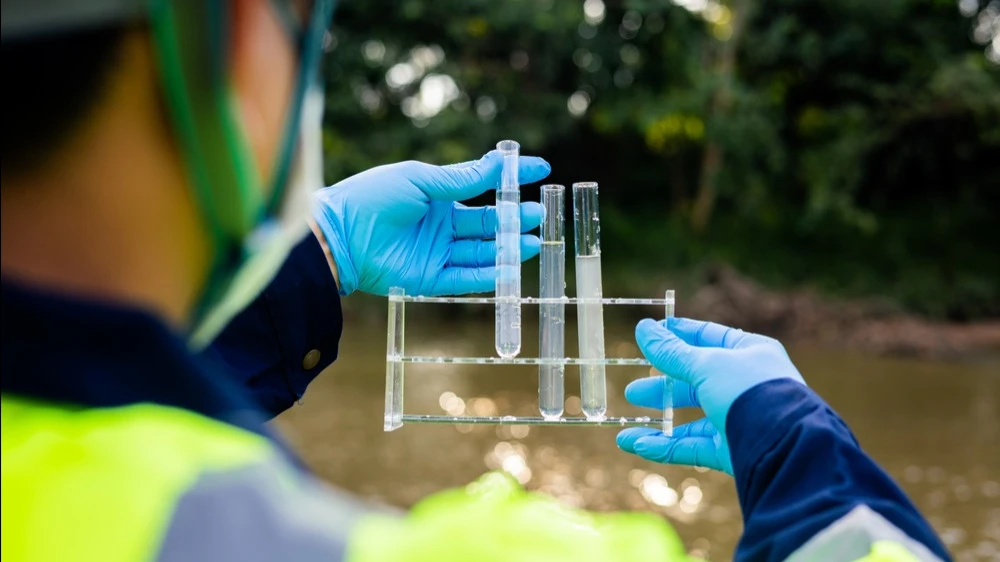
Suppliers of equipment and materials for biotechnology research can benefit from the adoption of AI / Photo: Alohaflaminggo / Shutterstock.com
Researchers at Citrini Research, known for its widely discussed report on impending unemployment and economic damage caused by AI, are betting on the biotech sector following an experiment with Anthropic’s Claude Science platform. Using AI, Citrini analysts developed a potential antidote to scorpion venom much faster than a traditional laboratory could have. Suppliers of research materials stand to benefit from this dramatic acceleration.
Details
Citrini Research turned to the team at Anthropic Life Sciences to test the extent to which AI is capable of contributing to actual drug development, according to Bloomberg. The researchers tasked Anthropic’s new scientific platform, Claude Science, with creating a molecule that could serve as an antidote to scorpion venom. Within a few days, Claude proposed about 180 options, after which 211 of the designed proteins were sent for synthesis and laboratory testing. As a result, 17 of the variants were able to bind to at least one of the five toxins tested. However, the researchers have not yet verified whether these proteins are actually capable of neutralizing the venom.
Although Citrini generally considered the experiment a success—thanks to the AI’s ability to “compress a year’s worth of work into a couple of days”—she acknowledged that artificial intelligence faces serious challenges when it comes to the complexity and unpredictability of how drugs act in the human body. Nevertheless, the company’s analysts believe that AI can help create more effective drugs targeting already known biological targets, and that improving the efficacy of existing drugs could generate enormous economic value.
“AI doesn’t necessarily have to cure cancer to have a massive impact,” the researchers wrote. “What matters to the market right now isn’t where AI will ultimately take medicine, but what it will change over the next few years.”
What does this mean for investors?
The use of AI is becoming a routine part of the race to develop new, effective drugs for a wide variety of diseases, according to Bloomberg. Pharmaceutical companies are increasingly using AI to identify and design promising molecules, and are also trying to use it to bring back into development drugs that might otherwise have been abandoned. Over the past year, shares of biotech companies involved in AI have surged on expectations that computers will be able to quickly solve scientific problems that previously took researchers years to tackle.
“In a world where the drug discovery phase is getting shorter and the demand for experimental testing is growing, a contract research organization is becoming something like a cloud infrastructure for biology, — analysts noted, referring to companies that drug developers hire to organize and conduct clinical trials. — Cells, tests, reagents, and patient samples are becoming the equivalent of computing power.”
"As these 'virtual biologists' become more widespread, demand is likely to grow for any company that sends them their first bill for work in the real world," the Citrini report states.

Who is Citrini betting on?
Charles River Laboratories International, a research company, and Revvity, a manufacturer of laboratory equipment, reagents, and software for biomedical research, are among Citrini Research’s top picks in the life sciences sector (Life Sciences) that could benefit from AI advances in drug development.
Following the release of the experiment report, Charles River’s stock rose 5.1% in trading on October 20, while Revvity’s rose 3.4%.
Charles River breeds and supplies primates for biomedical and pharmaceutical research. “If this investment idea continues to pay off and investors remain focused on bottlenecks, it’s hard to find anything in biotechnology that’s in shorter supply than monkeys,” Citrini explained.
For Revvity, which manufactures hardware and software, the advantage lies in its involvement in experimental work related to drug development using AI, according to Citrini. Revvity produces many of the “tools of the trade” necessary for research and development. Analysts have called the company “the computing infrastructure of biotech.”
Citrini also named the Tecan Group, a company specializing in laboratory automation, among its favorites. “Tecan addresses another, potentially more serious challenge: how to transform a large number of proposed experiments into reproducible laboratory work without increasing the amount of manual coordination at the same rate,” the analysts’ report states.
The life sciences sector has experienced a downturn following the pandemic-driven boom, amid challenging funding conditions and several years during which investors sought more attractive investment opportunities. The S&P 1500 Life Sciences Tools & Services Industry Index, which comprises 19 companies that provide equipment and services for biomedical research, has gradually recovered and has risen by more than 18% since the beginning of 2026, though it remains more than 10% below its peak during the coronavirus pandemic. “A sector forgotten by investors but with growth potential thanks to AI—this is exactly the kind of situation we love most: a long-term structural story trading at cyclical lows,” noted researchers at Citrini.