Amazon will launch a competitor to Starlink at the end of the year. What is known about it?

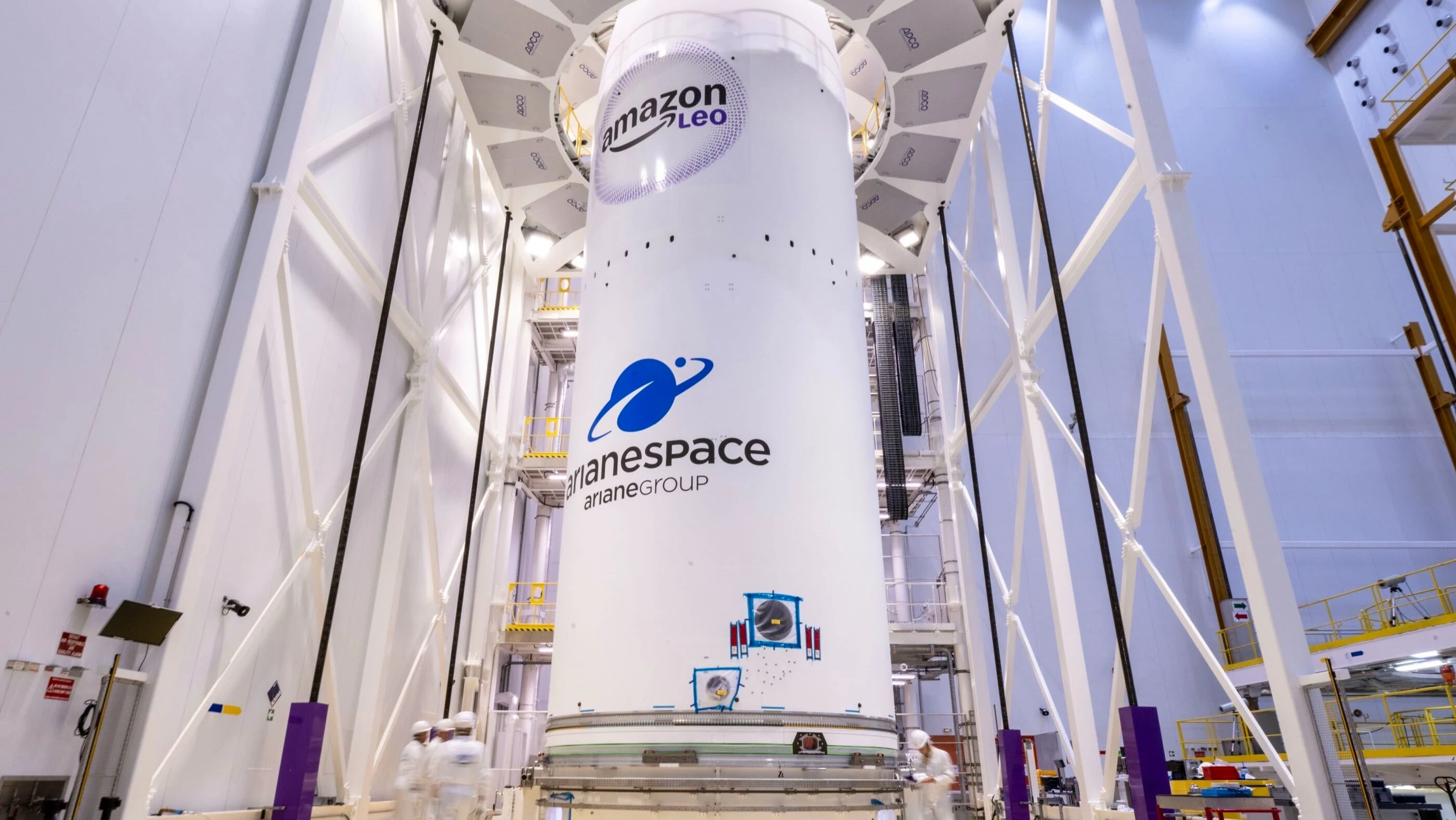
Following the successful launch of the ULA rocket on July 2, Amazon Leo now has enough satellites to launch its high-speed satellite internet service / Photo: x.com / AmazonLeo
Amazon has completed the deployment of the minimum required satellite constellation to launch its Leo satellite broadband internet service later in 2026. Amazon expects this project to compete in the market with the Starlink satellite business operated by Elon Musk’s SpaceX, according to CNBC and Bloomberg.
During trading on July 2, Amazon shares rose 0.4%. SpaceX shares rose 2.83%, but after the close of the main trading session in the U.S., they lost momentum and are down 0.6%.
Details
On July 2, a United Launch Alliance Atlas V rocket launched 29 new satellites for Amazon into orbit. This brings the company’s total number of satellites in orbit to over 390. This is enough to “ensure continuous coverage” and begin providing services in select regions, wrote Chris Weber, Amazon’s vice president of business and products, on X. The company added that the service is expected to launch later this year.
This is a significant development for Amazon, as the company aims to make its Leo service a competitor to SpaceX’s Starlink, according to CNBC. Amazon began offering its Leo service on a trial basis to corporate clients back in November, but has not yet launched the final version for consumers and government customers, the network reports.
Webber noted that the Amazon service will likely be available initially only to users in certain regions, but he assured that future launches will “expand coverage and increase capacity.”
For its next satellite launch into LEO, Amazon will use ULA’s (a joint venture between Boeing and Lockheed Martin) new heavy-lift Vulcan rocket. It will be able to launch larger batches of satellites into orbit and accelerate the pace of the constellation’s deployment, according to CNBC.
Context
Amazon positions Leo as a direct competitor to Starlink. However, SpaceX began rolling out its satellite business four years earlier and now has a constellation of approximately 10,000 satellites and more than 10 million users, CNBC notes. Amazon announced its satellite project in 2019—it was originally called Kuiper and was later renamed Leo.
As part of this business, Amazon plans to deploy a network of approximately 7,700 satellites in low Earth orbit; however, in recent years, the project has faced a “shortage of launch capacity.” Back in 2022, Amazon signed contracts and reserved launch slots with United Launch Alliance, Arianespace, and Blue Origin, and later purchased additional launch slots from SpaceX, CNBC reports, noting that many of these companies subsequently faced delays in launching their rockets. In particular, the Vulcan rocket has completed only four flights since its debut in 2024 and has not launched since a technical malfunction in February, Bloomberg reports. Meanwhile, Blue Origin’s New Glenn rocket exploded during a test firing in May—shortly before the planned launch of Amazon’s satellites, CNBC notes.
Starlink, for its part, continues to expand its satellite constellation using SpaceX’s Falcon 9 missions. According to the company’s prospectus, the satellite business of Musk’s aerospace and AI corporation was SpaceX’s only profitable division prior to the IPO: as of the end of the first quarter of 2026, Starlink accounted for 69% of Musk’s company’s revenue. During the same period, SpaceX’s space division posted a loss of $619 million, while its artificial intelligence division lost $2.5 billion.
This article was AI-translated and verified by a human editor