Button for investors: what will change for Kazakhstan's accession to Euroclear
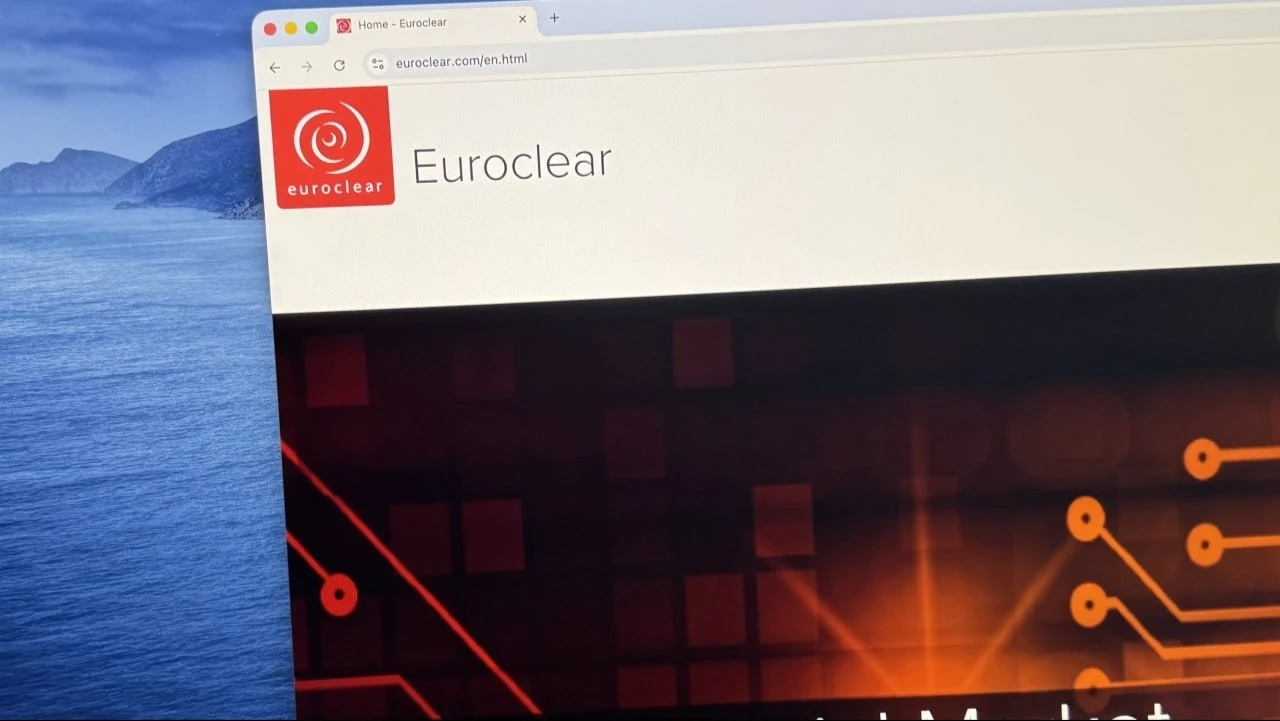
Kazakhstan's connection to the Euroclear depository will allow international investors to buy the country's government bonds in one click / Photo: Jarretera / Shutterstock.com
"Discover a whole new world" - with this headline Bank of America (BoFa) released a review on the announcement of the National Bank on the intention to connect Kazakhstan's government bonds to the international system Euroclear from 2027. "Connecting the local bond market to Euroclear will open up a market of nearly $60 bln to a wide range of non-residents," BoFa writes.
The current presence of non-residents in Kazakh government securities BofA estimates as "rather limited" - at the level of 6-7%. From next year, the purchase of Kazakh government bonds will be available through the standard Euroclear infrastructure - "as a button on the screen" - without the need to create local access to the Kazakh market.
As an example of the possible effect of connection to Euroclear, the bank's experts cite Russia, where after February 2013 the share of non-residents in government securities for three to six months rose to 27-28%, which meant $18 billion in net inflows. In the case of Kazakhstan, the bank's experts expect a similar period of growth to 20-25% and an inflow of $10 billion within a year and a half.
Bank's experts put connection to Euroclear as an argument in favor of purchase of Kazakhstan securities in one row with such factors, as expected in the next one and a half-two years decrease of inflation to 5% and National Bank's rate to 9-10% from available on the date of research 18%. Decrease of rates will also mean decrease of yields of new debt instruments - and price of old securities will have to grow.
The economic situation in the country looks attractive, the bank writes, pointing to the expected easing of monetary policy, as well as the likely upgrade of country ratings. Reduction of rates carries risks of tenge weakening - but, according to researchers, on the long horizon the national currency looks quite confident.
Euroclear is the largest international securities depository, handling 1.7 million securities and processing over 360 million transactions worth over €1.7 trillion annually. Euroclear ensures that in a transaction, the securities go to the buyer and the money to the seller (delivery versus payment).
Will investors come?
Talks about connecting Kazakhstan to international depositories began in winter 2018, shortly before the launch of the Astana International Financial Center (AIFC). At that time it was possible to launch Clearstream, but the scale of this depository is much smaller, and the management of the National Bank immediately stated that Euroclear was needed for full-fledged work.
ING Chief Economist for CIS Dmitry Dolgin notes that the inflow of foreign investment in Kazakhstan's bonds has increased since last fall. "And it is not only speculative capital: in Europe there are funds managing pension and other "long" assets, and countries like Kazakhstan and Uzbekistan are attractive for them in the long term". However, according to him, many investors were stopped by the complexity of buying assets and, especially, possible difficulties with the subsequent sale "in a thin local market".Dolgin notes that the institutional environment in Kazakhstan is similar to that of Russia 15 years ago, while in Russia the mere announcement of future accession to Euroclear was enough to quintuple the inflow of money from foreigners. Examples of such growth in the share of foreigners in the debt market are not isolated: in 2017, similar dynamics were observed in Chile and Peru, and in 2022 - in Saudi Arabia.
What Kazakhstan will get
The first beneficiary of the new stage of market development will be the state. According to the joint research of Euroclear Bank and PwC, connection to Euroclear allows to expect a 0.29 percentage point decrease in yields of primary offerings of government debt securities. This is roughly comparable to an increase in the country rating by one level (for Kazakhstan it would mean an upgrade to BBB from S&P, BBB+ from Fitch and A3 from Moody's).
The year 2026 is associated with rather serious borrowing plans for the government of Kazakhstan. At the end of Ma, after the announcement of the Euroclear plans, the first yuan-denominated government bonds in the country's history were placed. The volume was not very large - the equivalent of $500 million - but the rate was just 1.9% per annum for three years, only 0.6 percentage points above the average yield on China's own government securities. For comparison: last October dollar bonds were placed at 4.412% per annum. At least one more placement is planned already in summer - for $1-1.5 bln, but its parameters have not been announced yet.
Dmitry Dolgin notes that for the state, foreign borrowing is a tool to balance the economy and "close" the chronic current account deficit, according to the National Bank of Kazakhstan, in 2025 amounting to $12.5 billion. But the expert reminds that investor confidence requires a counter liability: whether the country is able to solve the problem of chronic deficits of the current account and non-oil part of the budget, and thus - to diversify the economy and to carry out institutional reforms. For example, in Turkey, the connection to Euroclear itself did not change the situation much: from 2022 to 2025, the share of foreigners in government securities increased from 1% to 10%, but still remained below the 25% observed before the currency crisis began in 2018.
What the business will get
Large businesses will also receive bonuses: "Government bonds are the locomotive, and then they will be used to determine the yield premium to other securities - regional and corporate," says Rafael Nagapetyants, senior partner at Movchan's Group. - And if there is a debt history clear to international investors, it is easier to bring shares to the market. This is a very positive aspect, although it does not determine the final price.
But private investors from Kazakhstan will not get counter access to foreign markets through Euroclear yet. Nagapetyants notes that the ban on dual nominal ownership of securities in Kazakhstan has been lifted only for foreigners, so they will have direct access to the market of Kazakhstan, but the clients of Kazakh brokers to the world market - not.
This article was AI-translated and verified by a human editor