CoreWeave: How a Single Equation Helps Identify the Main Risk in the AI Business
The CoreWeave situation highlights the main weakness of the neo-cloud business model: while the payback period for data center construction is spread out over time, equipment depreciation is accounted for immediately. Photo: jackpress / Shutterstock.com
The AI boom promises record profits for non-cloud companies that provide computing power. But billionaire Elon Musk, for example, predicts that most of them will “die out.” Where do growth prospects end and financial risks begin? Using CoreWeave as an example, Vladimir Tsuprov, portfolio manager and head of the analytics division at Diaman Partners Ltd, demonstrates how to use a single equation based on financial statements to assess the sustainability of a non-cloud company’s business model.
"Storage" for shovels
Many people know that the U.S. stock market—especially against the backdrop of rising interest rates—is expensive (based on the P/E ratio). But the S&P 500 index continues to rise thanks to record expectations for earnings growth and the fact that it will, of course, be entirely driven by AI.
It stands to reason that investors are concerned about the possibility of a bubble in the AI sector, and any problems at AI-related companies immediately raise concerns.
During the Gold Rush in the U.S., it wasn’t the gold miners who came out on top, but those who sold shovels. Something similar is happening now in the AI sector. But a third element has been added to the “shovels”—which are sold by Nvidia.
AI companies need data centers—places where thousands of “processors” are connected into a single network. Cloud computing providers, or “neoclouds,” are a key component of this infrastructure.
And it is precisely this sector that is currently putting the AI growth hypothesis to the test. Investors are focusing on the non-cloud company CoreWeave, which is actively financing its investments in data centers and equipment through debt. It has faced a sharp rise in the yields on its bonds.
What's Hidden in the Financial Statements
What is the main weakness of the business model for non-cloud companies? Building data centers requires massive investments. As a result, the payback period for such projects is extended over time.
When evaluating the cash flows of AI companies, it is essential to take equipment depreciation into account. Microprocessors, graphics cards, and other hardware quickly become obsolete and lose value. This is particularly important for companies that finance their growth with loans secured by equipment: as the equipment depreciates, the value of the collateral also decreases.
At the same time, it’s not easy to accurately assess depreciation. The accounting depreciation period for a graphics card can be six years. But technically, it can continue to function even after that period has expired. Currently, no one has any statistics or understanding of the actual wear and tear on graphics cards and memory chips after six years of extremely intensive use. After all, the entire recent history of the AI industry dates back to 2023–2024.
Therefore, depreciation is a significant component of cash flow that must be properly isolated from it. And this often causes problems.
Let's take the cryptocurrency sector as an example. Two problems are particularly evident there.
The first is that mining equipment (ASICs) depreciates rapidly, with a lifespan of 1–3 years. The second is that each ASIC generates less and less revenue, all other things being equal. In mining, this is because one of the reasons for the growth in the network’s hash rate—its total computing power—is the constant addition of new, more efficient equipment. As a result, the number of satoshis (the smallest unit of Bitcoin) generated per server decreases nonlinearly as the hash rate increases.
As a result, it is quite difficult to calculate the rate of return on an investment: one might overestimate the project's appeal and make an investment that is obviously unprofitable.
In the past, publicly traded mining companies were able to “disguise” this characteristic and sold the future as a pure, stable cash flow. In reality, however, a large portion of it is eaten up by equipment depreciation, which does not generate a return on invested capital.
A similar issue arises in the REIT market, where investors are often presented with FFO (funds from operations), a metric that excludes accounting depreciation of real estate. This is justified in itself: buildings can serve for decades and even appreciate in value. At the same time, however, FFO does not account for capital expenditures required to maintain and renovate real estate. For some companies, these expenses can eat up a significant portion of cash flow. If they are ignored, a company can report high profitability and even pay excessive dividends, effectively eating into its capital.
CoreWeave was originally founded to mine cryptocurrencies, but later shifted to a more complex business—cloud computing. And now it’s fair to say that three of CoreWeave’s four founders come from the financial industry: a hedge fund manager, a portfolio manager, and a commodities trader. Their strengths lie in capital management and raising funds. But is that enough to run a high-tech and extremely complex business? By comparison, Arkady Volozh, the founder of Nebius Group, has many years of experience building and managing a large technology company.
From a multi-page report to a single formula
What is the problem facing analysts covering CoreWeave? They’re forced to read tea leaves to some extent. Their cash flow forecasting models are built on a huge number of assumptions, and even small changes in the input parameters can drastically alter the final valuation of the company.
Perhaps the analysts who expect CoreWeave to overcome its challenges will be right. Or perhaps not. But right now (as always), it’s the investors who are putting their money on the line.
How can you simplify the investment decision and analysis for CoreWeave? We condense the analytical report—which runs to several dozen pages—into a single equation and a couple of questions.
We need to take into account the operating cash flow from CoreWeave’s operational equipment and depreciation. To assess CoreWeave’s financial performance, I compared operating cash flow with accounting depreciation based on the results for the first half of 2026.
The GAAP operating loss was $193 million, and after accounting for $2.54 billion in depreciation and amortization, adjusted EBITDA reached $2.347 billion. If we include $318 million in non-cash stock-based compensation expenses and $365 million in non-cash operating lease expenses, and subtract $182 million in changes to lease liabilities, the estimated operating cash flow before interest and taxes comes to $2.848 billion. This is only $308 million, or 12.1%, higher than the amount of depreciation and amortization. If stock-based compensation is treated as an economic expense to shareholders, the result drops to $2.53 billion—nearly to the level of depreciation. This is an estimate for the consolidated company, not the exact cash flow of a single GPU cluster.
What insights does this provide:
— Today, CoreWeave's depreciation even exceeds its operating cash flow, adjusted for changes in working capital.
As mentioned above, this creates the risk that the company will simply burn through its capital without generating new profits.
— Interest payments on debt have already been deducted from operating cash flow.
If we add back the interest expense on loans used to finance working capital to operating cash flow (CFO), the adjusted CFO will exceed depreciation. However, this excess is insignificant, and it means that the company is currently, in effect, working not for its shareholders but to service its debt.
Therefore, based on the current assumptions for CoreWeave, we can draw the following conclusions:
— The company's margin isn't high enough.
— The interest payments on the debt are too burdensome.
— Given the current profitability, investors must either expect the equipment to continue generating cash flow after the six-year accounting depreciation period ends, or expect the profitability of the existing facilities to increase significantly.
My opinion: CoreWeave is a company with significant operational risks. Its financial model is built on a shoestring and carries enormous risks of potential management errors and an uncertain future once the equipment’s book depreciation period ends. The question of whether the graphics cards will continue to generate profit after the end of their useful life remains open.
If these risks materialize, the company will most likely be saved: its largest clients, who need data center capacity, will simply buy it out.
Several conclusions can be drawn for the entire AI data center industry.
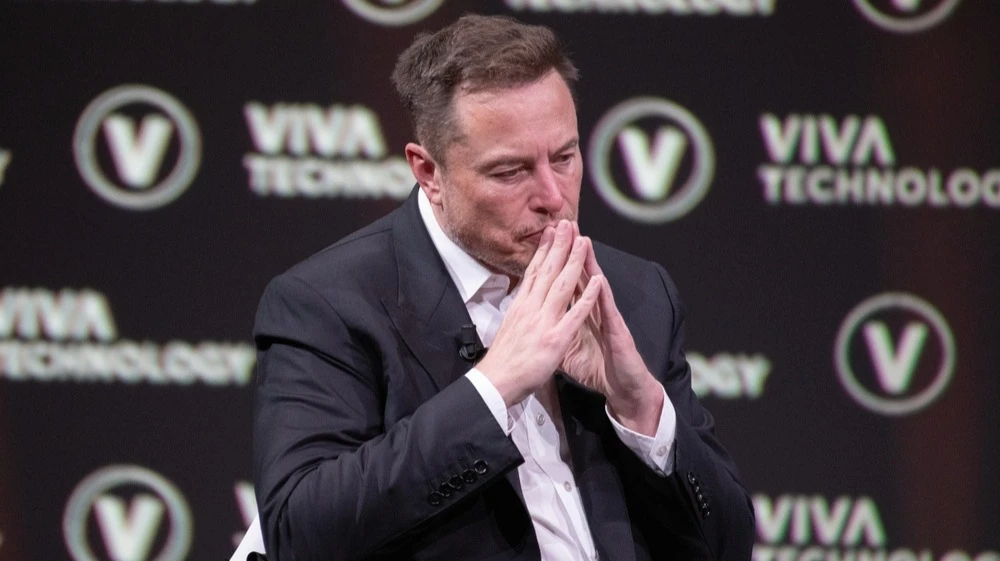
The return on investment in AI infrastructure may prove insufficient given the risks involved. Companies with weak balance sheets are likely to be revalued. Last weekend, billionaire Elon Musk even stated that more than 200 cloud providers “face consolidation or mass extinction.” Debt market participants are reluctant to lend to companies whose revenues depend almost entirely on AI data centers. “Only a few will survive,” the billionaire warned. A revaluation of multiples across the entire AI sector is also likely.
Investors and lenders will demand higher rates of return on new data center construction projects. Consequently, operators will have to charge higher prices for computing power, including token generation. Some of these costs may be passed on to end users of AI services.
As for the AI bubble, this example does not allow us to draw a definitive conclusion that all investments in AI are unprofitable. Rather, it shows that there are both promising and less effective business models in this sector.
This article was AI-translated and verified by a human editor