Customs within the Union: why Russia introduces prepayment of taxes at border crossings
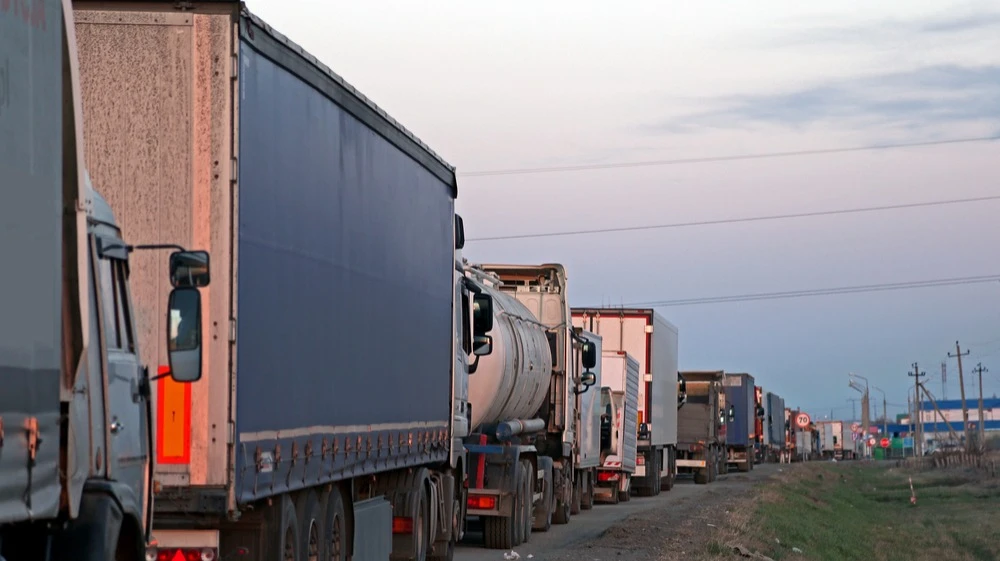
Russia is fighting gray imports: now to bring goods into Russia will require a security payment / Photo: Shutterstock.com
On April 1, the "system of goods waiting confirmation" (SPOT) was supposed to start working at the border of the Eurasian Economic Union (EAEU). Experts and officials saw in this system elements of restoring tax and customs control between the countries - the start of the test period was postponed
What is SPOT?
SPOT is a system of accounting for goods entering Russia from EAEU countries. Now, unlike goods from other countries, goods within the union cross the border without customs procedures, and after importation the importer submits an application to the tax inspectorate and pays indirect taxes. With the introduction of the SPOT, there is actually a requirement to pay the tax in advance. The importer will be obliged to make a "security payment" in the amount of VAT and excise taxes (if applicable) at least two days before crossing the border. After that, the Federal Tax Service will issue QR codes, which must be presented at the checkpoint - without them, the party will not be able to cross the border.
For the time being, such a rule is introduced only for road transportation. Other modes of transportation will not be connected until 2027 at the earliest. The test period, during which QR codes were to be issued without prior payment - only upon notification - was planned to be launched on April 1. But the day before, the launch was postponed for three months. "The SPOT bill is still under consideration by the State Duma and has not even passed the first reading. So the SPOT now exists only at the level of departmental orders of the Federal Tax Service, and formally no one can prohibit the importation of goods into Russia without any QR," says Anton Yarmak, partner of the EDAS law firm.
Why do you need a SPOT?
Russian officials explained that the system was being introduced to prevent unscrupulous businesses from importing goods across the EAEU border without paying indirect taxes. The scheme looks like this: the documents specify a non-existent recipient of the goods, and delivery is made to "third parties, not the taxpayer specified in the documents". Now the payment system is organized in such a way that the importer can manage to sell the goods and disappear without paying tax. The Russian side estimates that the introduction of SPOT can give the budget from 2026 to 2028 about 300 billion rubles. "The very payment of VAT by importers dozens of days earlier can give the annual budget about the amounts that the Ministry of Finance says - and this may be the main argument in favor of SPOT", - said investment strategist of MC "Arikapital" Sergey Suverov.
The SPOT will not affect everyone. Among the exceptions are the largest taxpayers (with revenues of more than 35 billion roubles), supplies of oil and oil products, electricity and goods transported by pipelines, residents of free economic zones, transit through the territory of Russia and the importation of goods for personal use.
Which countries will be affected?
The EAEU comprises Armenia, Belarus, Kazakhstan, Kyrgyzstan and Russia. Russia, which unilaterally introduces the SPOT, shares land borders only with Belarus and Kazakhstan. The Belarusian authorities are seeking exclusion from the system and apparently successfully. In February, the Russian Deputy Prime Minister Alexei Overchuk said that between the two states "a system of administration has been created, which already provides control over the receipt of VAT. Kazakhstani representatives have not publicly disputed the prospect of introducing SPOT. At the time of publication, the Ministry of Trade and Integration of Kazakhstan did not provide Oninvest with a comment. Timur Zharkenov, Deputy Chairman of the Board of the National Chamber of Entrepreneurs "Atameken", says that the organization is preparing counter proposals and plans to present them "after studying the practical results of the introduction of this system".
How will this affect exporters from the EAEU and Russian importers?
It is the importer who has to make the security payment, since VAT is payable in the country of importation. "In fact, for the deal to take place, the parties will have to find at least 22% of the value of the goods and somehow divide the costs of using these funds before they make a profit. So, not to mention the probable loss of some buyers, the Kazakh side will have to, in fact, partially assume the costs" - says Sergey Suverov.
"Russia has begun to fight sharply against 'gray imports,' when goods are imported and lost along the way. This is a good endeavor, but both sides will have to bear the costs, and it only limits exports to Russia," Zharkenov said, noting that the situation is completely unbalanced for Kazakhstan because the country sells far fewer goods to Russia than it imports. The SPOT implies a withdrawal of money, which will affect both large and small businesses, he said: "but at least the large one has such resources".
Who's going to get hurt?
Small businesses will have the hardest time. Previously, companies under simplified regimes still had "input" tax on imports, but it could be included in expenses and not pay VAT on their sales. However, starting from 2026, the threshold of revenue exempt from VAT has been lowered from 60 million rubles to 20 million rubles per year - and will be lowered further for the next two years. Daniil Egorov, head of the Federal Tax Service of Russia, admitted that the interests of small businesses were not taken into account, and the tax authorities still do not understand how the system will actually work.
Alexei Fedorov, head of the Russian Chamber of Commerce and Industry's e-commerce council, said that the SPOT would "close the oxygen" to small and medium-sized businesses, especially those operating on marketplaces. "This will turn into additional bureaucracy and financial pressure on small and medium-sized businesses, which already live on minimal margins and cannot afford to keep lawyers, customs brokers and accountants." SPOT could prove fatal for thousands of small sellers, the assortment will shrink and prices will rise, he believes.
Kazakhstan's exports to the EAEU countries in 2025 amounted to just over 7% of the country's total exports. Of this $10.12 billion, $8.14 billion went to Russia. Among the major export items are chemical products ($2.47 billion), machinery, equipment, vehicles, instruments and apparatus ($1.68 billion), metals and metal products ($1.68 billion). Kazakhstan brings to Russia $660.3 million worth of food, textiles and textile products ($99.2 million), construction materials ($72 million).
How does the introduction of SPOT fit into the idea of the EAEU and the Customs Union?
"Formally, the SPOT is made competently and does not contradict the letter of the EAEU agreement. But the introduction of additional control and actual prepayment of taxes at the border may cause accusations from partner countries of violating the spirit and essence of the Customs Union," says Sergey Suverov of Arikapital. Chairman of the Kyrgyz government Adylbek Kasymaliev, has already stated that control measures "at or near the borders" are turning into quasi-customs procedures and "often have the character of total control of all transportation". "In fact, this means the restoration of customs control at internal borders, which contradicts the fundamental principle of our union," he said.
"The Russian side has previously introduced non-tariff measures at the regional level and prevented Kazakhstani goods from entering certain areas. Now it is essentially introducing customs within the Customs Union, and countermeasures from Kazakhstan would be logical," said Magbat Spanov, a professor at KazNU.
This article was AI-translated and verified by a human editor