"Give disinflation a chance": Fed official suggests rates may remain unchanged
U.S. stocks rose, while the sell-off in the bond market slowed

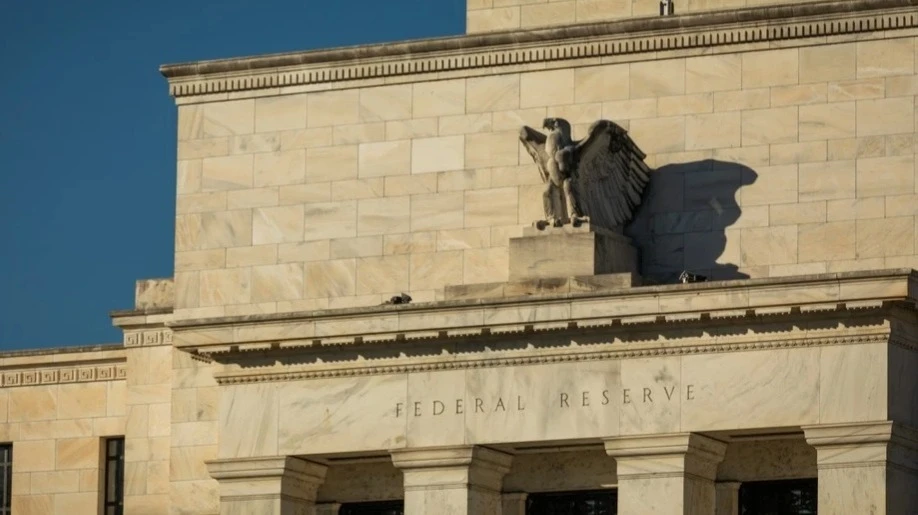
Federal Reserve Governor Christopher Waller believes that the three-month inflation measure better reflects price trends than the annual data / Photo: christianthiel.net / Shutterstock
Federal Reserve Board member Christopher Waller stated on September 3 that he is prepared to support keeping the interest rate at its current level at the Fed’s September meeting if August data confirm an easing of inflationary pressures. However, he cautioned that an unexpectedly high Consumer Price Index (CPI) reading for last month—which is set to be released next week—could sway him toward voting for a rate hike, according to Bloomberg.
The markets reacted positively to Waller's statements—U.S. stocks are rising, and Treasury yields are falling.
Details
Waller’s decision will “largely depend” on the August inflation data, Reuters reports. If inflation continues to move toward the Fed’s 2% target, the Fed governor is prepared to support keeping rates at their current level. However, if inflation turns out to be higher than expected, Waller will consider voting to raise rates, Bloomberg notes.
At the same time, Waller noted signs of improvement in the inflation situation. Although inflation remains “significantly above” the Fed’s target, the latest data, he said, point to the first signs of disinflation, he told Reuters in an interview. Three-month inflation rates, as measured by the Fed’s preferred metric, fell from 4.76% in February to 3.05% in July, according to Waller, CNBC reported. This measure, the Fed member emphasized, better reflects current price dynamics than annual figures, in his view. Recent trends “suggest that we are finally seeing some signs of disinflation,” Waller stated.
“To paraphrase John Lennon—give disinflation a chance,” he added in an interview with Reuters. The Fed, Waller continued, could, in his view, afford to take a pause for at least one more meeting: “What is the cost of waiting one meeting? A 25-basis-point rate hike won’t bring the consumer price index down to 2%,” he noted.
What's Happening in the Markets
The markets reacted positively to Waller’s remarks—according to the CME Group’s FedWatch tool, following the Fed official’s comments, traders lowered their expectations for a rate hike at the next Fed meeting: market participants now estimate the probability of this at 50.3%, although just the day before, they had estimated it at 63.2%.
Major U.S. stock indexes are rising in trading on September 3, while Treasury yields are falling despite rising oil prices. Specifically, the S&P 500 rose 0.86% during Thursday’s trading session, the Nasdaq Composite jumped 1.16%, and the Dow Jones rose 1.13%.
Meanwhile, the sell-off in the bond market slowed: the yield on 10-year government bonds fell by more than 3 basis points, to 4.756%. For 30-year Treasuries, this figure fell by more than 2 basis points to 5.241%. Meanwhile, the yield on short-term—2-year—Treasury bills fell by more than 5 basis points to 4.328%.
Last week, partly due to concerns about rising oil prices and accelerating inflation, yields on long-term Treasuries reached their highest levels in nearly 20 years, forcing the U.S. Treasury to announce an expansion of its government debt buyback program.
Context
The Fed will hold its next meeting on September 15–16. The central bank has kept the rate unchanged for five consecutive meetings. It currently stands in the range of 3.5–3.75%.
In July, three members of the Federal Open Market Committee (FOMC) advocated for a 25-basis-point rate hike. At the same time, Fed officials have sent mixed signals in recent weeks regarding the future path of monetary policy.
Federal Reserve Chairman Kevin Warsh stated on August 28 at a symposium in Jackson Hole that current inflation rates do not yet indicate a significant improvement in underlying trends. If inflationary pressures do not ease, the central bank “has a lot of work ahead,” he said. At the time, the markets interpreted these remarks as a signal that a rate hike was imminent.
Earlier this week, Michael Barr, a member of the Federal Reserve Board of Governors, also stated that the U.S. central bank should be prepared to raise interest rates in September if inflation does not decline. In contrast, John Williams, president of the Federal Reserve Bank of New York, noted that he sees signs of a further slowdown in inflation as the impact of tariffs weakens, according to Reuters.
Bloomberg concludes that the next key indicators for the Fed will be the jobs report, due on September 5, and the August Consumer Price Index (CPI) data, scheduled for release on September 11.
This article was AI-translated and verified by a human editor